
Interested in working with us in the future?
Follow to see new jobs and posts in your feed.
No news yet.

Administrative divisions

The prefecture-level city of Zhumadian administers 1 district and 9 counties.
Geography
Zhumadian is situated at 32° 18'−33° 35' N latitude, and 113° 10'−115° 12' E longitude, with a maximum east–west width of 191.5 kilometres (119.0 mi), and at most 137.5 kilometres (85.4 mi) long from south to north. The area of the prefecture is 15,083 square kilometres (5,824 sq mi), occupying 8.9% of the total provincial area. Neighbouring prefectures are:
The terrain is dominated by mountains, hills, hillocks, and plains.
Climate
Zhumadian has a four-season, monsoon-influenced humid subtropical climate (Köppen Cwa), with cold, somewhat damp, winters, and hot, humid summers. The monthly 24-hour average temperature ranges from 1.5 °C (34.7 °F) in January to 27.3 °C (81.1 °F) in July, while the annual mean is 15.15 °C (59.3 °F). More than 60% of the annual precipitation of 990 mm (39 in) occurs from June to September. With monthly percent possible sunshine ranging from 39% in March to 46% in four months, the city receives 1,927 hours of bright sunshine annually.
Agriculture
Mainly wheat, maize, peanut, sesame, green beans and tobacco are grown.
Culture
Zhumadian has a cultural history and is the birthplace of many great people in ancient times. There is an old site of Liang Shanbo and Zhu Yingtai who are the characters in the Butterfly Lovers, a famous Chinese story.
Zhumadian is the location of Mount Chaya, a major geological site of interest and tourist attraction.
People from Henan have been negatively stereotyped, with Zhumadian being singled out as the supposed base of scamming. This may have originated from the aftermath of the 1975 Banqiao Dam collapse, when locals affected by the disaster eventually become the first large batch of migrant workers to go to Guangdong. Most of these workers had little education and lived together in impoverished communities, leading to a negative perception of Zhumadian people. A popular quote going around was:
Dams
Zhumadian has 62 different dams including Banqiao Dam within its territory. The failure of the Banqiao and Shimantan Dams in 1975, which caused more than 150,000 casualties and made more than 10 million people homeless, is considered the biggest catastrophe of its kind.
Transportation
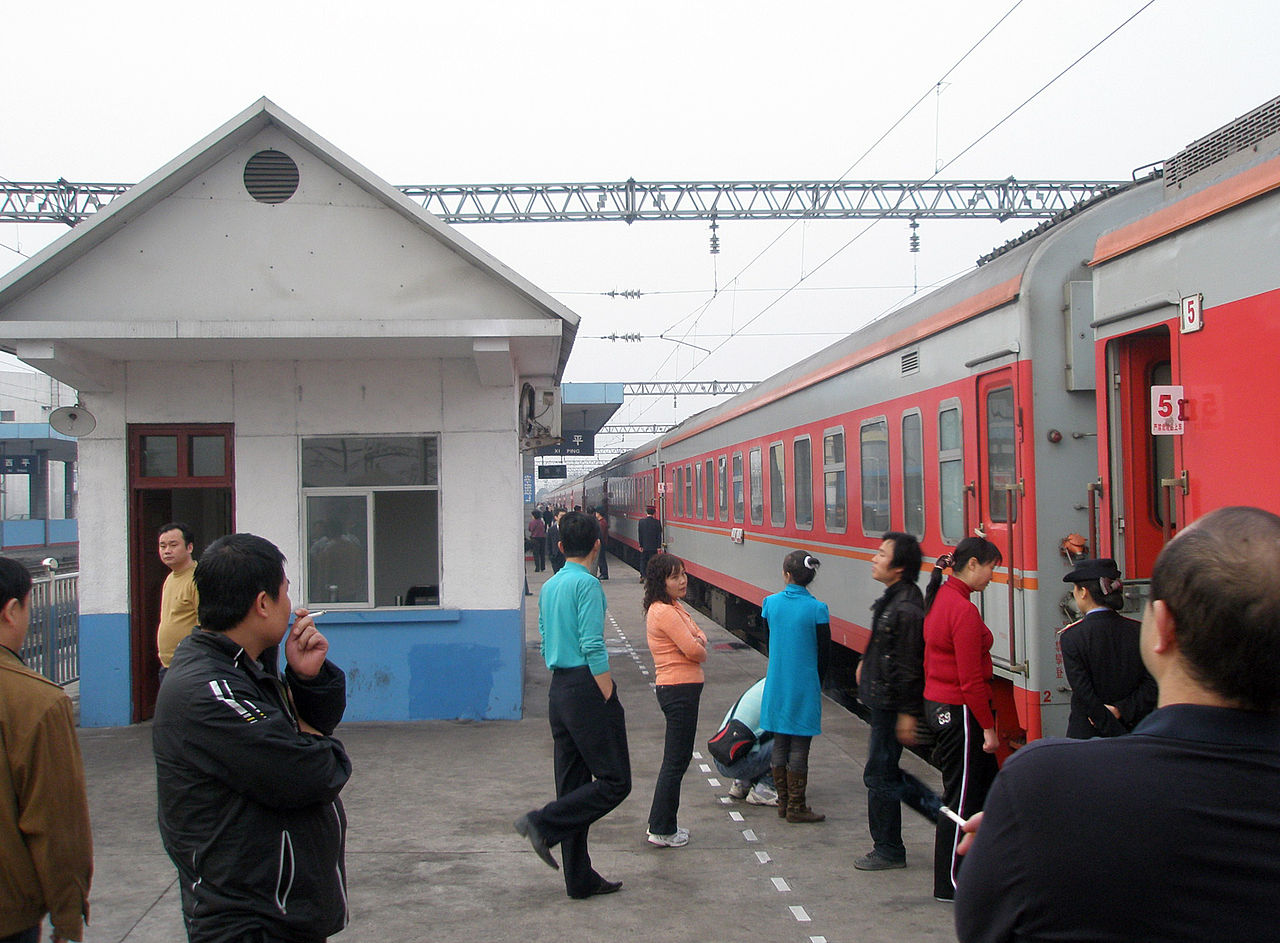
One of the Chinese main highways, China National Highway 107, runs through Zhumadian. Zhumadian also has its own transportation system. The old Golden Decade-built Zhumadian Aerodrome primarily served military operations from 1931 until late-2018, when it was converted for commercial passenger airliner use as well.
Demographics
According to the Seventh National Census in 2020, the city's Permanent Population (hukou) was 7,008,427. The population was 49.57% male and 50.43% female. In terms of age structure, 25.1% were aged from 0 to 14, 55.1% were aged from 15 to 59, 19.8% were over 60, and 15.72% were over 65.
Education
Zhumadian Vocational and Technical College (驻马店职业技术学院)
Zhumadian Preschool Education College (驻马店幼儿师范高等专科学校)
Kaynak: Wikipedia – Zhumadian · CC BY-SA 4.0
Tarihçe
Zhumadian daha önceden Yicheng adıyla bilinmekteydi.
1975 yılında Nina Tayfunu nedeniyle Banqiao Barajı'nın çökmesi 171000 kişinin ölümüne ve 11 milyon kişinin evsiz kalmasına neden oldu. Baraj 1993 yılında yeniden inşa edildi.
İdari bölümler
Zhumadian şehri bir semt ile dokuz ilçeye ayrılmaktadır.
Kaynak: Wikipedia – Zhumadian · CC BY-SA 4.0