
Overview
日向市(ひゅうがし)は、宮崎県の北東部に位置する市。県北エリアに属する。
Interested in working with us in the future?
Follow to see new jobs and posts in your feed.
No news yet.
About

日向市(ひゅうがし)は、宮崎県の北東部に位置する市。県北エリアに属する。
Kaynak: Wikipedia · CC BY-SA 4.0
地理

日向灘に面し、細島港という天然の良港に恵まれ、古くから県のゲートウェイとしての役割を担ってきた。県内有数の工業地帯としても知られる。
海域: 日向灘 - 今後発生が予見されている南海トラフ巨大地震の際には、市内の海岸に最大10mの津波が到達することが予想されている。
気候
温暖で降水量が多い一方で、日照時間は全国トップクラスである。また、宮崎県の他の市と同様に台風の影響を受けやすく、しばしば大きな被害を受ける。
地名
大正6年に、現在の福岡県久留米市田主丸町から移住し、後に宮崎県議になった綾部市太が苗木販売をしていた敷地に昭和になってツツジを植え、「迎洋園」と言うツツジ園を開園したのがそもそもの地名の由来。後に宅地化されて「迎洋園団地」となり、今に至っている。
歴史

前史
1587年(天正15年) - 足利将軍和陸使が豊後水道南下の際に細島に寄港。(正史最初の記録)。
1692年旧暦閏9月 - 臼杵郡富高村、日知屋村(細島を含む)、財光寺村、塩見村、平岩村の5村と山陰村の一部が延岡藩領より幕府領(天領:西国筋郡代)へ移行。
1868年旧暦閏4月25日 - 府藩県三治制により、天領であった地域に(富高陣屋)に富高県が発足。
1873年(明治6年)1月15日 - 美々津県・都城県が統合し宮崎県が発足。臨時的に旧富高県庁が宮崎県庁として使用された。
1889年(明治22年)5月1日 - 町村制施行により、現在の市域にあたる以下の町村が発足。
1937年(昭和12年)10月1日 - 細島町・富高町が対等合併し富島町になる。
1949年(昭和24年)6月7日 - 昭和天皇の戦後巡幸があり、富島中学校(富島町民奉迎場)、細島港などに行幸。
日向市小史
1951年(昭和26年)4月1日 - 富島町・岩脇村が対等合併・市制施行し日向市になる。
1964年(昭和39年) - 延岡市とともに新産業都市に指定される。※新産業都市建設促進法は2001年3月に廃止。
1971年(昭和46年) - 細島工業港と神奈川県川崎市を結ぶフェリーが就航する。
その後、兵庫県神戸市、大阪、広島間の航路ができる。※2005年6月ですべて廃止。
1997年 (平成9年)1月10日 - 日向市立図書館が日向保健所跡に移転する。
2010年(平成22年)12月4日 - 東九州自動車道 門川IC - 日向IC間が開通する。
2014年(平成26年)3月16日 - 東九州自動車道 日向IC - 都農IC間が開通し、県庁所在地の宮崎市と高速道路で結ばれる。
2016年(平成28年)1月18日 - 日向市新庁舎建設工事竣工式 - 1964年庁舎建設以降、耐震性に課題があったため新庁舎建設を開始。
2018年(平成30年)5月 - 日向市新庁舎の運用開始。旧庁舎は同年7月以降に解体され、翌年3月まで外構整備工事が行われた。
2019年(平成31年) 3月24日 - 日向市新庁舎グランドオープン - グランドオープンを記念して市民イベントも同時開催された。
議会
県議会
2007年(平成19年)の県議選までは定数3だった(黒木覚市、十屋幸平、西村賢の3名)。
国会
衆議院小選挙区選挙では、宮崎2区(延岡市、日向市、西都市、児湯郡、東臼杵郡、西臼杵郡)に属する。
交通

バス
宮崎交通(一般路線) : イオンタウン日向を拠点に、主に日向市中心部と旧東郷町や周辺市町村を結ぶ路線を運行する。
ぷらっとバス : 中心部および比較的中心部に近い地域。日向交通協同組合が運行する。
南部ぷらっとバス : 日向市中心部 - 美々津地区間。日向交通協同組合が運行する。
乗合バスなんぶ : 市南部の南日向駅周辺および美々津駅周辺。予約制(誰でも利用可能)。日向交通協同組合が運行する。
乗合バスとうごう : 旧東郷町域内。予約制(誰でも利用可能)。山陰タクシーが運行する。
乗合タクシーほそしま : イオンタウン日向 - 細島地区間。予約制(誰でも利用可能)。宮交タクシーが運行する。
ハッコートラベル : 日向市と福岡市を結ぶ高速バス「ハッコーライナー」を運行する。
港湾
貝塚港 - 細島港 - 宮崎港(2004年 同年8月より宮崎カーフェリーに移管)
環境
住友金属鉱山(株)のグループ会社である(株)日向製錬所跡地や東ソー日向工場などの日向市船場町や大字日知屋他において、50,000m2を超える土壌汚染対策法に基づく形質変更時要届出区域に指定されている。
放射性廃棄物が、旭化成㈱の日向細島事業所に8,030本(平成20年度) で保管されている 。
休廃止富高鉱山からの排水水質が強酸性水(pH 2.5~2.9)、鉄~200mg/L、ヒ素~0.6mg/L観測された。また放流口直下の底質にヒ素が160mg/kg検出された 。
日知屋古田町にある日向製錬所旧細島工場跡地(6・6ヘクタール)の地下水から、土壌汚染対策法で定める基準値を超えるヒ素とフッ素が検出された 。
2014年スラグ埋立の公害被害を指摘した主婦が、産業廃棄物収集運搬会社および製錬会社から名誉棄損及び営業妨害として提訴され、2015年10月14日に主婦が敗訴する判決があった 。
参考文献
『新現代宮崎の百人 青少年への座右銘(県人シリーズ 64)』育英出版、1982年。
Kaynak: Wikipedia – 日向市 · CC BY-SA 4.0
Origin of name
Hyuga City took its name from Hyūga Province (日向国, Hyūga/Hinata no kuni), the historical name of what is now Miyazaki Prefecture. According to Japanese legend in the Nihon Shoki, following the conquest of the Kumaso people, Emperor Keikō watched the sunrise over the ocean and said "This country faces straight toward the sunrise" (この国は真っ直ぐに日の出る方に向いている, Kono kuni wa massugu ni hinoderu hou ni muite iru). From that time, the province was known as Hyuga or Hinata (the country facing the sun) until the Meiji Restoration when it was renamed Miyazaki.
Geography

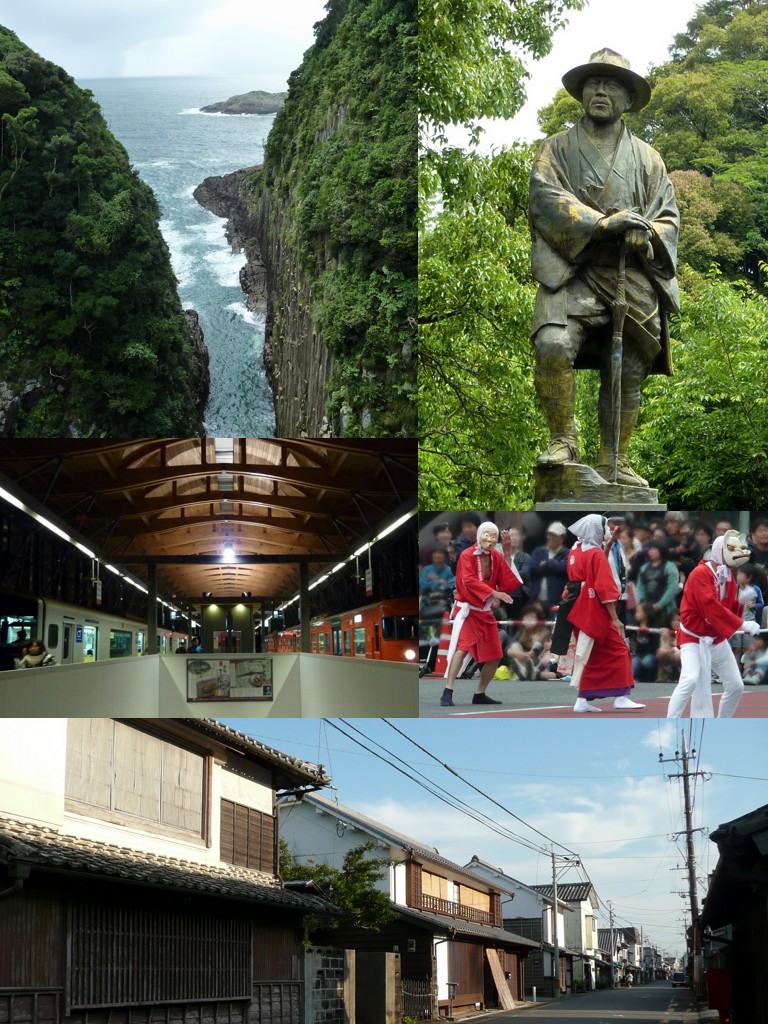
Hyūga is located in central Miyazaki Prefecture. It is bordered by the Hyūga Sea to the east and the Kyushu Mountains to the west. The area along Cape Hyūga with its exposed hexagonal pillar rocks and ria (saw tooth) coastline are designated as part of the Nippō Kaigan Quasi-National Park. A bit south are beaches such as Ise-ga-hama, Okura-ga-hama, and Kane-ga-hama, known for their surfing.
Climate
Hyūga is located in the humid subtropical climate zone (Köppen climate classification: Cfa), exhibiting four distinct seasons. It has a mild, but humid subtropical climate with no dry season. The climate is comparable to the southern coastal areas of the United States or southern Europe. The average summer daytime temperature is about 30 °C (86 °F) with 80% humidity. The average winter daytime temperature is about 13 °C (56 °F) with 60% humidity. Early summer is marked with the rainy season in June and July. This is followed by a hot, humid summer and daily sunshine, but is often accompanied by typhoons. Winter is mild with small amounts of rain.
Demographics
As of November 2015, Hyūga had a total population of 63,011 people; 30,150 males and 32,861 females.
Districts
Shinmachi (新町) is Hyūga's downtown area. Hyūga City has been engaged in large scale urban renewal, slowly widening roads, creating new businesses, beautifying, and modernizing the city center. As such, Shinmachi is relatively new and modern. This region is centered on Hyūgashi Station.
The southern part of Hososhima is centered on Hyūga's commercial fishing port between Komenoyama and Makishimayama. This is an older less frequented part of Hyūga. The streets are narrow and there are numerous old Edo-period buildings.
The northern part of Hososhima is far more industrial. This region has several manufacturing plants and large areas for storage of goods and raw materials. Hososhima Industrial Port currently serves as the main international port in northern Miyazaki Prefecture handling materials and goods import and export in the region. Hososhima Industrial Port is designated as a Special Major Port and was selected as a focus port by the Japanese government in 2010. There continues to be major development and expansion of the port and its available services. Hososhima Port was selected by the Japanese government as Port of the Year 2015.
History
Archaeologists working in Hyūga have reported finding artifacts such as stone tools and stone piles from as much as 30,000 years ago, the Japanese Paleolithic period. There is also evidence of inhabitation during the Jōmon period. Archaeological digs uncovering pottery from this time period continue today in parts of the city.
During the Edo period, Hyūga was divided between the holdings of Nobeoka Domain and tenryō territory administered directly by the Tokugawa shogunate. Following the Meiji Restoration, the town of Hososhima and villages of Iwawaki ad Tomidaka were established on May 1, 1889 with the creation of the modern municipalities system. Tomidaka was raised to town status on October 1, 1921. On October 1, 1937, Hososhima and Tomidaka merged to form Toshima Town. Toshima merged with Iwawaki to form the city of Hyūga on April 1, 1951.
Municipal consolidation
Modern Hyūga City is a result of the merger of numerous smaller towns and villages. These mergers began at the start of the Meiji Period when the han system was abolished and the concept of towns and cities arose. This time period, between 1888 and 1889, became known as the Great Meiji Consolidation. Following this, towns continued to merge mainly due to population limitations or financial limitations. The most recent merger in 2006 with Tōgō (from Higashiusuki District) was part of the Great Heisei Consolidation. This was a government initiative to counter population declines and financial problems while promoting decentralization of the national government. This merger increased Hyuga City's population, tax money, and autonomy.
Government
Hyūga has a mayor-council form of government with a directly elected mayor and a unicameral city council of 20 members. Hyūga contributes two members to the Miyazaki Prefectural Assembly. In terms of national politics, the city is part of the Miyazaki 2nd district of the lower house of the Diet of Japan.
Economy
Hyūga is a major industrial center, with many chemical plants belonging to the Asahi Kasei group. Other major industries include smelting, titanium production and food processing.
Education
Hyūga has 13 elementary schools, seven junior high schools and three high schools. The Miyazaki Board of Education also operates one special education school for the handicapped.
Transportation

Railways
Hyūgashi - Zaikōji - Minami-Hyūga - Mimitsu
Sister cities
Weifang, Shandong, China, friendship city since February 25, 1986
Local attractions
Annual cultural events
Hyottoko Summer Festival (ひょっとこ夏祭り, hyottoko natsu matsuri) takes place the first Friday and Saturday of August every year. This is the largest festival in Hyuga City attracting visitors from all over Japan. The rather peculiar dance associated with this festival is not exclusive to Hyuga City, but this is the most famous Hyottoko dance in Japan; as such it and the characters in the dance have become symbols of the city.
Hyuga Jugoya Festival (日向十五夜祭, hyuga jugoya matsuri) takes place during September or October in accordance to the harvest moon. In Hyuga City, this event features two dances, the more traditional Jugoya dance and a traditional dance specific to the Togo region. This is the second largest festival in Hyuga City.
Museums and other points of interest
Hyuga Historical and Folk Museum (日向市歴史民俗資料館, Hyūgashi rekishi minzoku shiryōkan)
Bokusui Wakayama Memorial Museum of Literature (若山牧水記念文学館, Wakayama bokusui kinen bungaku-kan)
Hososhima Port Museum (細島みなと資料館旧高鍋屋, Hososhima Minato shiryōkan kyū Takanabe-ya)
Notable people from Hyūga
Norichika Aoki, Major League Baseball player
Masatora Kawano, Japanese racewalking athlete
Kaynak: Wikipedia – Hyūga, Miyazaki · CC BY-SA 4.0