


Berlin
Berlin ist die Hauptstadt und ein Land der Bundesrepublik Deutschland.
Government administration · Germany · 0 followers
Overview
Berlin ist die Hauptstadt und ein Land der Bundesrepublik Deutschland. Die Großstadt ist mit rund 3,7 Millionen Einwohnern die bevölkerungsreichste und mit 891 Quadratkilometern die flächengrößte Gemeinde Deutschlands sowie die bevölkerungsreichste Stadt der Europäischen Union. In der Agglomeration Berlin leben mehr als 4,7 Millionen Menschen und in der Metropolregion Berlin-Brandenburg mehr als 6,2 Millionen. Der Stadtstaat besteht aus zwölf Bezirken. Neben den Flüssen Spree, Havel und Dahme befinden sich im Stadtgebiet kleinere Fließgewässer sowie zahlreiche Seen und Wälder.
Interested in working with us in the future?
Follow to see new jobs and posts in your feed.
No news yet.
About

Berlin ist die Hauptstadt und ein Land der Bundesrepublik Deutschland. Die Großstadt ist mit rund 3,7 Millionen Einwohnern die bevölkerungsreichste und mit 891 Quadratkilometern die flächengrößte Gemeinde Deutschlands sowie die bevölkerungsreichste Stadt der Europäischen Union. In der Agglomeration Berlin leben mehr als 4,7 Millionen Menschen und in der Metropolregion Berlin-Brandenburg mehr als 6,2 Millionen. Der Stadtstaat besteht aus zwölf Bezirken. Neben den Flüssen Spree, Havel und Dahme befinden sich im Stadtgebiet kleinere Fließgewässer sowie zahlreiche Seen und Wälder.
Kaynak: Wikipedia · CC BY-SA 4.0
Geographie

Lage
Berlins Bezugspunkt, das Rote Rathaus (Rathausstraße 15 in 10178 Berlin), hat die geographische Lage: 52° 31′ 7″ nördliche Breite, 13° 24′ 30″ östliche Länge. Der Flächenschwerpunkt der Stadt liegt rund zwei Kilometer südlich davon in Kreuzberg (). Die größte Ausdehnung des Stadtgebiets in Ost-West-Richtung beträgt rund 45 km, in Nord-Süd-Richtung etwa 38 km. Die Fläche Berlins beträgt etwa 891 km². Die Stadt befindet sich im Nordosten der Bundesrepublik Deutschland und ist vollständig vom Land Brandenburg umgeben.
Das historische Zentrum liegt an der schmalsten und damit verkehrsgünstigsten Stelle des Warschau-Berliner Urstromtals, das Berlin vom Südosten zum Nordwesten hin durchquert und von der Spree in Ost-West-Richtung durchflossen wird. Der nordöstliche Teil Berlins liegt auf der Hochebene des Barnim, knapp die Hälfte der Stadtfläche im südwestlichen Bereich liegt auf der Hochebene des Teltow. Der westlichste Bezirk, Spandau, verteilt sich auf das Berliner Urstromtal, das Brandenburg-Potsdamer Havelgebiet und die Zehdenick-Spandauer Havelniederung. Die Landschaft Berlins entstand im Eiszeitalter während der letzten Vereisungsphase, der Weichsel-Eiszeit. Vor etwa 20.000 Jahren war das Gebiet Berlins vom mehrere hundert Meter mächtigen skandinavischen Eisschild (Gletscher) bedeckt. Beim Rückschmelzen des Gletschers entstand vor etwa 18.000 Jahren das Berliner Urstromtal.
Gewässer und Erhebungen
Berlin hat zahlreiche Fließgewässer und Seen. Die Spree mündet in Spandau in die Havel, die den Westen Berlins in Nord-Süd-Richtung durchfließt. Berliner Nebenflüsse der Spree sind die Panke, die Dahme, die Wuhle und die Erpe. Der Flusslauf der Havel, eigentlich eine glaziale Rinne, ähnelt dabei oft einer Seenlandschaft; die größten Ausbuchtungen bilden der Tegeler See und der Große Wannsee. Jeweils zum Teil in Berlin liegen die der Havel zufließenden Bäche Tegeler Fließ und Bäke. Größter See Berlins ist der Große Müggelsee im Bezirk Treptow-Köpenick.
Geschichte

Namensherkunft und erste Besiedlungen
Der Name der hochmittelalterlichen Gründungsstadt Berlin geht auf das altpolabische Wort Birlin, Berlin zurück, das ‚Ort in einem sumpfigen Gelände‘ bedeutet. Noch heute gibt es den See Berl in Berlin-Neu-Hohenschönhausen. Zugrunde liegt altpolabisch birl-, berl- ‚Sumpf, Morast‘, ergänzt um das ortsnamenbildende slawische Suffix -in. Die urkundliche Überlieferung mit dem Artikel („der Berlin“) spricht für einen Flurnamen, den die Stadtgründer aufgenommen hatten. Wie alle slawischstämmigen deutschen Ortsnamen im nordöstlichen Mitteleuropa, die auf -in enden (Schwerin, Stettin, Eutin, Templin, Küstrin usw.), wird auch Berlin auf der letzten Silbe betont.
Der Name Kölln ist vermutlich eine Namensübertragung von Köln am Rhein, der auf lateinisch colonia ‚Pflanzstadt in einem eroberten Land, Kolonie‘ zurückgeht. Nicht ganz auszuschließen ist jedoch auch eine Herleitung von einem altpolabischen Namen *kol’no, der zu kol ‚Pfahl‘ gebildet wäre.
Der Stadtname ist weder auf den angeblichen Gründer der Stadt, Albrecht den Bären, noch auf das Berliner Wappentier zurückzuführen. Hierbei handelt es sich um ein redendes Wappen, mit dem versucht wird, den Stadtnamen in deutscher Interpretation bildlich darzustellen. Das Wappentier leitet sich demnach vom Stadtnamen ab, nicht umgekehrt.
Markgrafschaft und Kurfürstentum Brandenburg
Die auf der Spreeinsel gelegene Stadt Kölln wurde 1237 erstmals urkundlich erwähnt. 1244 folgte dann die erste Erwähnung (Alt-)Berlins, das am nordöstlichen Ufer der Spree liegt. Neuere archäologische Funde belegen, dass es bereits in der zweiten Hälfte des 12. Jahrhunderts vorstädtische Siedlungen beiderseits der Spree gegeben hat. 1280 fand der erste nachweisbare märkische Landtag in Berlin statt. Dies deutet auf eine frühe Spitzenstellung, wie sie auch aus dem Landbuch Karls IV. (1375) erkennbar wird, als Berlin, Stendal, Prenzlau und Frankfurt (Oder) als die Städte mit dem höchsten Steueraufkommen nachgewiesen werden. Die beiden Städte Berlin und Kölln bekamen 1307 ein gemeinsames Rathaus.
Bevölkerung

Einwohnerentwicklung
Berlin hatte am 31. Dezember 2025 insgesamt 3.700.577 Einwohner, und ist damit die bevölkerungsreichste Stadt Deutschlands. Beim Zensus 2022, dessen Ergebnisse am 25. Juni 2024 veröffentlicht wurden wurde zum Stichtag 30. Juni 2022 ein Stand von 3.598.006 Einwohnern festgestellt – gegenüber 3.725.650 nach der vorherigen, auf Basis des Zensus 2011 beruhenden Bevölkerungsfortschreibung, und damit eine Überhöhung um 128.651 Personen. Berlin ist innerhalb der Verwaltungsgrenzen bevölkerungsreichste Stadt der Europäischen Union. Die Agglomeration Berlin zählt 4,8 Millionen Einwohner (31. Dezember 2022), die Hauptstadtregion Berlin-Brandenburg, die beide Länder umfasst, etwa 6,3 Millionen Einwohner.
Bis Mitte des 17. Jahrhunderts war die Berliner Gegend nur spärlich bevölkert, der Dreißigjährige Krieg hatte die Bevölkerung Berlins noch einmal etwa halbiert. Doch nachdem Kurfürst Friedrich Wilhelm 1640 die Regierungsgeschäfte von seinem Vater übernommen hatte, holte er unter anderem viele Hugenotten aus Frankreich in die Region. So stieg die Bevölkerung von rund 6.000 um 1648 auf rund 57.000 im Jahr 1709. Die Einwohnerzahl wuchs stetig, sodass Berlin 1747 zur Großstadt und 1877 zur Millionenstadt wurde.
Der Bevölkerungsanstieg im Berliner Raum hatte infolge der nach den Preußischen Reformen einsetzenden Industrialisierung eine Beschleunigung erfahren. Die Berliner im letzten Viertel des 19. Jahrhunderts waren nur noch zu 40 % in Berlin geboren. Im Jahre 1900 stammten von den 1,9 Millionen Berlinern aus den preußischen Provinzen Brandenburg über 20 %, Ost- und Westpreußen 9 %, Schlesien 7 %, Pommern 6 %, Posen 5 Prozent und Sachsen 4 %. Eher gering war mit drei bis vier Prozent die Zuwanderung aus anderen Regionen Deutschlands und mit gut 1,5 % aus dem Ausland. Der Anteil der Berliner mit deutscher Muttersprache lag 1895 bei über 98 %. Mit dem Groß-Berlin-Gesetz von 1920 stieg die Bevölkerungszahl durch Eingemeindung bisher unabhängiger Städte und Dörfer auf fast vier Millionen an. Berlin war damit in den 1920er und 1930er Jahren die flächenmäßig zweitgrößte Stadtgemeinde der Welt nach Los Angeles und nach New York City und London die bevölkerungsmäßig drittgrößte Stadt der Erde. Die Einwohnerzahl überschritt in den 1920er Jahren die Viermillionengrenze und erreichte 1942 mit 4,48 Millionen ihren Höchststand (damals hingegen ein theoretischer Wert).
Politik

Bundeshauptstadt
Der Deutsche Bundestag entschied 1991 nach der Wiedervereinigung im sogenannten „Hauptstadtbeschluss“, dass Berlin als Bundeshauptstadt auch Sitz des Bundestages und der Bundesregierung werden sollte. Das Berlin/Bonn-Gesetz ist eine Folge des Hauptstadtbeschlusses vom 20. Juni 1991, in dem Berlin auch zum Regierungssitz bestimmt wurde.
Seit 1994 befindet sich der Erste Amtssitz des Bundespräsidenten im Schloss Bellevue in Berlin. 1999 zog der größte Teil der Bundesregierung von Bonn nach Berlin um. Bundestag (im Reichstagsgebäude), Bundesrat und Bundesregierung haben seitdem ihren Betrieb in der Bundeshauptstadt aufgenommen. Im Jahr 2001 wurde das Bundeskanzleramt eingeweiht und erstmals von Bundeskanzler Gerhard Schröder bezogen. Die Zentrale des Bundesnachrichtendienstes wurde 2018 bezogen. Die Julius-Leber-Kaserne ist der größte Standort der Bundeswehr in der Stadt.
Von den derzeit 16 Bundesministerien des 20. deutschen Bundeskabinetts haben zehn ihren Hauptsitz in Berlin. Darunter sind das Auswärtige Amt sowie die Bundesministerien für Wirtschaft und Klimaschutz; für Finanzen; für Familie, Senioren, Frauen und Jugend; für Arbeit und Soziales; des Innern; der Justiz; für Digitales und Verkehr. Die übrigen sechs Bundesministerien haben ihren Hauptsitz in der Bundesstadt Bonn. Alle Ministerien, auch die in der Hauptstadt ansässigen, haben einen Zweitsitz in der jeweils anderen Stadt.
In Berlin sind die Bundesministerien für Bildung und Forschung; für Ernährung und Landwirtschaft; für Gesundheit; für Umwelt, Naturschutz, nukleare Sicherheit und Verbraucherschutz; der Verteidigung und für wirtschaftliche Zusammenarbeit und Entwicklung mit einem Zweitsitz vertreten. Etwa zwei Drittel der Ministeriumsbeschäftigten, rund 12.600 Beamte und Tarifbeschäftigte (Stand: 2018), arbeiten in Berlin.
Wirtschaft

2022 betrug das nominale Bruttoinlandsprodukt (BIP) des Landes Berlin 179,4 Milliarden Euro. Gemessen am nominalen BIP ist Berlin die größte städtische Wirtschaft in Deutschland sowie die zweitgrößte innerhalb der Europäischen Union.
Zwischen 2009 und 2019 stieg das Bruttoinlandsprodukt um jahresdurchschnittlich 4,5 %, gegenüber bundesweit 3,5 %. 2019 betrug das BIP pro Kopf im Land Berlin 41.967 Euro und lag erstmals seit 1990 über dem bundesdeutschen Durchschnitt. Die Zahl der Erwerbstätigen in Berlin lag im selben Jahr bei rund 2,064 Millionen Personen. Das waren 2,4 % mehr als im Vorjahr.
Laut dem Sozialbericht 2019 des Amtes für Statistik waren in Berlin 16,5 % der Bevölkerung armutsgefährdet. Dagegen lebten 9,1 % der Bevölkerung über der Reichtumsgrenze in Einkommensreichtum. Im Jahr 2016 lebten 489 Einkommensmillionäre in Berlin. Bis 2019 stieg diese Anzahl in ganz Berlin um mehr als 50 % auf 749 Einkommensmillionäre.
Die bedeutendsten Wirtschaftszweige Berlins sind die Kreativ- und Kulturwirtschaft, Tourismus, Biotechnologie, Medizintechnik, pharmazeutische Industrie, Medien/Informations- und Kommunikationstechnologie, Bauwirtschaft, Einzelhandel, Verkehrssystemtechnik, Optik sowie die Energietechnik. Die Gesamtwirtschaftsleistung Berlins wird zu über 80 % durch den Dienstleistungssektor erbracht.
Zu den wesentlichen Standortfaktoren der Hauptstadtregion Berlin-Brandenburg zählen unter anderem die renommierte Universitäts- und Forschungslandschaft, die kulturelle Attraktivität der Metropole, eine Vielzahl von akademisch ausgebildeten Arbeitnehmern, die Nähe zum Regierungssitz der Bundesrepublik Deutschland, die internationale Bekanntheit der Metropole, der Zugang zu Wagniskapitalgebern sowie die hochausdifferenzierte lokale Verkehrsinfrastruktur und medizinische Versorgung. In verschiedenen international angelegten Studien und Ranglisten wird die Lebensqualität Berlins zudem als sehr überdurchschnittlich bewertet.
Infrastruktur

Die Millionenmetropole Berlin hat ein hochausdifferenziertes Netz an infrastrukturellen Anlagen ausgebildet. Die städtebaulichen Grundlagen hierzu wurden über mehr als zwei Jahrhunderte entwickelt. Anfang der 1950er-Jahre fuhren die meisten Berliner noch mit Fahrrad, Bus, Tram und Bahn. Zunehmend wurden Motorräder populär und in den 1960er-Jahren stiegen die Verkaufszahlen der nun massenhaft produzierten Automobile stark an. Im Neu- und Wiederaufbau orientierte man sich in West-Berlin wie in der Bundesrepublik überwiegend an der Charta von Athen (CIAM) von 1933, in Ost-Berlin wurden die 16 Grundsätze des Städtebaus verbindlich. Im Ergebnis folgte der Wiederaufbau in beiden Teilen dem Leitbild der autogerechten Stadt. Wohnen und Gewerbe wurden damit häufig voneinander getrennt. Fortan wurden auch zahlreiche suburbane Satellitenstädte geplant. Diese Art der Verkehrs- und Stadtentwicklung wurde bereits früh als Missstand erkannt, jedoch über Jahrzehnte beibehalten.
Öffentlicher Verkehr
Berlin ist im internationalen Fernverkehr ein wichtiger Knotenpunkt insbesondere für Züge zwischen West- und Osteuropa. 2006 wurden der Hauptbahnhof als zentrale Bahnstation und im Zusammenhang damit der Tunnel Nord-Süd-Fernbahn, die Fernbahnhöfe Gesundbrunnen und Südkreuz sowie die Regionalbahnhöfe Potsdamer Platz (unterirdisch), Jungfernheide und Lichterfelde Ost in Betrieb genommen. Damit erhielt der Regional- und Fernverkehr der Bahn gemäß dem sogenannten Pilzkonzept zusätzlich zu der in Ost-West-Richtung angelegten Stadtbahn eine unterirdische Regional- und Fernverkehrsverbindung in Nord-Süd-Richtung. Der Umstieg zwischen dem Nord-Süd-Fernbahntunnel und der Stadtbahn erfolgt am Hauptbahnhof. Züge, die Berlin aus südlicher Richtung erreichen, fahren seitdem meist über die Nord-Süd-Trasse von Lichterfelde Ost über Südkreuz nach Gesundbrunnen oder Richtung Westen über Jungfernheide nach Spandau.
Wissenschaft und Bildung

Hochschulen
Berlin schaut auf eine mehr als 200-jährige Wissenschaftsgeschichte zurück. Über 40 Nobelpreisträger lehrten und arbeiteten an den Instituten und Hochschulen der Stadt. In Berlin konzentriert sich gegenwärtig eine Vielzahl von international ausstrahlenden Wissenschafts- und Forschungseinrichtungen. Als Universitätsstadt zählt Berlin zu den weltweit angesehenen Bildungsstandorten.
Im Berliner Wintersemester 2021/22 waren an über 40 Universitäten und Hochschulen, darunter vier Kunsthochschulen, rund 200.000 Studenten eingeschrieben. Damit verzeichnete die Stadt die größte Anzahl an Studenten im deutschsprachigen Raum. Im globalen Umfeld zählt Berlin zu den Weltstädten mit sehr vorteilhaften Studienbedingungen.
Die im Zuge der Preußischen Reformen durch Wilhelm von Humboldt gegründete und im Jahr 1809 eröffnete Humboldt-Universität zu Berlin (HU) hat gegenwärtig über 35.000 Studenten. Die Freie Universität Berlin (FU) hat mehr als 35.000, die Technische Universität Berlin (TU) über 35.000, die Universität der Künste Berlin (UdK) etwa 4.500 (Stand: 2022) und die Kunsthochschule Berlin-Weißensee über 800 Studierende. Die Berliner Hochschule für Technik zählt über 12.000 Studenten, die Hochschule für Technik und Wirtschaft Berlin hat über 14.000 Immatrikulierte und an der Charité sind rund 9.500 Studenten eingeschrieben.
Die Medizinischen Fakultäten der Freien Universität und der Humboldt-Universität wurden 2003 zur Charité – Universitätsmedizin Berlin zusammengefasst. Seitdem ist diese mit ihren vier Standorten die größte medizinische Fakultät Europas.
Im Rahmen der Exzellenzinitiative wurden die FU Berlin und die HU zu Berlin in der dritten Förderlinie positiv begutachtet. Das bereits 2007 ausgezeichnete Konzept der Freien Universität wurde in der Evaluation 2012 bestätigt. Die Humboldt-Universität war mit ihrem Konzept 2012 erfolgreich. Damit zählen beide Hochschulen zu den elf deutschen Eliteuniversitäten. Mit der Bekanntgabe des Ergebnisses der Exzellenzstrategie 2019 gehören die FU, die HU, die TU und die Universitätsmedizin der Charité als Einrichtungen der Berlin University Alliance gemeinsam zu den insgesamt elf deutschen Exzellenzuniversitäten.
Kultur

Berlin ist ein international herausragendes Zentrum der Künste und genießt den Ruf einer europäischen Weltstadt. Als Produktionsstätte verschiedener Zweige der Kreativwirtschaft ist die Metropole Anziehungspunkt für Kulturschaffende. Erstmals zu überregionaler Bedeutung gelangte das Kulturleben der Stadt in der auch als Berliner Klassik bezeichneten Bürgerkultur um 1800.
Renommierte Einrichtungen, täglich stattfindende Ereignisse der populären Künste und ein sich stetig im Wandel befindendes Szeneleben prägen die kulturelle Landschaft Berlins.
Zu den bedeutenden Institutionen der Stadt zählt u. a. die Deutsche Filmakademie, die jährlich den Deutschen Filmpreis in Berlin verleiht. Die Europäische Filmakademie, gegründet 1988, hat ihren Sitz ebenfalls in Berlin.
Musik
In Berlin bestehen mehrere Orchester: Die international renommierten Berliner Philharmoniker, die Staatskapelle Berlin, das Konzerthausorchester Berlin, das Deutsche Symphonie-Orchester Berlin, das Rundfunk-Sinfonieorchester Berlin, der Rundfunkchor Berlin und der RIAS Kammerchor. Diese Ensembles treten im Konzerthaus Berlin, der Berliner Philharmonie und in anderen Sälen in Deutschland oder auf Tourneen auf der ganzen Welt auf.
Daneben verfügt Berlin über drei Opernhäuser: die Staatsoper Unter den Linden, die Deutsche Oper und die Komische Oper. Mit der Berliner Waldbühne und der Parkbühne Wuhlheide werden zwei Freiluftbühnen regelmäßig für Musikveranstaltungen genutzt.
Im Chorverband Berlin sind 236 Laienchöre mit über 10.000 Mitgliedern vereinigt. Die Sing-Akademie zu Berlin besteht als Wiege der bürgerlichen Musikpflege in Berlin seit dem Jahre 1791.
Zu den berühmten Komponisten und Dirigenten Berlins zählen Paul Lincke, Walter Kollo, Wilhelm Furtwängler, Herbert von Karajan, Daniel Barenboim, Simon Rattle und Kurt Sanderling.
Kaynak: Wikipedia – Berlin · CC BY-SA 4.0
Tarihçe

Kentin ortasından akan Spree Nehrinin, iki kıyısında, Cölln ve Berlin adlı iki balıkçı köyü iken ilk kez 1307 yılında birleşti. Brandenburg'un (daha sonra ise Prusya'nın) başkentliğini yapan Berlin, 18. yüzyıla kadar önem arz eden bir şehir değildi. Ancak Prusya'nın güçlenmesi sürecinde öncelikle Kuzey Almanya'nın ve sonrasında da Avrupa'nın siyasi, ekonomik ve kültürel anlamda önemli merkezlerinden biri haline geldi. 1871 yılında kurulan Alman İmparatorluğu'na başkentlik yapan Berlin, 1933 yılından itibaren Nazi Almanyası'nın da başkentiydi. II. Dünya Savaşı'nda harabeye döndü, müttefik devletler tarafından işgal edildi.
II. Dünya Savaşı'ndan sonra şehir dört sektöre bölündü ve tüm Almanya'da olduğu gibi Berlin de ABD, Birleşik Krallık, Fransa ve SSCB'nin kontrolüne girdi. Batılı ülkelerle Sovyetler Birliği arasında hızla gelişen siyasi farklılık ülkeyi olduğu gibi kenti de doğu ve batı olmak üzere ikiye böldü. 12 Ağustos 1961 tarihinde Berlin Duvarı'nın yapımına başlandı ve Berlinlilerin doğudan batıya geçişi en katı yöntemlerle engellendi. Zamanın imparatorluk merkezi Mitte ile birlikte, Berlin'i inşa eden mimar Karl Friedrich Schinkel'in tasarladığı binalar, büyükelçilikler, saraylar, müzeler tamamen kentin doğu kesiminde kaldı. Türkiye'den kaçak yollarla getirilen Bergama Sunağı'nın sergilendiği dünyanın en önemli müzelerinden biri olan Bergama Müzesi, Cölln ile Berlin'i birleştiren anlaşmanın yapıldığı St. Nicholas Kilisesi de tıpkı diğer önemli yapılar gibi Doğu Berlin'de kaldı.
1989'da duvarın yıkılması ve 3 Ekim 1990'da iki Almanya'nın resmen birleşmesiyle Berlin eyalet şehir olarak eski bütünlüğüne kavuştu ve birleşik Almanya Federal Cumhuriyeti'nin başkenti oldu.
Şehrin kuruluşu ve Ortaçağ
Cölln şehri (çift kent Berlin-Cölln Spree adasında) ilk defa 1237'de resmi olarak kayıtlara geçti ve 1244'te ilk defa Berlin adında anıldı. Berlin, Spree nehrinin kuzey kısmında yer alıyordu. 1307'de iki şehirde beraber kullandıkları bir belediye binasına sahip oldular. Berlin'in adının armasındaki ayı (Almanca: Bär) ile ilgisi yoktur. Daha çok Slav dilinden gelen Berl kelimesinden olduğu düşünülüyor. Berl Slav dilinde Bataklık anlamına geliyor. Spandau ve Köpenick, Berlin'den önce kuruldu. Berlin şehri tarihin geçen kısmında 1157'de Mark Brandenburg'a ait oldu.
Coğrafya

Berlin'in doğudan-batıya uzunluğu 45 km'dir ve güneyden kuzeye ise 38 km'dir. Şehrin yüzölçümü 892 km²'yi bulur. Berlin eyaleti, tek komşusu Brandenburg eyaletiyle çevrilidir. Polonya sınırına sadece 70 km uzaklıktadır.
Berlin'in coğrafi oluşumu buzul çağının etkisiyle belirlenmiştir. Almanya'nın başkenti, Teltow ve Barnim yaylaları arasında kalır. 20 bin yıl önce Berlin'in etrafı dev buzullarla çevriliydi, bunların 18 bin yıl önce erimesiyle Berlin'in coğrafyası oluşmuştur.
Berlin'den iki önemli ırmak geçmektedir. Bunlar Spree ve Havel'dir. Spree ırmağı doğudan batıya doğru akmaktadır. Irmak daha sonra, batıdaki Spandau ilçesindeki Havel ırmağıyla birleşir. Havel ırmağı ise güneyden kuzeye Tegeler See ve Großer Wannsee göllerinden geçerek akar.
Berlin'deki en yüksek doğal tepe Großer Müggelberg'dir (115,4 m). Bu tepe Treptow-Köpenick ilçesindedir. Geriye kalan iki tepe II. Dünya Savaşından kalan hafriyat ya da çöplerle oluşmuş tepelerdir. Teufelsberg (114,7 m) Charlottenburg-Wilmersdorf ilçesinde yer alır. Ahrensfelder Berge (112,1 m) ise Marzahn-Hellersdorf ilçesindedir.
İlçeleri
10 Haziran 1998 tarihinde çıkan yasa ile birlikte ilçe sayısı 23 olan Berlin, tasarruf ve yönetilebilirliği kolaylaştırmak amacıyla 12 idari bölgeye ayrılmıştır. 1 Ocak 2001 tarihinden itibaren uygulama şu şekildedir:
Komşu belediyeler ve şehirler
Landkreis Barnim: Wandlitz, Panketal, Ahrensfelde,
Landkreis Märkisch-Oderland: Hoppegarten, Neuenhagen bei Berlin,
Landkreis Oder-Spree: Schöneiche bei Berlin, Woltersdorf, Erkner (şehir), Gosen-Neu Zittau,
Landkreis Dahme-Spreewald: Königs Wusterhausen (şehir), Zeuthen, Eichwalde, Schulzendorf, Schönefeld,
Landkreis Teltow-Fläming: Blankenfelde-Mahlow, Großbeeren,
Landkreis Potsdam-Mittelmark: Teltow (şehir), Kleinmachnow, Stahnsdorf,
Potsdam (Brandenburg eyaletinin başkenti),
Landkreis Havelland: Dallgow-Döberitz, Falkensee (şehir), Schönwalde-Glien,
Nüfus
Berlin'in toplam nüfusu 3,6 milyondur ve böylece Almanya'nın en kalabalık şehridir. 17. yüzyıla kadar Berlin yöresinde çok az insan yaşıyordu ve 30 Yıl Savaşları sayesinde de bu nüfus yarı yarıya inmişti. 1640 yılında hükümdarlığı babasından alan Friedrich Wilhelm Fransa'dan Berlin'e ve yöresine çok sayıda Huguenot yerleştirmiştir. Böylece 1648'de 6 bin nüfuslu olan şehirde 1709 yılında nüfus 57 bine çıkmıştır. 1875'te şehrin nüfusu bir milyonu aşmıştır.
1920'de Berlin'in etrafındaki şehir ve belediyelerle birleşmesi sonucu bu sayı neredeyse 4 milyona ulaştı. II. Dünya Savaşı sonucu bu sayı düştü ve şehrin nüfusu bundan sonra 3,1 veya 3,6 milyon arasında hep aynı düzeyde kaldı.
Berlin her zaman göçe uğramış olan bir şehirdir. 17. yüzyılda Huguenotlar Berlin'e yerleşti. 19. yüzyılın ortasından sonra pek çok Slav Berlin'e göç etti. II. Dünya Savaşı'ndan sonra Güney Avrupa'dan ve Türkiye'den göç olmuştur. Doğu Berlin'de ise Vietnamlılar Doğu Almanya'nın konuk işçileri olarak buraya göç etti. 1980'lerde Alman asıllı Ruslar Berlin'e gelmeye başladı.
Etnik gruplar
Berlin, etnik olarak dünyanın en kozmopolit şehirlerinden biridir. Berlin'da yaklaşık 200 farklı dil konuşulmaktadır. Şu an Berlin'de yaklaşık 200.000 civarında Türk yaşamaktadır. Bu, Türkiye dışında yaşayan en kalabalık Türk, aynı zamanda Berlin'deki en kalabalık yabancı nüfusunu oluşturur. Berlin'de en yoğun Türk nüfusu Kreuzberg semtinde ('Kroytsberg' diye okunur) bulunmaktadır. 149.884 nüfusa sahip Kreuzberg'de yaklaşık 50 bin yabancı kökenli yaşamaktadır.
Din
Berlin'in 3,4 milyon nüfusunun yüzde 59'u ateist veya agnostik, yüzde 22,3'ü Protestan, yüzde 9,1'i Katolik, yüzde 6,2'si Müslüman, yüzde 2,7'si diğer Hristiyan ve yüzde 0,6'si diğer dinlere mensuptur (2010).
Berlin'de yaşayan Müslümanların çoğu Türk'tür.
Berlin'de 11 sinagog, 76 cami ve 2 Budist tapınağı var.
Ekonomi

2021 senesinde Berlin eyaleti'nin gayri safi yurt içi hasıla'sı 163 milyar Euro'du. Bu Berlin eyaleti için yüzde 5 bir büyüme. 2020, Brandenburg eyaletinde ise bu rakam 73 milyar Euro'du.
Berlin eyalet ticarethanelerinin yüzde 85'i hizmet sektöründe bulunuyor. Hizmet sektörü şehir için en önemli hizmetlerden biri, çünkü nüfusun yüzde 45'i (800.000 çalışanlar) bu branş'da çalışıyor (2020).
Berlin'in geleceği için bilim, teknik, teknoloji ve bilgisayar gibi alanları geliştirme çalışmaları sürmektedir.
Berlin, Almanya'nin diğer eyaletlerine göre çok yüksek bir işsizlik sayısına sahiptir. 2018 senesinin Eylül ayında işsizlik oranı yüzde 7,9'ydi.
Medya
Berlin eyaleti'nin medyası hem Berlin bölgesine hem Almanya'nın geneline yayın yapar. Welt, Tv.Berlin ve rbb gibi birçok televizyon istasyonunun stüdyoları Berlin'dedir. Ayrıca birçok radyo kanalı da vardır. Bunların arasında DeutschlandRadio, KissFM ve Türkçe yayın yapan MetropolFM de bulunur. Berlin'in başkent olmasıyla ARD, ZDF ya da RTL gibi ulusal kanalların, Berlin'de stüdyoları açılmıştır.
Almanya'da en çok gazete Berlin'de yayımlanıyor. Bunların en tanınları arasında Der Tagesspiegel, Berliner Zeitung ve Berliner Morgenpost yer alır. Ayrıca, B.Z., Bild Berlin ve Berliner Kurier gibi sadece Berlin için yayım yapan gazeteler de vardır.
Springer Science+Business Media, 2015'ten beri Springer Nature'ın bir parçası olan bilim, beşeri bilimler, teknik ve tıbbi (STM) yayımcılık alanında kitaplar, e-kitaplar ve hakemli dergilerde yayın yapan küresel bir yayıncılık şirketidir.
Ticaret
IFA Berlin Almanya'nın en eski endüstriyel sergilerinden biridir. 2005 yılından beri Eylül ayında tekrarlanan yıllık bir olay oldu.
Tarihi boyunca, sergide ilk kez çok sayıda dünya yeniliği görüldü. IFA, 2015 yılı itibarıyla "Avrupa'nın en büyük teknoloji gösterisi" dir. IFA 2018'e 245.000 ziyaretçi ve 1.814 katılımcı katıldı.
Ulaşım

Berlin Brandenburg Havalimanı (Flughafen Berlin-Brandenburg "Willy Brandt"), Berlin şehrinin güneydoğusunda Brandenburg sınırındaki uluslararası havalimanı. Havalimanının tüm işlevleriyle 31 Ekim 2020'de devreye girmiştir.
Berlin Merkez Tren İstasyonu (Berlin Hauptbahnhof), Almanya'nın başkenti Berlin'de bulunan bir tren istasyonudur. İstasyon 26 Mayıs 2006 tarihinde açılmış olup tarihi Lehrter Bahnhof arazisinde yer almaktadır.
A10 Otoyolu (Bundesautobahn 10), Almanya'nın otoyollarından biridir. Otoyol, 196 km uzunluğunda olup başkent Berlin'i çevrelemektedir ve Avrupa'nın en uzun çevre yoludur.
Berlin S-Bahn banliyölara ulaşımı sağlayan S-Bahn adında bir demiryolu sistemi. Toplam 340 kilometre uzunluğunda bir ray sisteminde hizmet veren Berlin S-Bahn'ın toplam 15 hattı ve Berlin içinde 168 tane durağı bulunuyor (2021). 36 durak Brandenburg eyaletinde bulunuyor. Berlin S-Bahn'ın işletmecisi Deutsche Bahn AG.
Berlin U-Bahn, Almanya'nın başkenti Berlin'deki hızlı bir metrodur ve şehrin toplu ulaşım sisteminin önemli bir parçasıdır. 1902'de açılan metro ağı, %80'i yer altında olan 155 kilometrelik demir yolu uzunluğuyla, 9 ayrı hatta 175 istasyona hizmet vermektedir. Ağın tamamı, genellikle BVG olarak bilinen Berliner Verkehrsbetriebe tarafından korunmakta ve işletilmektedir.
Berlin tramvay hattı, Almanya'nın başkenti Berlin'de bulunan bir tramvay hattıdır. Sistem 190 km uzunlukta olup 22 hat ve 803 durağa sahiptir. Berlin tramvayı 1865 yılında açılmış ve 1895 yılında elektriklendirilmiş olup Melbourne ve Sankt Petersburg tramvaylarından sonra dünyanın üçüncü büyük tramvay hattıdır.
Yönetim
Başkent
1991'de Almanya Federal Meclisinin birleşmesinden sonra yaptığı ilk oturumda Berlin'in başkent olması ve hükûmet ile Almanya Federal Meclisinin bundan böyle Berlin'de olması kararlaştırıldı. 1994'ten beri Almanya'nın Cumhurbaşkanı da Berlin'de bulunmaktadır ve 1999'da hükûmetin de çoğu eski başkent Bonn'dan Berlin'e taşındı. Ancak bakanlıkların bir kısmı hâlâ Bonn'da ya da Almanya'nın diğer şehirlerindedir.
Berlin eyaleti
Berlin 3 Ekim 1990'dan sonra Almanya Federal Cumhuriyeti'nin Doğu Almanya ve Batı Almanya'nın birleşmesiyle oluşan tek eyalet oldu. 1 Ocak 2001 tarihinden itibaren mali ve bürokratik anlamda tasarruf için Berlin'deki 23 ilçeden bazıları birleştirilerek bu sayı 12'ye indirildi. Berlin eyalet parlamentosunda şu an SPD, CDU, Die Linke, Birlik 90/Yeşiller ve Piraten (Korsanlar) partilerinin senatörleri ve bağımsız vekiller mevcuttur. SPD ile CDU partileri Kasım 2011'den bu yana Berlin koalisyon hükûmetini oluşturmaktadır. Berlin'in Yürütme'si Berlin Senatosu'ndadır ve belediye başkanının (Michael Müller, SPD) yanı sıra on senatörden oluşur. Berlin belediye başkanı aynı zamanda Berlin Eyaleti'nin de en üst düzeydeki resmi temsilcisidir.
Berlin eyaletinin 2006 bütçesi 20,5 milyar Euro'ydu. Bu bütçede 3,2 milyar € diğer eyaletlerden alınan yardımlardı (Länderfinanzausgleich). Berlin, yıllık bütçesi için 1,8 milyar € kredi aldı. Şehrin 61 milyar € borcu var ve her yıl bu borca 2,4 milyar € ekleniyor.
İlk defa başkent 2007 senesinde 80 milyon Euro kâr yapabildi. Böylece Berlin eyaleti ilk defa daha çok para aldı daha çok para sarf etmekdense. Bu kâr hemen borçların bir kısmını kapatmak için harcandı. Finanzsenatörü Thilo Sarrazin'e göre bu kâr daha çok vergilerin daha düzenli ve daha doğru alınmasından kaynaklandı. Çünkü Berlin eyaleti önceki seneye nazaran yüzde on daha çok vergi almıştı. 2008 ve 2009 senesindede Berlin eyaleti'nin daha çok kâr yapacağı tahmin ediliyor.
Eğitim

Hochschule für Technik und Wirtschaft Berlin (HTW)
Hochschule für Wirtschaft und Recht Berlin (HWR)
European School of Management and Technology
Kültür

Müzeler Adası, Kültür Forumu ve Dahlem'deki müze ve koleksiyonlar dünya çapında önem taşıyor. Berlin, sanat alanında da dünyanın en önemli şehirleri arasında. Üç opera, filarmoni, birçok tiyatro, konser salonu ve kütüphanenin yanı sıra; Berlin Film Festivali, festival haftaları ve tiyatro günleri, tüm sanatseverleri Berlin'e çekiyor.
Müzik
Berlin'de, uluslararası üne sahip Berlin Filarmoni Orkestrası, Berlin Devlet Opera Orkestrası, Berlin Konzerthaus Orkestrası, Berlin Alman Senfoni Orkestrası, Berlin Radyo Senfoni Orkestrası, Berlin Radyo Korosu ve RIAS Oda Korosu gibi birçok orkestra vardır. Bu topluluklar, Konzerthaus Berlin'de, Berlin Filarmoni'de ve Almanya'daki diğer konser salonlarında, ayrıca dünya çapında turnelerde konserler verir.
Berlin'de üç opera binası vardır: Berlin Devlet Operası, Deutsche Oper ve Komische Oper Berlin. Berliner Waldbühne ve Parkbühne Wuhlheide, müzik etkinlikleri için düzenli kullanılan iki açık hava sahnesidir.
Chorverband Berlin 236 amatör koroyu 10.000'den fazla üyeyle birleştirir. Berlin'deki burjuva müzik kültürünün beşiği olan Sing-Akademie zu Berlin, 1791'den beri varlığını sürdürmektedir.
Paul Lincke, Walter Kollo, Wilhelm Furtwängler, Herbert von Karajan, Daniel Barenboim, Simon Rattle ve Kurt Sanderling, Berlin'in ünlü bestecileri ve orkestra şefleri arasındadır.
Festival
Berlin'de her ay çok çeşitli kültürel odak noktalarına sahip binlerce etkinlik düzenlenir. Şubat ayında ise Berlin Uluslararası Film Festivali (Berlinale olarak da bilinir) düzenlenir. Bu festival, dünyanın en büyük halka açık film etkinliği olarak kabul edilir. Yarışma, Altın ve Gümüş Ayı ödüllerinin verilmesiyle sona erer.
Berlin, yıl boyunca birçok uluslararası festivale ev sahipliği yapar. Bunlardan bazıları Berlin Festivali çatısı altında gerçekleşir. Berlin Tiyatro Buluşması, sezonun en dikkat çekici Almanca tiyatro yapımlarını sergiler. Berlin Uluslararası Edebiyat Festivali, Berlin Dans Günleri, Ağustos'ta Dans, Genç Euro Klasik ve Berlin Bienali diğer etkinlikler arasındadır.
Kaynak: Wikipedia – Berlin · CC BY-SA 4.0
History

Etymology
Berlin lies in northeastern Germany, in an area formerly settled by Slavs which thus exhibits many (Germanized) Slavic-derived placenames to this day (see below). The word Berlin also has its roots in the language of the West Slavs, and may be related to the Old Polabian stem berl-/birl- ("swamp").
Of Berlin's twelve boroughs, five bear a Slavic-derived name—Pankow, Steglitz-Zehlendorf, Marzahn-Hellersdorf, Treptow-Köpenick and Spandau; furthermore, across the city's 96 neighborhoods, there are 22 which bear a Slavic-rooted name—Altglienicke, Alt-Treptow, Britz, Buch, Buckow, Gatow, Karow, Kladow, Köpenick, Lankwitz, Lübars, Malchow, Marzahn, Pankow, Prenzlauer Berg, Rudow, Schmöckwitz, Spandau, Stadtrandsiedlung Malchow, Steglitz, Tegel and Zehlendorf.
Prehistory
The area of what is now Berlin has been settled for millennia. A deer mask, dated to 9,000 BCE, is attributed to the Maglemosian culture. Around 2,000 BCE dense human settlements along the Spree and Havel rivers gave rise to the Lusatian culture. Starting around 500 BCE Germanic tribes settled in a number of villages in the higher situated areas of today's Berlin. After the Semnones left around 200 CE, the Burgundians followed. In the 7th century Slavic tribes, the later known Hevelli and Sprevane, reached the region.
12th century to 16th century
In the 12th century the region came under German rule as part of the Margraviate of Brandenburg, founded by Albert the Bear in 1157. The first written records of towns in the area of present-day Berlin date from the late 12th century. Spandau is first mentioned in 1197 and Köpenick in 1209. German merchants founded two settlements in today's city center – Berlin (or Alt-Berlin; at the site of today's Nikolaiviertel) and Cölln (on the island in the Spree now known as Museum Island). 1237 is considered the founding date of the city. Berlin and Cölln over time formed close economic and social ties, and profited from the staple right on the two important trade routes. One was known as Via Imperii, and the other trade route reached from Bruges to Novgorod. In 1307, the two towns formed an alliance with a common external policy, their internal administrations still being separated. In 1326, the territory of Berlin was raided by pagan Lithuanians during the Raid on Brandenburg.
Geography

Topography
Berlin is in northeastern Germany, in an area of low-lying marshy woodlands with a mainly flat topography, part of the vast Northern European Plain which stretches all the way from northern France to western Russia. The Berliner Urstromtal (an ice age glacial valley), between the low Barnim Plateau to the north and the Teltow plateau to the south, was formed by meltwater flowing from ice sheets at the end of the last Weichselian glaciation. The Spree follows this valley now. In Spandau, a borough in the west of Berlin, the Spree empties into the river Havel, which flows from north to south through western Berlin. The course of the Havel is more like a chain of lakes, the largest being the Tegeler See and the Großer Wannsee. A series of lakes also feeds into the upper Spree, which flows through the Großer Müggelsee in eastern Berlin.
Substantial parts of present-day Berlin extend onto the low plateaus on both sides of the Spree Valley. Large parts of the boroughs Reinickendorf and Pankow lie on the Barnim Plateau, while most of the boroughs of Charlottenburg-Wilmersdorf, Steglitz-Zehlendorf, Tempelhof-Schöneberg, and Neukölln lie on the Teltow Plateau.
The borough of Spandau lies partly within the Berlin Glacial Valley and partly on the Nauen Plain, which stretches to the west of Berlin. Since 2015, the Arkenberge hills in Pankow at 122 meters (400 ft) elevation, have been the highest point in Berlin. Through the disposal of construction debris they surpassed Teufelsberg (120.1 m or 394 ft), which itself was made up of rubble from the ruins of the Second World War. The Müggelberge at 114.7 meters (376 ft) elevation is the highest natural point and the lowest is the Spektesee in Spandau, at 28.1 meters (92 ft) elevation.
Climate
Berlin has an oceanic climate (Köppen: Cfb) bordering on a humid continental climate (Dfb). This type of climate features mild to very warm summer temperatures and cold, though not very severe, winters. Annual precipitation is modest.
Cityscape and architecture

Cityscape
Berlin's history has left the city with a polycentric metropolitan area and an eclectic mix of architecture. The city's appearance today has been predominantly shaped by German history during the 20th century. 17% of Berlin's buildings are Gründerzeit or earlier and nearly 25% are of the 1920s and 1930s, when Berlin played a part in the origin of modern architecture.
Devastated by the bombing of Berlin in World War II, many of the buildings that had survived in both East and West were demolished during the postwar period. After the reunification, many important heritage structures have been reconstructed, including the Forum Fridericianum along with the Berlin State Opera, Charlottenburg Palace, Gendarmenmarkt, Alte Kommandantur, as well as the City Palace.
The tallest buildings in Berlin are spread across the urban area, with clusters at Potsdamer Platz, City West, and Alexanderplatz.
Over 1⁄3 of the city's area consists of green and open space; the Großer Tiergarten, one of the largest and most popular parks in Berlin is located in the city centre.
Architecture
The Fernsehturm (TV tower) at Alexanderplatz in Mitte is among the tallest structures in the European Union at 368 m (1,207 ft). Built in 1969, it is visible throughout most of the central districts of Berlin. The city can be viewed from its 204-meter-high (669 ft) observation floor. Starting here, the Karl-Marx-Allee heads east, an avenue lined by monumental residential buildings, designed in the Socialist Classicism style. Adjacent to this area is the Rotes Rathaus (City Hall), with its distinctive red-brick architecture. In front of it is the Neptunbrunnen, a fountain featuring a mythological group of Tritons, personifications of the four main Prussian rivers, and Neptune on top of it. Nearby is the Nikolaiviertel, the reconstructed oldest settlement area in the city.
Demographics

At the end of 2024 the city-state of Berlin had 3.897 million registered inhabitants, in an area of 891 km2 (344 sq mi). Berlin is the most populous city proper in the European Union. In 2021, the urban area of Berlin had a population of over 4.6 million inhabitants. As of 2019, the functional urban area was home to about 5.2 million people. The entire Berlin-Brandenburg capital region has a population of more than 6 million in an area of 30,546 km2 (11,794 sq mi).
In 2014, the city-state Berlin had 37,368 live births (+7%), a record number since 1991. The number of deaths was 32,314. Almost 2 million households were counted in the city, of which 54% were inhabited by a single person. More than 337,000 families with children under the age of 18 lived in Berlin. In 2014, the German capital registered a migration surplus of approximately 40,000 people.
Nationalities
National and international migration into the city has a long history. In 1685, after the revocation of the Edict of Nantes in France, the city responded with the Edict of Potsdam, which guaranteed religious freedom and tax-free status to French Huguenot refugees for ten years. The Greater Berlin Act in 1920 incorporated many suburbs and surrounding cities of Berlin. It formed most of the territory that comprises modern Berlin and increased the population from 1.9 million to 4 million.
Chinese migration to Berlin dates back to the 19th century, with a substantial community developing during the Weimar Republic. By the 1920s, Chinese students and intellectuals were concentrated around Charlottenburg, while a smaller community of traders and merchants, many originating from Qingtian and Wenzhou in southern Zhejiang, settled around the former Schlesischer Bahnhof in Friedrichshain. The community was subsequently disrupted by Nazi persecution and the Second World War, before migration expanded again during the late 20th-century. By 2025, Berlin had approximately 13,660 registered Chinese nationals, making it home to the largest Chinese community second only to Munich.
Government and politics

City state
Since German reunification on 3 October 1990, Berlin has been one of the three city-states among the present 16 states of Germany. The Abgeordnetenhaus von Berlin (House of Representatives) functions as the city and state parliament, which has 141 seats. Berlin's executive body is the Senate of Berlin (Senat von Berlin). The Senate consists of the Governing Mayor of Berlin (Regierender Bürgermeister), and up to ten senators holding ministerial positions, two of them holding the title of "Mayor" (Bürgermeister) as deputy to the Governing Mayor.
The total annual budget of Berlin in 2015 exceeded €24.5 ($30) billion including a budget surplus of €205 ($240) million. The state of Berlin owns extensive assets, including administrative and government buildings, real estate companies, as well as stakes in the Olympic Stadium, swimming pools, housing companies, and numerous public enterprises and subsidiary companies. The state of Berlin runs a real estate portal to advertise commercial spaces or land suitable for redevelopment.
The Social Democratic Party (SPD) and The Left (Die Linke) took control of the city government after the 2001 state election and won another term in the 2006 state election. From the 2016 state election until the 2023 state election, there was a coalition between the Social Democratic Party, the Greens and the Left Party. Since April 2023, the government has been formed by a coalition between the Christian Democrats and the Social Democrats.
The Governing Mayor is simultaneously Lord Mayor of the City of Berlin (Oberbürgermeister der Stadt) and Minister President of the State of Berlin (Ministerpräsident des Bundeslandes). The office of the Governing Mayor is in the Rotes Rathaus (Red City Hall). Since 2023, this office has been held by Kai Wegner of the Christian Democrats. He is the first conservative mayor in Berlin in more than two decades.
Economy

In 2025, Berlin's GDP amounted to €218.3 billion and grew by 1.1% in real terms from the previous year. Between 2013 and 2025, Berlin's annual real GDP growth exceeded the national rate in every year, with the service sector providing the main contribution to growth. Berlin's unemployment rate declined from its peak of 18.3% in 2005 to 7.8% in 2019. It rose during the COVID-19 pandemic and, after a temporary decline in 2022, increased to an annual average of 10.3% in 2025.
Important economic sectors in Berlin include life sciences, transportation, information and communication technologies, media and music, advertising and design, biotechnology, environmental services, construction, e-commerce, retail, hotel business, and medical engineering.
Research and development have economic significance for the city. Several major corporations like Volkswagen, Pfizer, and SAP operate innovation laboratories in the city.
The Science and Business Park in Adlershof is the largest technology park in Germany measured by revenue. Within the eurozone, Berlin has become a center for business relocation and international investments.
Companies
Many German and international companies have business or service centers in the city. For several years Berlin has been recognized as a major center of business founders. In 2015, Berlin generated the most venture capital for young startup companies in Europe.
Among the 10 largest employers in Berlin are the City-State of Berlin, Deutsche Bahn, largest railway company in the world, the hospital providers Charité and Vivantes, the Federal Government of Germany, the local public transport provider BVG, Siemens and Deutsche Telekom.
Siemens, a Global 500 and DAX-listed company is partly headquartered in Berlin. Other DAX-listed companies headquartered in Berlin are the property company Deutsche Wohnen, the online fashion retailer Zalando and the online food delivery service Delivery Hero. The national railway operator Deutsche Bahn, Europe's largest digital publisher Axel Springer as well as the MDAX-listed firm HelloFresh and also have their main headquarters in the city. Among the largest international corporations who have their German or European headquarters in Berlin are Bombardier Transportation, Securing Energy for Europe, Coca-Cola, Pfizer, Sony and TotalEnergies.
Quality of life
In a 2023 European Commission survey, 86% of respondents in Berlin were satisfied with the city as a place to live. The survey also found that 83% were satisfied with their personal job situation.
In the 2025 Global Power City Index, Berlin ranked fourth in the livability category among 48 cities. The category covers working conditions, the cost of living, safety, health and well-being, and access to everyday services and amenities.
Berlin's 2025 Social Report, which covers developments through 2023, found that around 20% of residents were at risk of poverty. It also found that a similar share of households spent at least 40% of their income on rent and associated charges.
Transport

Airports
Berlin is served by Berlin Brandenburg Airport (BER), an international airport in Schönefeld, Brandenburg, located just outside Berlin's south-eastern border. Construction began in 2006, and the airport opened in October 2020 after extensive delays and cost overruns, consolidating commercial air traffic from Tegel Airport and Schönefeld Airport at a single site.
In 2025, BER handled 26.1 million passengers and was Germany's third-busiest airport. The airport can be further expanded to accommodate up to 55 million passengers annually by 2040. BER Airport station, located beneath Terminal 1, is served by the Berlin S-Bahn, regional and long-distance trains, and the Airport Express (FEX). Since December 2025, the FEX has connected the airport with Berlin Hauptbahnhof in approximately 23 minutes.
Until its closure in 2008, Berlin was also served by Tempelhof Airport. Its former airfield opened as the public park Tempelhofer Feld in 2010.
Roads
Berlin's transport infrastructure provides a diverse range of urban mobility.
A total of 979 bridges cross 197 km (122 miles) the inner-city waterways. Berlin roads total 5,422 km (3,369 miles) of which 77 km (48 miles) are motorways (known as Autobahn). In 2013 only 1.344 million motor vehicles were registered in the city. With 377 cars per 1000 residents in 2013 (570/1000 in Germany), Berlin as a Western global city has one of the lowest numbers of cars per capita.
Rail
Long-distance rail lines directly connect Berlin with all of the major cities of Germany. The regional rail lines of the Verkehrsverbund Berlin-Brandenburg provide access to Brandenburg and to the Baltic Sea. The Berlin Hauptbahnhof (Berlin Central Station) is the largest grade-separated railway station in Europe. The Deutsche Bahn runs the high speed Intercity-Express (ICE) to domestic destinations, including Hamburg, Munich, Cologne, Stuttgart, and Frankfurt am Main.
Energy

Most of the electricity generated in Berlin comes from combined heat and power (CHP) plants, which also supply the city's district heating networks. Berlin is a net importer of electricity and draws power from neighboring Brandenburg, particularly during summer, when local CHP plants operate at reduced output.
The Berlin 380-kV electric line, which crosses the city from Spandau to Marzahn, forms a central part of the city's transmission network. Its connection to the regional grid in 1994 ended West Berlin's operation as a power island.
BEW Berliner Energie und Wärme, owned by the state of Berlin since 2024, operates several major CHP plants and the city's largest district heating network, which supplies about one third of Berlin's households. Its largest plants are the coal-fired Reuter West power station and the natural gas-fired Berlin-Mitte power station.
Electricity generation from renewable sources in the city is growing, driven particularly by photovoltaics. By the end of 2025, Berlin had 55,861 photovoltaic installations with a combined capacity of 487 MWp. Their estimated annual generation was about 438 GWh, equivalent to approximately 6% of Berlin’s gross electricity generation.
Berlin's climate legislation requires the Senate to work toward a phase-out of hard coal by 2030.
Health

Berlin has a long history of discoveries in medicine and innovations in medical technology. The modern history of medicine has been significantly influenced by scientists from Berlin. Rudolf Virchow was the founder of cellular pathology, while Robert Koch developed vaccines for anthrax, cholera, and tuberculosis. For his life's work Koch is seen as one of the founders of modern medicine.
The Charité complex (Universitätsklinik Charité) is the largest university hospital in Europe, tracing back its origins to the year 1710. More than half of all German Nobel Prize winners in Physiology or Medicine, including Emil von Behring, Robert Koch and Paul Ehrlich, have worked at the Charité. The Charité is spread over four campuses and comprises around 3,000 beds, 15,500 staff, 8,000 students, and more than 60 operating theaters, and it has a turnover of two billion euros annually.
Education and research
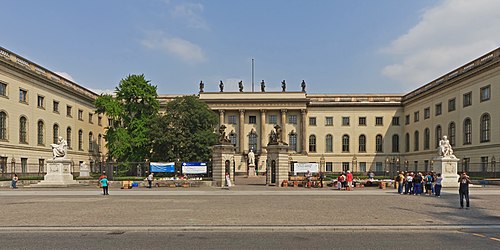
As of 2014, Berlin had 878 schools, teaching 340,658 students in 13,727 classes and 56,787 trainees in businesses and elsewhere. The city has a 6-year primary education program. After completing primary school, students continue to the Sekundarschule (a comprehensive school) or Gymnasium (college preparatory school). Berlin has a special bilingual school program in the Europaschule, in which children are taught the curriculum in German and a foreign language, starting in primary school and continuing in high school.
The Französisches Gymnasium Berlin, which was founded in 1689 to teach the children of Huguenot refugees, offers (German/French) instruction. The John F. Kennedy School, a bilingual German–American public school in Zehlendorf, is particularly popular with children of diplomats and the English-speaking expatriate community. 82 Gymnasien teach Latin and 8 teach Classical Greek.
Higher education
The Berlin-Brandenburg capital region is one of the most prolific centers of higher education and research in Germany and Europe. Historically, 67 Nobel Prize winners are affiliated with the Berlin-based universities.
The city has four public research universities and more than 30 private, professional, and technical colleges (Hochschulen), offering a wide range of disciplines. A record number of 175,651 students were enrolled in the winter term of 2015/16. Among them around 18% have an international background.
The three largest universities combined have approximately 103,000 enrolled students. There are the Freie Universität Berlin (Free University of Berlin, FU Berlin) with about 33,000 students, the Humboldt Universität zu Berlin (HU Berlin) with 35,000 students, and Technische Universität Berlin (TU Berlin) with 35,000 students. The Charité Medical School has around 8,000 students. The FU, the HU, the TU, and the Charité make up the Berlin University Alliance, which has received funding from the Excellence Strategy program of the German government. The Universität der Künste (UdK) has about 4,000 students and ESMT Berlin is only one of four business schools in Germany with triple accreditation. The Hertie School, a private public policy school located in Mitte, has more than 900 students and doctoral students. The Berlin School of Economics and Law has an enrollment of about 11,000 students, the Berlin University of Applied Sciences and Technology of about 12,000 students, and the Hochschule für Technik und Wirtschaft (University of Applied Sciences for Engineering and Economics) of about 14,000 students.
Culture

Berlin is known for its numerous cultural institutions, many of which enjoy international reputation. The diversity and vivacity of the metropolis led to a trendsetting atmosphere. An innovative music, dance and art scene has developed in the 21st century.
Young people, international artists and entrepreneurs continued to settle in the city and made Berlin a popular entertainment center in the world.
The expanding cultural performance of the city was underscored by the relocation of the Universal Music Group who decided to move their headquarters to the banks of the River Spree. In 2005, Berlin was named "City of Design" by UNESCO and has been part of the Creative Cities Network ever since.
Galleries and museums
As of 2011 Berlin is home to 138 museums and more than 400 art galleries. The ensemble on the Museum Island is a UNESCO World Heritage Site and is in the northern part of the Spree Island between the Spree and the Kupfergraben. As early as 1841 it was designated a "district dedicated to art and antiquities" by a royal decree. Subsequently, the Altes Museum was built in the Lustgarten. The Neues Museum, which displays the bust of Queen Nefertiti, Alte Nationalgalerie, Pergamon Museum, and Bode Museum were built there.
Apart from the Museum Island, there are many additional museums in the city. The Gemäldegalerie (Painting Gallery) focuses on the paintings of the "old masters" from the 13th to the 18th centuries, while the Neue Nationalgalerie (New National Gallery, built by Ludwig Mies van der Rohe) specializes in 20th-century European painting. The Hamburger Bahnhof, in Moabit, exhibits a major collection of modern and contemporary art. The expanded Deutsches Historisches Museum reopened in the Zeughaus with an overview of German history spanning more than a millennium. The Bauhaus Archive is a museum of 20th-century design from the famous Bauhaus school. Museum Berggruen houses the collection of noted 20th century collector Heinz Berggruen, and features an extensive assortment of works by Picasso, Matisse, Cézanne, and Giacometti, among others. The Kupferstichkabinett Berlin (Museum of Prints and Drawings) is part of the Staatlichen Museen zu Berlin (Berlin State Museums) and the Kulturforum at Potsdamer Platz in the Tiergarten district of Berlin's Mitte district. It is the largest museum of the graphic arts in Germany and at the same time one of the four most important collections of its kind in the world. The collection includes Friedrich Gilly's design for the monument to Frederick II of Prussia.
Sports

Berlin has established a high-profile as a host city of major international sporting events. The city hosted the 1936 Summer Olympics and was the host city for the 2006 FIFA World Cup final. The World Athletics Championships was held at Olympiastadion in 2009. The city hosted the Euroleague Final Four basketball competition in 2009 and 2016, and was one of the hosts of FIBA EuroBasket 2015. In 2015 Berlin was the venue for the UEFA Champions League Final. The city bid to host the 2000 Summer Olympics but lost to Sydney.
Berlin hosted the 2023 Special Olympics World Summer Games. This is the first time Germany has ever hosted the Special Olympics World Games.
The annual Berlin Marathon – a course that holds the most top-10 world record runs – and the ISTAF are well-established athletic events in the city. The Mellowpark in Köpenick is one of the biggest skate and BMX parks in Europe. A fan fest at Brandenburg Gate, which attracts several hundreds of thousands of spectators, has become popular during international football competitions, such as the UEFA European Championship.
Friedrich Ludwig Jahn, who is often hailed as the "father of modern gymnastics", invented the horizontal bar, parallel bars, rings, and the vault around 1811 in Berlin. Jahn's Turners movement, first realized at Volkspark Hasenheide, was the origin of modern sports clubs. In 2013, around 600,000 Berliners were registered in one of the more than 2,300 sport and fitness clubs. The city of Berlin operates more than 60 public indoor and outdoor swimming pools. Berlin is the largest Olympic training center in Germany, with around 500 top athletes (15% of all German top athletes) being based there. 47 elite athletes participated in the 2012 Summer Olympics. Berliners would achieve 7 gold, 12 silver, and 3 bronze medals.
Places of interest
Berlin had 788 hotels with 134,399 beds in 2014. The city recorded 28.7 million overnight hotel stays and 11.9 million hotel guests in 2014. Tourism figures have more than doubled within the last ten years and Berlin has become the 3rd-most-visited city destination in Europe. Some of the most visited places in Berlin include: Potsdamer Platz, Brandenburger Tor, the Berlin wall, Alexanderplatz, Museumsinsel, Fernsehturm, the East-Side Gallery, Schloss-Charlottenburg, Zoologischer Garten, Siegessäule, Gedenkstätte Berliner Mauer, Mauerpark, Botanical Garden, Französischer Dom, Deutscher Dom and Holocaust-Mahnmal. The largest visitor groups are from Germany, the United Kingdom, the Netherlands, Italy, Spain and the United States.
According to figures from the International Congress and Convention Association in 2015, Berlin became the leading organizer of conferences globally, hosting 195 international meetings. Some of these congress events take place on venues such as CityCube Berlin or the Berlin Congress Center (bcc).
The Messe Berlin (also known as Berlin ExpoCenter City) is the main convention organizing company in the city. Its main exhibition area covers more than 160,000 square meters (1,722,226 sq ft). Several large-scale trade fairs like the consumer electronics trade fair IFA, where the first practical audio tape recorder and the first completely electronic television system were first introduced to the public, the ILA Berlin Air Show, the Berlin Fashion Week (including the Premium Berlin and the Panorama Berlin), the Green Week, the Fruit Logistica, the transport fair InnoTrans, the tourism fair ITB and the adult entertainment and erotic fair Venus are held annually in the city, attracting a significant number of business visitors.
Kaynak: Wikipedia – Berlin · CC BY-SA 4.0