
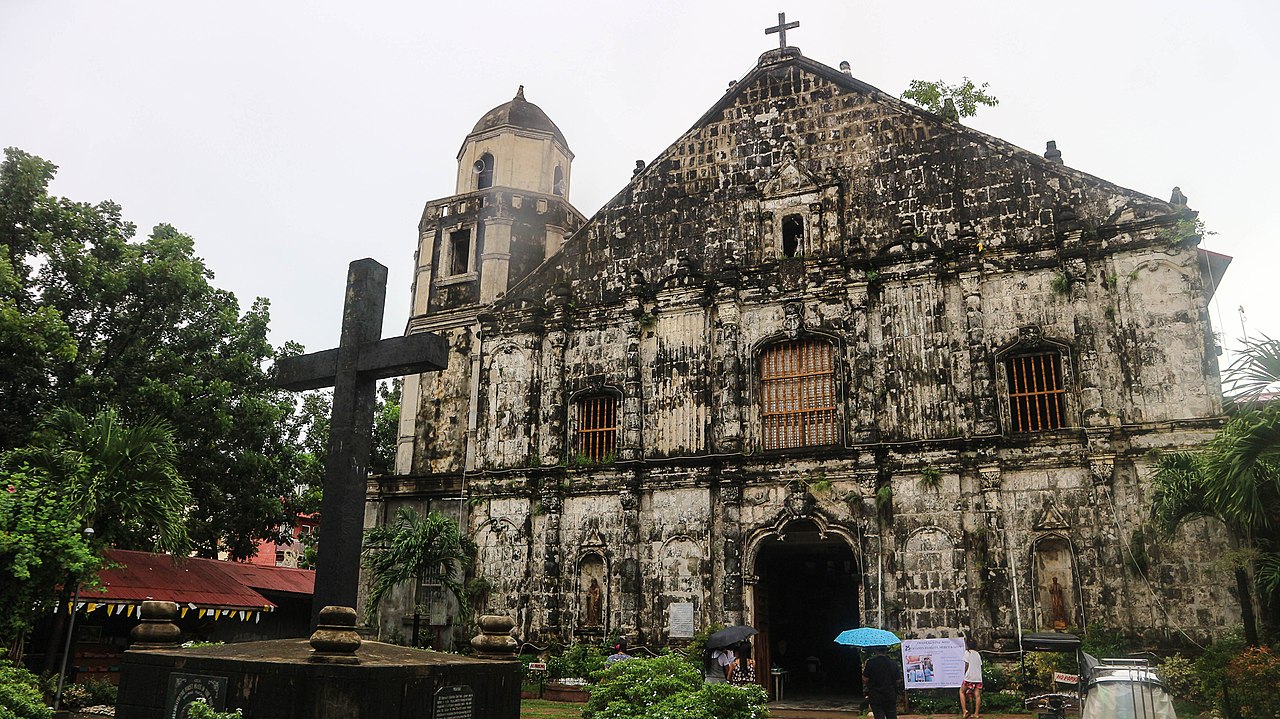
Bolinao
Bolinao, officially the Municipality of Bolinao, is a municipality in the province of Pangasinan, Philippines.
Government administration · Philippines · 0 followers
Overview
Bolinao, officially the Municipality of Bolinao, is a municipality in the province of Pangasinan, Philippines. According to the 2024 census, it has a population of 84,658 people.
Interested in working with us in the future?
Follow to see new jobs and posts in your feed.
No news yet.
About

Bolinao, officially the Municipality of Bolinao, is a municipality in the province of Pangasinan, Philippines. According to the 2024 census, it has a population of 84,658 people.
Kaynak: Wikipedia · CC BY-SA 4.0
Etymology
Folk etymology attributes the name "Bolinao", a remote fishing enclave, from the fish specie "monamon" – commonly called "bolinao" by the Tagalogs, Bicolanos, and the Visayans. A theory also posits that once upon a time, "pamulinawen" trees grew in large numbers along its shores so the Ilocano migrants who crossed Lingayen Gulf gave it a name phonetically similar to the name of the tree in their language. However there is not a modern large popular of these trees in the area.
History
Spanish Colonial Era
According to oral history, the town of Bolinao used to be a small settlement in what is now Barrio Binabalian in Santiago Island, then having a population of just over a hundred families. An account narrates the arrival of Juan de Salcedo and his crew in Bolinao when they chanced upon a Chinese Sampan who captured a native chieftain. Salcedo and his men liberated the natives and the latter immediately pledged vassalage to the King of Spain.
It is also said that Captain Pedro Lombi founded the town of Bolinao in 1575. A decade later, Dominican Friar Esteban Marin became the first Spanish missionary to evangelize the people of Bolinao. For two years, he worked in Bolinao before he was assigned as prior in Batac, Ilocos Norte.
The Dominicans ended their service in 1607 to be replaced by the Augustinian Recollects headed by Father Jeronimo de Cristo and Dr. Andres del Espiritu Santo. At this time, the old town of Bolinao was still located along the coast of Pangasinan. Due to pirate attacks, the town was transferred to the mainland in 1609. Ilocano settlers from Paoay, Ilocos Norte moved and stayed in the town to increase the small population of the town.
This town formerly included the neighboring towns of Alaminos, Bani, and Anda; until they eventually became independent municipalities in 1744; March 18, 1769; and, May 26, 1849 respectively.
American occupation era
In 1903, Bolinao was separated from Zambales and was annexed into Pangasinan by virtue of Act No. 1004. On October 15, 1903, by virtue of Act No. 945, while still part of the Province of Zambales, the municipality of Bolinao was consolidated with the municipality of Zaragoza with the seat of the municipal government remaining at Bolinao.
Japanese occupation era
Japanese forces landed and occupied Bolinao in December 1941 and established a military garrison. A joint military force of American, Australian and Philippine Commonwealth troops, including local resistance fighters, liberated Bolinao in January 1945.
Geography
The Municipality of Bolinao is the northernmost town in the province, with many white-sand beaches.
Bolinao is situated 78.36 kilometres (48.69 mi) from the provincial capital Lingayen, and 287.29 kilometres (178.51 mi) from the country's capital city of Manila.
Barangays
Bolinao is politically subdivided into 30 barangays. Each barangay consists of puroks and some have sitios. The barangays listed in italics indicate that they are located on Santiago Island.
Demographics
Language
The word Bolinao is a term used for the name of the town, the people, and the language.
The Bolinao people generally speak Pangasinan, Ilocano, Tagalog, and their own unique native language called Bolinao, which is also used in the nearby town of Anda, a former barangay of Bolinao. The Bolinao language is closely related to Sambal, both are Sambalic languages. Bolinao was part of the province of Zambales from the mid-18th century before being turned over to Pangasinan in 1903. Most locals generally understand and speak English.
The Mother Tongue Policy of the Department of Education is enforced in the elementary schools of these barangays to empower the native languages in town.
Government
Local government
Bolinao, belonging to the first congressional district of the province of Pangasinan, is governed by a mayor designated as its local chief executive and by a municipal council as its legislative body in accordance with the Local Government Code. The mayor, vice mayor, and the councilors are elected directly by the people through an election which is being held every three years.
Elected officials
Members of the Municipal Council (2024–2027):
Representative: Rhona-lyn Galunggong Pal-iwen
Education
The Bolinao Schools District Office governs all educational institutions within the municipality. It oversees the management and operations of all private and public elementary and high schools.
Tertiary schools
Bolinao Lighthouse School of Tourism and Learning Center Ilog-Malino Campus
Kaynak: Wikipedia – Bolinao · CC BY-SA 4.0