

Bossier City
Bossier City es una ciudad ubicada en la parroquia de Bossier en el estado estadounidense de Luisiana.
Government administration · United States · 0 followers
Overview
Bossier City es una ciudad ubicada en la parroquia de Bossier en el estado estadounidense de Luisiana. En el Censo de 2020 tenía una población de 62,701 habitantes y una densidad poblacional de 552.08 personas por km².
Interested in working with us in the future?
Follow to see new jobs and posts in your feed.
No news yet.
About

Bossier City es una ciudad ubicada en la parroquia de Bossier en el estado estadounidense de Luisiana. En el Censo de 2020 tenía una población de 62,701 habitantes y una densidad poblacional de 552.08 personas por km².
Kaynak: Wikipedia · CC BY-SA 4.0
Geografía
Bossier City se encuentra ubicada en las coordenadas 32°31′25″N 93°39′20″O. Según la Oficina del Censo de los Estados Unidos, Bossier City tiene una superficie total de 111.77 km², de la cual 109.66 km² corresponden a tierra firme y (1.89%) 2.11 km² es agua.
Demografía
Según el censo de 2010, había 61315 personas residiendo en Bossier City. La densidad de población era de 548,59 hab./km². De los 61315 habitantes, Bossier City estaba compuesto por el 65.38% blancos, el 25.64% eran afroamericanos, el 0.55% eran amerindios, el 2.03% eran asiáticos, el 0.2% eran isleños del Pacífico, el 3.47% eran de otras razas y el 2.74% pertenecían a dos o más razas. Del total de la población el 8.08% eran hispanos o latinos de cualquier raza.
Kaynak: Wikipedia – Bossier City · CC BY-SA 4.0
History
19th century
In the 1830s, the area of Bossier City was the plantation Elysian Grove, which was purchased by James Cane and his second wife Mary Doal Cilley Bennett Cane.
Cane had come to the area with his first wife Rebecca Bennett, and her brother, William Bennett, and his wife Mary Doal (née Cille)y Bennett. They ran a trading post across the river on what was then Caddo Indian territory, a portion called "Bennett's Bluff". The trading post partners became a one-seventh partner in the new Shreve Town, which eventually developed as Shreveport.
Like most plantations, Elysian Grove had frontage on the Red River for access to transportation for shipping cotton and other commodities. The Texas Trail crossed the Red River at this point. The trading post on the west side operated a ferry between what would become Shreveport and Bossier City. The plantation loading and unloading dock was later recorded as "Cane's Landing" in the old ferry log books. For a very short time, Cane's Landing was known as Cane City.
The Canes and Bennetts were among the earliest European-American settlers in the area. Mary D. C. Bennett gave birth to the first white baby of the area, William Smith Bennett Jr. He died at an early age.
In 1843, a section of land east of the Red River was divided from the Great Natchitoches District and Claiborne Parish areas and was called Bossier Parish. It was named in honor of Pierre Evariste John Baptiste Bossier, a former Creole general, who became a cotton planter in Bossier Parish. Of ethnic French descent, he was one of the first European settlers in the area after most of the Native Americans had been forcibly removed by the federal government.
In the 1840s, the Great Western Migration of Americans and immigrants from the East and Upper South began. The parish grew in population. Many early settlers passed through the region on their way to the Western U.S. By 1850, more than 200 wagons a week passed through Bossier City, with many travelers from the Upper South intending to settle in Texas. Some of these settlers stayed in Louisiana, attracted by the fertile soil and river valley. In 1850, the U.S. census listed the population of Bossier City (?) at 6,962.
Geography
The city lies primarily on the banks of the Red River, and has a largely flat topography in contrast with Shreveport's terrain. The northern city limits are noticeably more hilly than the rest of the city. Many small waterways flow through the city, such as Flat River and Red Chute Bayou, which provide drainage for many areas of the city.
The city has a total area of 43.90 square miles (113.69 km2), of which 0.99 square miles (2.56 km2) are covered by water.
Climate
Bossier shares most aspects of its climate with its sister city of Shreveport. The city has a humid subtropical climate (Köppen climate classification Cfa) with hot, humid summers and mild winters.
During the warmer months, the city is prone to severe thunderstorms that feature heavy rain, high winds, hail, and occasional tornadoes. The city has a slightly above-average rate of tornadoes when compared to the U.S. average. Due to the flat topography of the city and the prominence of smaller waterways that are prone to backwater flooding from the Red River, the city occasionally experiences severe flooding events. A notable occurrence of severe flooding occurred in March 2016 after torrential rains caused a rapid rise of many local waterways, displacing upwards of 3,500 people from their homes across the area. Freezes and ice storms regularly occur during the winters.
Demographics
2020 census
Per the 2020 United States census, 62,701 people, 26,677 households, and 17,524 families resided in the city. According to 2019 census estimates per the American Community Survey, 24.2% of the population were 18 and older, and 13.8% were 65 and older; the 26,927 households from 2015 to 2019 had an average of 2.44 people per household. In 1890, Bossier City initially had a population of 202, which has steadily increased since.
In 2019, the racial and ethnic makeup of the city was 58.5% non-Hispanic or Latino white, 27.9% Black or African American, 0.4% Native American, 2.4% Asian, 0.1% Native Hawaiian and other Pacific Islander, 2.5% two or more races, and 8.6% Hispanic and Latino American of any race. At the 2020 census, the racial and ethnic makeup of the city was 50.79% non-Hispanic white, 30.45% Black or African American, 0.38% Native American, 2.36% Asian, 0.12% Pacific Islander, 5.22% two or more races, and 10.68% Hispanic and Latino American of any race; the 2020 census reflected nationwide trends of greater diversification and the growth of traditional minority populations in areas once predominantly non-Hispanic white.
Of the 26,927 households estimated at 2019's American Community Survey, the owner-occupied housing rate was 52.8% and the median value of an owner-occupied housing unit was $163,500. The median cost with a mortgage was $1,182 versus $363 without a mortgage, and the median gross rent was $955. The median income for a household in the city was $50,340, and the per capita income was $26,755; an estimated 19.7% of the population lived at or below the poverty line. By 2020, its median household income was $48,385 with a mean income of $63,114.
Religion
The majority of Bossier City's population is Christian. Neighboring Shreveport is more religiously diverse than Bossier. Of its population, 37.9% identified as Baptists, primarily affiliated with the Southern Baptist Convention and National Baptist Convention, USA, Inc. Within the city, 6.7% were Methodists, primarily served by the United Methodist Church, 5.2% were Catholics in the Shreveport Diocese, 2.2% Pentecostals, 0.9% Latter Day Saints, 0.4% Presbyterian, 0.4% Lutheran, and 0.2% Episcopalian or Anglican. Within the Christian population of Bossier City, 7.7% claimed to be from another Christian group. Outside of Christendom, 0.3% of the city's residents were adherents to Islam. Less than 0.1% of Bossier's residents identified with Judaism, or eastern religions such as Hinduism or Buddhism.
Education

Primary and secondary schools
Bossier City residents are zoned to Bossier Parish Schools, as are all residents of the parish.
W.T. Lewis Elementary School, outside the city limits, serves dsome portions of Bossier City. A portion of Bossier City is in the collective boundary of T. L. Rhodes Elementary School (Eastwood CDP, PreKindergarten-Grade 1), Platt Elementary School (Eastwood, grades 2-3), and Princeton Elementary School (grades 4-5). Additionally, a small area of the city limits is in the zone for Elm Grove Elementary School, also outside of the city limits.
Additionally, Haughton Middle School in Haughton has a boundary including a portion of Bossier City.
Parkway High School, just outside the city limits, has a boundary including parts of Bossier City. Additionally, Haughton High School in Haughton has a boundary including a portion of Bossier City.
Tertiary education
Bossier Parish is in the areas of Bossier Parish Community College and Northwest Louisiana Technical Community College.
Louisiana Tech University at Shreveport-Bossier City
Media
As a sister city to Shreveport, the city of Bossier City is served by the Bossier Press-Tribune and Shreveport Times. In addition, The Forum, City Lights, and SB Magazine are news magazines in the Shreveport–Bossier City area. The city shares the same television and radio markets with Shreveport and the Texarkana metropolitan area as part of the Ark-La-Tex.
In mainstream media, "Bossier City" is a song by David Allan Coe, in which he sings, "And it sure smells like snow in Bossier City..." Johnny Rodriguez recorded a song called "Achin' Bossier City Backyard Blues" in 1972. Turnpike Troubadours 2007 freshman album is entitled Bossier City, and includes the title track "Bossier City".
Radio
Bossier City is the second most populous and the principal city of the Shreveport radio market.
Television
Bossier City is the second most populous city in the Shreveport media market for television.
Sports and entertainment
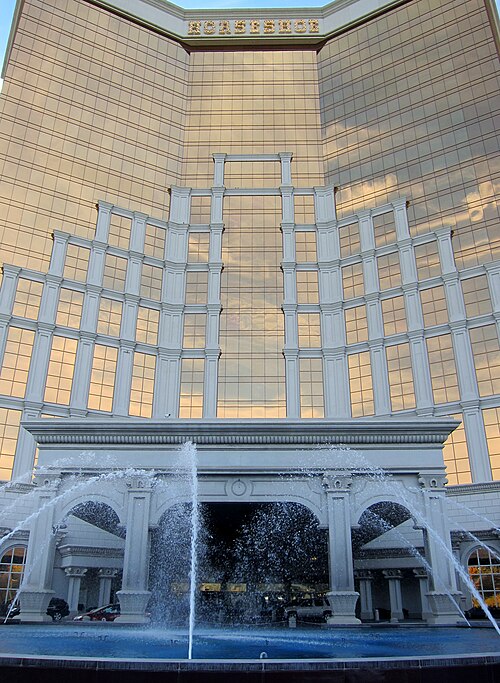
From the 1930s to the 1970s, Bossier was regionally and even nationally known for its entertainment district known as The Bossier Strip, which followed U.S. Highway 80 through the city. Nightclubs proliferated from the Texas Avenue Bridge to the Bossier-Webster parish line. Prior to the 1940s, The Strip was as well known for such entertainment as Las Vegas, Nevada.
Bossier City and Shreveport share an all-women's flat track roller derby team named the Twin City Knockers. The team is the newest competing sport in the area, founded in January 2010. Bouts are hosted at Hot Wheels skating rink in south Bossier.
The Brookshire Grocery Arena (formerly CenturyTel Center) in Bossier City was the home of the Bossier–Shreveport Battle Wings of the AF2, as well as the Bossier-Shreveport Mudbugs of the Central Hockey League. The arena has hosted top performers, including Britney Spears and Aerosmith, as well as rodeos, ice shows, and children's entertainment.
The 2005 Red River Classic PRCA Rodeo to be hosted at the CenturyTel Center was cancelled due to the arena's use as a shelter for Hurricane Katrina evacuees.
The city hosts three riverboat casino gambling resorts along the east bank of the Red River: Margaritaville, Horseshoe, and Boomtown. Diamond Jacks previously operated in the area before closing, but Foundation Gaming has plans for reopening in 2024. Horse racing and gambling on slot machines is also available at Louisiana Downs, which opened in 1974.