


Overview
Charlotte es una ciudad estadounidense ubicada en el condado de Mecklenburg, del cual es sede, en Carolina del Norte, con una población de más de 730 000 habitantes en 2010, lo que la sitúa como la ciudad más poblada del estado. Se encuentra ubicada al centro-sur del mismo, cerca del límite con Carolina del Sur y de la ribera izquierda del río Catawba.
Interested in working with us in the future?
Follow to see new jobs and posts in your feed.
No news yet.
About

Charlotte es una ciudad estadounidense ubicada en el condado de Mecklenburg, del cual es sede, en Carolina del Norte, con una población de más de 730 000 habitantes en 2010, lo que la sitúa como la ciudad más poblada del estado. Se encuentra ubicada al centro-sur del mismo, cerca del límite con Carolina del Sur y de la ribera izquierda del río Catawba.
Kaynak: Wikipedia · CC BY-SA 4.0
Nombre
La ciudad fue incorporada en el año 1768, y llamada así en honor de la reina de Gran Bretaña, Carlota de Mecklemburgo-Strelitz (Charlotte en inglés), consorte del rey Jorge III, con quien se casó el año anterior.
Historia
Topper es un importante yacimiento arqueológico ubicado a lo largo del río Savannah, en el Condado de Allendale (Carolina del Sur), a 295 km de la actual ciudad de Charlotte del cual se ha postulado una posible presencia humana tan antigua, pre-Clovis en arenas aluviales de dieciséis mil a veinte mil años de antigüedad. En 2004, el arqueólogo estadounidense Albert Goodyear de la Universidad de Carolina del Sur, que trabaja en el sitio desde 1980, anunció también dataciones con carbono-14 que arrojaron como resultado una posible presencia humana en el lugar hace unos cincuenta mil años, aunque muchos cuestionan estas investigaciones.
En el siglo XVII, el área de Charlotte aún estaba habitada por la tribu indígena catawba, que significa «gente del río» y que había establecido áreas habitables a lo largo del río desde el 8000 a. C.. Huyendo de sus enemigos en 1640, los catawba formaron parte de la nación india sioux en Las grandes llanuras occidentales.
La primera exploración europea documentada de la costa de la actual Carolina del Norte fue dirigida por el navegante florentino Giovanni da Verrazzano en nombre de Francia, en 1524, actuando bajo el mandato del rey Francisco I de Francia. A bordo de la carabela La Dauphine, Verrazzano alcanzó el litoral norteamericano en marzo de ese año en las inmediaciones de Cape Fear, marcando el primer contacto europeo registrado con esta sección de la costa atlántica. Durante su travesía hacia el norte a lo largo de los Outer Banks, el explorador describió la región como una tierra de extraordinaria belleza natural, bautizándola con el nombre de Arcadia debido a la densidad y exuberancia de sus bosques, en alusión a la región idílica de la mitología griega. Un aspecto historiográfico fundamental de su paso por Carolina del Norte fue su interpretación errónea de la geografía local: al observar las vastas extensiones de agua de los sonidos de Albemarle y Pamlico tras las estrechas islas de barrera, Verrazzano concluyó que se trataba del océano Pacífico (el célebre «Mar de Verrazzano»), un error cartográfico que persistió en los mapas europeos durante gran parte del siglo XVI al sugerir un paso inmediato hacia Asia. El testimonio primordial de esta expedición es la relación enviada por el navegante al monarca francés desde Dieppe, conservada detalladamente en el Cèllere Codex. Este manuscrito ofrece una de las primeras descripciones etnográficas de los pueblos indígenas algonquinos de la zona, destacando su hospitalidad, rasgos físicos y costumbres, además de catalogar la flora regional, compuesta principalmente por cedros, pinos y cipreses. Aunque esta expedición fundamentó las posteriores reclamaciones territoriales de la Corona francesa en Norteamérica, la región sería finalmente colonizada por el Reino de Inglaterra décadas más tarde.
Geografía

De acuerdo con la Oficina del Censo de los Estados Unidos, la ciudad tiene un área de 629 km², de los cuales 627.5 km² son terrenos sólidos y los restantes 1.6 km² están compuestos de agua (0.25 %).
Clima
Está ubicada en la zona de clima húmedo subtropical. Tiene inviernos moderados y veranos calientes y húmedos. Durante el mes de enero, las temperaturas mínimas por las mañanas son, en promedio, 0 °C y los promedios máximos son 11 °C. En julio, los promedios oscilan entre 21 y 32 °C. Recibe unos 1107 mm de lluvia al año.
Área metropolitana
La población de Charlotte es de 594 359 habitantes, de acuerdo con un estimado del censo estadounidense de 2004. La zona metropolitana de Charlotte-Gastonia-Salisbury está compuesta de los condados de Mecklenburg, Gaston, Lincoln, Cabarrus, Union, Iredell, Cleveland, Anson, Rowan y Stanly en Carolina del Norte. Cruza la frontera estatal llegando a Carolina del Sur con los condados de York, Lancaster y Chester. La población del área metropolitana es de 1 897 034 habitantes (2004). La aerolínea American Airlines posee un hub importante en esta ciudad.
Demografía
En 2004, vivían en Charlotte 614 330 personas, y 801 137 en el conjunto del condado (Mecklenburg). La densidad de población de Charlotte es de 861.9 hab./km². La población en su zona metropolitana según los censos del 2000 era de 1.5 millones de habitantes. Según estudios, la población del condado de Mecklenburg para el 2010 alcanzará la cifra de un millón de habitantes.
Educación
Las Escuelas de Charlotte-Mecklenburg gestiona escuelas públicas.
Deporte

Charlotte estuvo representada en el baloncesto estadounidense por los Charlotte Hornets entre 1988 y 2002, por los Charlotte Bobcats entre 2004 y 2014 y Charlotte Hornets a partir de 2014. El equipo Carolina Panthers de la National Football League tiene sede en Charlotte. La ciudad también está representada en divisiones menores del fútbol asociación y el hockey sobre hielo.
Gran parte de los equipos de las tres divisiones nacionales de la NASCAR tienen sus bases a pocos kilómetros de Charlotte. Las tres incluyen en su calendario el óvalo de Charlotte Motor Speedway. Una de las joyas de la corona de NASCAR, las 600 Millas de Charlotte, se disputa en este circuito. Además, también alberga el All-Star de NASCAR, una semana antes de la Charlotte 600. Por último, en Charlotte se encuentra el Salón de la Fama de NASCAR.
En la ciudad, se crio el jugador de baloncesto Stephen Curry, y es la actual residencia del exluchador profesional retirado de la WWE Ric Flair. Además la luchadora profesional de la WWE Ashley Fliehr (hija de Ric Flair) es oriunda de la ciudad, incluso es conocida internacionalmente como Charlotte Flair.
Kaynak: Wikipedia – Charlotte · CC BY-SA 4.0
Tarihçe
Koloni dönemi
Şehrin bulunduğu mevkiye yerleşmek için ilk göçmenler İskoç ve İrlanda asıllı Presbiteryen mezhebindendi. Bunlar yerli Amerikalı kabilelerin kullandığı patikaların bir kavşağı olan mevkide (günümüzde Trade Sokağı ile Tryon Sokağı kavşak meydanında) 18. yüzyıl ortalarında bir köy yerleşkesi; bir pazar yeri ve bir mahkeme binası kurmuşlardır. O zamanki Alman asıllı Birleşik Krallık kralı III. George'un kraliçesi adına ithaf olarak yerleşkeye "Charlotte" ve içinde bulunan kontluğa "Mecklenburg Kontluğu" adlarını vermişlerdir. Bu yerleşkenin ana sokağı da bu koloninin o zamanki İngiliz valisi olan Lord Tyron adına "Tyron Sokağı" adı verilmiştir. Charlotte'da bir mahkeme kurulması bu yerleşkeyi Macklenburg Kontluğu merkez şehri yapmıştı ama bu yerleşkenin koloni dönemine isim yapmasına tek neden olmuştu.
Amerikan Bağımsızlık Savaşı dönemi
Charlotte'da yaşayanlar, İngiliz asıllı olmayıp, İskoçya ve İrlanda asıllı olmaları ve çok sıkı Presbiteryenlik inançları olması dolayısıyla Amerikan kolonilerinin bağımsızlık kazanmasına yandaştılar. Bağımsızlık ayaklanması başlamadan önce bile Amerika'nın İngiltere'den bağımsız olması için örgütlenmişlerdi ve bu nedenle bu yerleşke halkı "Amerikan Bağımsızlık Bildirisi" ilanından bir yıl önce "Mecklenberg Bağımsızlık Bildirisi"'ni ilan etmişlerdi.
Britanya koloniyal orduları komutanı Lord Cornwallis birkaç ufak çarpışmadan sonra yerleşkeyi eline geçirmişti ama yerleşke halkının gayet aksi tutumu dolayısıyla bu yerleşkeden ayrılmış ve bu yerleşkeyi "ayaklanmanın eşek arısı yuvası" olarak nitelendirmişti.
Buna rağmen bağımsızlık elde edildikten sonra yerleşke ABD'de gayet önemsiz ve küçük bir şehir olarak kalmıştır. Yeni ABD'nin ilk Cumhurbaşkanı George Washington bu yerleşkeyi ziyaret ettikten sonu burasını "gayet küçümsenecek bir mevki" olarak nitelendirmiştir.
Amerikan İç Savaşı'ndan önce
Charolotte şehrinin ilk hızla gelişmesi günümüzde "Reed'in Altın Madeni" adı verilen mevkide gayet kocaman bir maden altın parçasının bulunması ile ortaya çıktı. Altın aramaya gelen madenci göçmenler Macklenburg Kontluk arazisini kazıp delik deşik edip maden artıklarından yapılmış büyük karınca yuvası gibi kum taş yığınları haline getirdiler. Charlotte şehrinin sokakları kaldırımları yapılmakta iken bu altın madeni artıkları kullanıldığı için alaycı olarak "Charlotte'un sokakları altınla kaplı" diye şakalar çok genelleşmişti. Bunun bir neticesi de "ABD Darphane İdaresi"'nin şehirdeki "Mint St"'e bir darphane kurması ve sonradan burada banknot matbaası kurması oldu. Yerleşke için daha önemli bir gelişme de yeni kurulan demir yolu şebekesinin de bir odak noktası olması ve birkaç demir yolu hattının Charlotte'da kesişip kentin demir yolu kavşağı olmasına yol açtı. Malalrinai depo ve ABD içinde mallarına dağıtmak isteyen pamuk tarımı ve tütün tarımı yapan çiftçiler bu demir yolu merkezi olan şehri kullanmak gereği duydular. Bu gelişmeler Charlotte'nun günümüzde bir ticaret, finansman ve dağıtım merkezi olmasına isbir erken gösterge sağlamaktadır.
Kardeş şehirler
Charlotte'un şu kardeş şehirler resmi bağlantıları vardır:
Kaynak: Wikipedia – Charlotte · CC BY-SA 4.0
History

Early history
The Catawba Indians are the earliest known inhabitants of the Charlotte area. They were first encountered in the region in 1567 by the Spanish Conquistador Juan Pardo.
18th century
The area that is now Charlotte was first settled by European colonists around 1755 when Thomas Spratt and his family settled near what is now the Elizabeth neighborhood. Thomas Polk (great-uncle of President James K. Polk), who later married Thomas Spratt's daughter, built his house by the intersection of two Native American trading paths between the Yadkin and Catawba rivers. One path ran north–south and was part of the Great Wagon Road; the second path ran east–west along what is now Trade Street.
By 1759, half the Catawba tribe had died from smallpox, an endemic disease among European colonists, against which the Catawba had no natural immunity. At its peak, the Catawba population was 10,000. But by 1826, the Catawba population dropped to 110.
The city of Charlotte was developed first by a wave of migration of Scots-Irish Presbyterians, or Ulster-Scot settlers from Ulster, who dominated the culture of the Southern Piedmont Region and made up the principal founding population in the backcountry. German immigrants also settled in the area before the American Revolutionary War, but in smaller numbers. They still contributed greatly to the early foundations of the region.
Mecklenburg County was initially part of Bath County (1696 to 1729) of the New Hanover Precinct, which became New Hanover County in 1729. The western portion of New Hanover split into Bladen County in 1734, and its western portion split into Anson County in 1750. Mecklenburg County was formed from Anson County in 1762. Further apportionment was made in 1792, after the American Revolutionary War, with Cabarrus County formed from Mecklenburg.
Nicknamed the "Queen City", like its county a few years earlier, Charlotte was named in honor of Charlotte of Mecklenburg-Strelitz, who had become the queen consort of Great Britain and Ireland in 1761, seven years before the town's incorporation. A second nickname derives from the American Revolutionary War, when British commander General Charles Cornwallis, 1st Marquess Cornwallis occupied the city but was driven out by hostile residents. He wrote that Charlotte was "a hornet's nest of rebellion", leading to the historical nickname "The Hornet's Nest".
Geography

According to the United States Census Bureau, the city has a total area of 312.00 square miles (808.1 km2), of which 310.02 square miles (802.9 km2) is land and 1.98 square miles (5.1 km2) (0.63%) is water. Charlotte is the twenty-sixth-most expansive city in the United States and lies at an elevation of 751 feet (229 m). Charlotte constitutes most of Mecklenburg County in the Carolina Piedmont. Uptown Charlotte sits atop a long rise between two creeks, Sugar Creek and Irwin Creek, and was built on the gunnies of the St. Catherine's and Rudisill gold mines. Charlotte is 25 miles (40 km) southwest of Concord; 26 miles (42 km) northeast of Rock Hill, South Carolina; 83 miles (134 km) southwest of Greensboro; 135 miles (217 km) west of Fayetteville; and 165 miles (266 km) southwest of Raleigh, the state capital.
Though the Catawba River and its lakes lie several miles west, there are no significant bodies of water or other geological features near the city center. Consequently, development has neither been constrained nor helped by waterways or ports that have contributed to many cities of similar size. The lack of these obstructions has contributed to Charlotte's growth as a highway, rail, and air transportation hub.
Neighborhoods
Charlotte has 199 neighborhoods radiating in all directions from Uptown. Biddleville, the primary historic center of Charlotte's African American community, is west of Uptown, starting at the Johnson C. Smith University campus and extending to the airport. East of The Plaza and north of Central Avenue, Plaza Midwood is known for its international population, including Eastern Europeans, Greeks, Middle-Easterners, and Hispanics. North Tryon and the Sugar Creek area include several Asian American communities. NoDa (North Davidson), north of Uptown, is an emerging center for arts and entertainment. Myers Park, Dilworth, and Eastover are home to some of Charlotte's most affluent, oldest and largest houses, on tree-lined boulevards, with Freedom Park nearby.
Demographics

In the 2020 census, there were 874,579 people, 342,448 households, and 195,614 families living in the city. In 2019, the U.S. Census Bureau estimates showed 885,708 residents living within Charlotte's city limits and 1,093,901 in Mecklenburg County. The combined statistical area, or trade area, of Charlotte–Concord–Gastonia, NC–SC had an estimated population of 3,387,115 in 2023. Figures from the more comprehensive 2010 census show Charlotte's population density was 2,457 per square mile (949/km2). There were 319,918 housing units at an average density of 1,074.6 per square mile (414.9/km2).
In 1970, the U.S. Census Bureau reported Charlotte's population as 30.2% Black and 68.9% White. In 2020, 39.72% of the population was non-Hispanic White, 32.5% Black or African American, 0.25% Native American, 7.02% Asian, 0.05% Pacific Islander, 4.15% other or mixed, and 16.32% Hispanic or Latin American of any race. This reflected the national demographic shift as Hispanic or Latinos and Asians increased in population.
In 2020, the median income for a household in Charlotte was $48,670. The median income for a family was $59,452. Males had a median income of $38,767 versus $29,218 for females. The per capita income for Charlotte was $29,825. The percentage of the population living at or below the poverty line was 10.6%, with 7.8% of families living at or below the poverty line. Out of the total population, 13.8% of those under the age of 18 and 9.7% of those 65 and older were living below the poverty line.
Religion
Charlotte has been historically Protestant and remains predominantly Protestant today. It is the birthplace of Billy Graham, and is also the historic seat of Southern Presbyterianism. The changing demographics of the city's increasing population have brought scores of new denominations and faiths. The Billy Graham Evangelistic Association, Wycliffe Bible Translators' JAARS Center, SIM Missions Organization, and The Christian Research Institute make their homes in the Charlotte general area. In 2018, Charlotte proper had over 700 places of worship.
Economy

Charlotte is the second-largest banking center in the United States, after New York City.
Bank of America, the second-largest financial institution by total assets in the United States, is headquartered in Charlotte. It is also home to Truist Financial, the nation's sixth-largest financial institution.
Charlotte also has become a large employment center for major banks not headquartered in Charlotte:
Charlotte is the regional headquarters for East Coast operations of Wells Fargo, which is headquartered in San Francisco, California. Charlotte also serves as the headquarters for Wells Fargo's capital markets activities.
Bank of America's headquarters, along with other regional banking and financial services companies, are located primarily in the Uptown central business district.
In May 2021, Ally Financial moved to Ally Charlotte Center, which houses its 2,100 Charlotte-based employees and contractors across 725,000 square feet (67,400 m2) of the building.
U.S. Bancorp leases 81,424 square feet (7,564.5 m2) in Truist Center to house 850 employees
USAA occupies 90,000 square feet (8,400 m2) in The Square which is located in South End to house 500 employees.
In September 2022, TD Bank announced its plan to expand its retail in Charlotte with 15 new branches.
In August 2022 UK based The Bank of London announced it will be leasing 40,000 square feet (3,716 m2) in 101 Independence Center to house the 350 jobs they are creating in Charlotte by 2026.
Other large companies, such as Microsoft and Centene Corporation, operate their East Coast headquarters in Charlotte. In November 2018, Honeywell moved its corporate headquarters to Charlotte. In June 2019, Lowe's announced it will be building its Lowe's Global Technology Center worth $153 million, which was completed in 2021 and headquarters in the South End neighborhood in Charlotte. In 2019, Dole Food Company relocated its headquarters to Charlotte from California, and expanded its presence in Charlotte with its merger with Ireland-based Total Produce in February 2021. On May 25, 2021, it was announced that Charlotte would become the East Coast headquarters of Credit Karma. On September 20, 2022, the Atlantic Coast Conference (ACC) announced it will be relocating its headquarters from nearby Greensboro to Charlotte in 2023. On July 12, 2023, railcar company TTX announced it will move its corporate headquarters to Charlotte. Following its 2024 merger with Cedar Fair, the amusement park company Six Flags moved its corporate headquarters to Charlotte, five miles northeast of its Carowinds theme park.
Arts and culture

Festivals and events
The Charlotte region is home to many annual festivals and special events. The Carolina Renaissance Festival operates on Saturdays and Sundays each October and November. Located near the intersection of NC 73 and Poplar Tent Road, the Carolina Renaissance Festival is one of the largest renaissance themed events in the country. It features 11 stages of outdoor variety entertainment, a 22-acre village marketplace, an interactive circus, an arts and crafts fair, a jousting tournament, and a feast, all rolled into one non-stop, day-long family adventure.
The Yiasou Greek Festival is a Greek Festival. It began in 1978 and since then has become one of Charlotte's largest cultural events. The Yiasou (the Greek word for Hello, Goodbye and Cheers) Greek Festival features Hellenic cultural exhibits, authentic Greek cuisine and homemade pastries, entertainment, live music and dancing, wine tastings, art, shopping and more.
Taste of Charlotte is a three-day festival offering samples from area restaurants, live entertainment and children's activities. Located on Tryon Street, Taste of Charlotte spans six city blocks from Stonewall to 5th Street.
Moo and Brew Fest is an annual craft beer and burger festival that is the largest in North Carolina, held each April and includes various national musical acts.
Breakaway Music Festival is a music festival which takes place at the NC Music Factory and consists of hip hop and electronic music artists and DJs.
Heroes Convention is an annual comic book convention held in June at the Charlotte Convention Center. Founded in 1982, it is one of the oldest and largest independent comic book conventions in the United States.
Charlotte Pride is an annual LGBT event held in August. In 2019, the event attracted 200,000 people to Uptown Charlotte. The event's parade became Charlotte's largest annual parade in 2017.
Sports

Charlotte is home to the Carolina Panthers of the National Football League (NFL), the Charlotte Hornets of the National Basketball Association (NBA), Charlotte FC of Major League Soccer (MLS) and the Carolina Chaos of the Premier Lacrosse League. The Panthers have been located in Charlotte since the team's creation in 1995, and the current Hornets franchise has been located in Charlotte since its creation in 1988 (with the exception of the 2002-03 and 2003-04 seasons). The Panthers and Charlotte FC play their home games in Bank of America Stadium, while the Hornets play in the Spectrum Center. The Panthers have won seven division titles from (1996, 2003, 2008, 2013, 2014, 2015, 2025) and two NFC championships in 2003 and 2015. Carolina has reached the Super Bowl twice but has been unsuccessful in both losing to the New England Patriots in Super Bowl XXXVIII in 2004 and against the Denver Broncos in Super Bowl 50 in 2016. The original Hornets NBA franchise was established in 1988 as an expansion team, but it relocated to New Orleans, Louisiana in 2002 after animosity grew between the team's fans and principal owner George Shinn. The NBA quickly granted Charlotte an expansion franchise following the departure of the Hornets and the new franchise, the Charlotte Bobcats, began to play in 2004. The team retook the Hornets name when the New Orleans–based team renamed itself the New Orleans Pelicans in 2013. The name change became official on May 20, 2014. On the same day, the franchise reclaimed the history and records of the original 1988–2002 Hornets. MLS awarded its expansion team to Charlotte in 2019, which began play as Charlotte FC in 2022.
Charlotte is represented in professional ice hockey by the Charlotte Checkers and in professional baseball at the Triple-A level by the Charlotte Knights. Since 1999, the Knights has been the Triple-A Affiliate of the Chicago White Sox.
Government

Charlotte has a council–manager form of government. The mayor and Charlotte City Council are elected every two years, with no term limits. The mayor is ex officio chair of the City Council, and only votes in case of a tie. Unlike other mayors in council–manager systems, Charlotte's mayor has the power to veto ordinances passed by the council; the council can override a mayoral veto by a vote of seven of its ten members. The Council appoints a city manager to serve as chief administrative officer.
Unlike some other cities and towns in North Carolina, elections are held on a partisan basis. Vi Lyles, a Democrat elected in 2017, became the 59th mayor of Charlotte, North Carolina. She was elected to her third term in 2022.
Patrick Cannon, a Democrat, was sworn in as mayor on December 2, 2013. On March 26, 2014, Cannon was arrested on public corruption charges. Later the same day, he resigned as mayor. Mayor Pro Tem Michael Barnes served as Acting Mayor until April 7, when the City Council selected State Senator Dan Clodfelter, also a Democrat, to serve the remainder of Cannon's term. Former Mecklenburg County Commission chairwoman Jennifer Roberts defeated Clodfelter in the 2015 Democratic primary and went on to win the general election, becoming the first Democratic woman to be elected to the post. She was ousted in the 2017 Democratic primary by Mayor Pro Tem Vi Lyles, who later defeated Republican City Councilman Kenny Smith in the general election to become Mayor of Charlotte.
Historically, voters have been friendly to moderates of both parties. However, in recent years, Charlotte has swung heavily to the Democrats. Republican strength is concentrated in the southeastern portion of the city, while Democratic strength is concentrated in the south-central, eastern, and northern areas. The city had a Republican mayor from 1987 to 2009.
Education
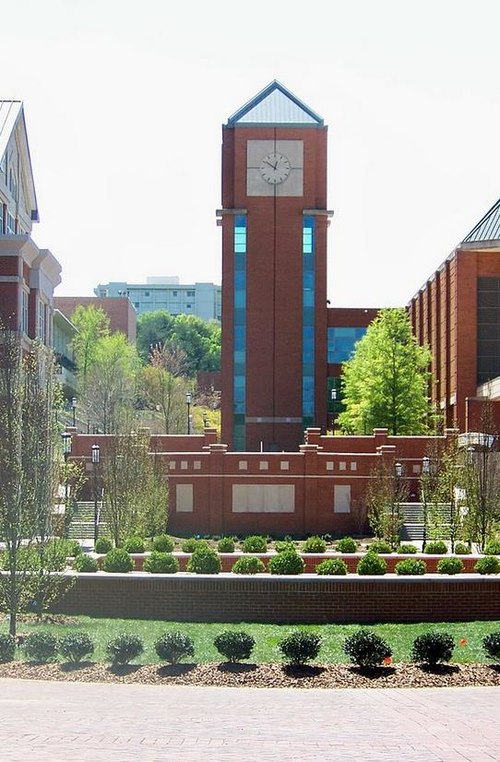
School system
The city's public school system, Charlotte-Mecklenburg Schools, is the second largest in North Carolina and 17th largest in the nation. In 2009, it won the NAEP Awards, the Nation's Report Card for urban school systems with top honors among 18 city systems for fourth grade math, second place among eighth graders. An estimated 144,000 students are taught in 164 separate elementary, middle, and high schools. Charlotte is also home to many private and independent schools, including British School of Charlotte, Charlotte Catholic High School, Charlotte Christian School, Charlotte Country Day School, Charlotte Islamic Academy, Charlotte Latin School, Grace Academy, Providence Day School, Hickory Grove Christian School, Northside Christian Academy, Southlake Christian Academy, and United Faith Christian Academy.
Colleges and universities
Charlotte is home to a number of universities and colleges such as Central Piedmont Community College, Johnson C. Smith University, Johnson & Wales University, Queens University of Charlotte, and the University of North Carolina at Charlotte. Several notable colleges are located in the metropolitan suburbs. Located in nearby Davidson, North Carolina is Davidson College. Additional colleges in the area include Belmont Abbey College in the suburb of Belmont, North Carolina, Gaston College with its main campus in the suburb of Dallas, North Carolina and Wingate University in the suburb of Wingate, North Carolina. Also nearby are Winthrop University, Clinton Junior College, York Technical College in Rock Hill, South Carolina, and Gardner-Webb University in Boiling Springs, North Carolina in the westernmost part of the Charlotte area.
UNC Charlotte is the city's largest university. It is located in University City, the northeastern portion of Charlotte, which is also home to University Research Park, a 3,200 acres (13 km2) research and corporate park. With more than 30,000 students, UNC Charlotte is the second largest university in the state system.
Media
Newspapers
Charlotte has one major daily newspaper, The Charlotte Observer. It boasts the largest circulation in North Carolina and South Carolina. A local news website, The Charlotte Ledger, is also published in the city.
Radio
Charlotte is the 24th largest radio market in the nation, according to Nielsen Audio. While major groups like iHeartMedia and Urban One have stations serving Charlotte, several smaller groups also own and operate stations in the area. The local National Public Radio news affiliate is WFAE News, which sponsors a number of podcasts and radio shows.
Television
According to Nielsen Media Research, Charlotte is the 22nd largest television market in the nation (as of the 2016–2017 season) and the largest in the state of North Carolina. Major television stations located in Charlotte include CBS affiliate WBTV 3 (the oldest television station in the Carolinas), ABC affiliate WSOC-TV 9, NBC affiliate WCNC-TV 36, independent station WCCB 18, and PBS member station WTVI 42. One cable sports network is headquartered in Charlotte: the ESPN-controlled SEC Network. Raycom Sports is also headquartered in Charlotte.
Other stations serving the Charlotte market include Fox affiliate WJZY 46 in Belmont, UNC-TV/PBS member station WUNG-TV 58 in Concord, independent station WAXN-TV 64 (a sister to WSOC-TV) in Kannapolis, and two stations in Rock Hill, South Carolina: CW owned-and-operated station WMYT-TV 55 (a sister to WJZY) and PBS member station WNSC-TV 30. Additionally, INSP is headquartered in nearby Indian Land.
In 2020, CNN established a Charlotte bureau spearheaded by national correspondent Dianne Gallagher.
Cable television customers are served by Spectrum, which offers a localized feed of Raleigh-based Spectrum News North Carolina.
Infrastructure

Emergency medical services
Emergency medical services for the city of Charlotte are provided by Mecklenburg EMS Agency (MEDIC). MEDIC received over 160,000 calls in 2022 and transported over 107,000 patients in Mecklenburg County. The agency employs over 600 paramedics, EMTs, EMDs and admin staff.
In addition to dispatching MEDIC's EMS calls, the agency also dispatches all county fire calls outside of the city of Charlotte.
Hospitals
Hospitals in Charlotte include Atrium Health Mercy, Atrium Health Pineville, Atrium Health University City, Carolinas ContinueCare Pineville, Atrium Health Carolinas Medical Center / Levine Children's, Novant Health Charlotte Orthopedic Hospital, Novant Health Hemby Children's Hospital, and Novant Health Presbyterian Medical Center. Charlotte-Mecklenburg Hospital Authority (dba Atrium Health) is the public hospital authority of Mecklenburg County.
Fire department
The Charlotte Fire Department provides fire suppression, emergency medical services, public education, hazardous materials (HAZMAT) mitigation, technical rescues, and fire prevention and inspection with 1,164 personnel. Forty-three fire stations are strategically scattered throughout Charlotte to provide a reasonable response time to emergencies in the city limits.
Law enforcement and crime
The Charlotte-Mecklenburg Police Department (CMPD) is a combined jurisdiction agency. The CMPD has law enforcement jurisdiction in both the city of Charlotte and the few unincorporated areas left in Mecklenburg County. The other small towns maintain their own law enforcement agencies for their own jurisdictions. The department consists of approximately 1,700 sworn law enforcement officers, 550 civilian personnel, and more than 400 volunteers.
An average of 4,939 vehicles are stolen every year in Charlotte.
According to the Congressional Quarterly Press; '2008 City Crime Rankings: Crime in Metropolitan America,' Charlotte, North Carolina ranks as the 62nd most dangerous city larger than 75,000 inhabitants. However, the entire Charlotte-Gastonia Metropolitan Statistical Area ranked as 27th most dangerous out of 338 metro areas.
Kaynak: Wikipedia – Charlotte, North Carolina · CC BY-SA 4.0