
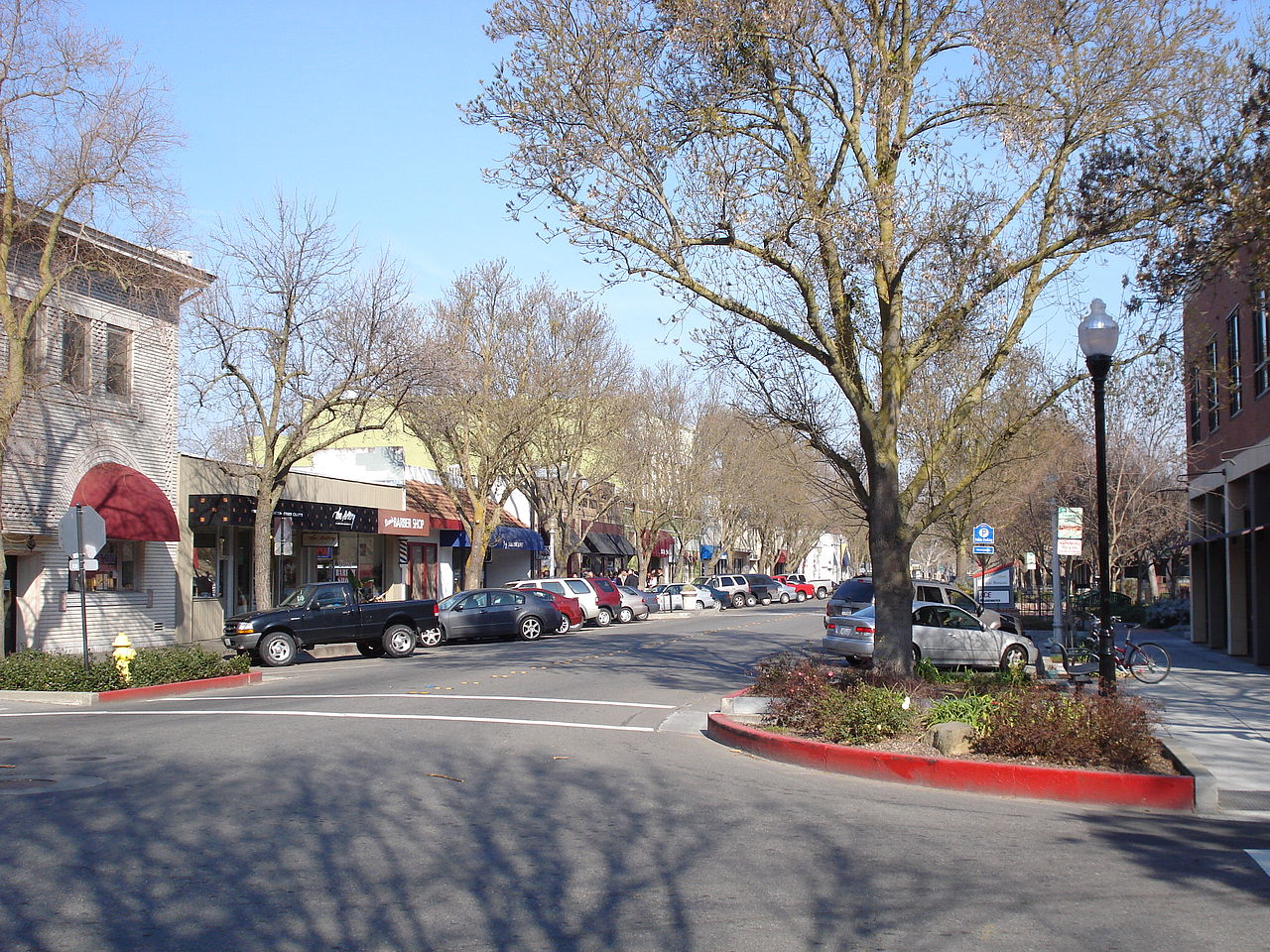

Davis
Davis es una ciudad en el norte del estado de California, en Estados Unidos.
Government administration · United States · 0 followers
Overview
Davis es una ciudad en el norte del estado de California, en Estados Unidos. Según el censo de 2010, en ese momento tenía una población de 65,622 habitantes. Tiene una población estimada, a mediados de 2019, de 69,413 habitantes.
Interested in working with us in the future?
Follow to see new jobs and posts in your feed.
No news yet.
About

Davis es una ciudad en el norte del estado de California, en Estados Unidos. Según el censo de 2010, en ese momento tenía una población de 65,622 habitantes. Tiene una población estimada, a mediados de 2019, de 69,413 habitantes.
Kaynak: Wikipedia · CC BY-SA 4.0
Historia

Davis fue fundada en 1868. Recibió su nombre por Jerome C. Davis, un prominente granjero de la zona que después de una vida de éxitos económicos, tuvo en 1867 que hipotecar buena parte de sus tierras o transferísrelas a su padre Isaac, por causa de las sequías, que le impidieron producir suficiente para cubrir los intereses y los impuestos. En noviembre de 1867, Jerome hipotecó la parte sur de sus tierras a la Compañía California Pacific Railroad y se crea la población de Davisville alrededor de un depósito agrícola donde los trenes paraban. El nombre de la ciudad fue acortado por los correos nacionales a Davis. En 1917 la ciudad fue completamente devastada por un incendio y después de esto fue incorporada como una unidad administrativa.
Economía

De acuerdo con Reporte Finanicero Anual de Davis la actividad económica en la ciudad se distribuye así:
Demografía
La ciudad de Davis tiene cerca de 66.000 habitantes (2010). La densidad poblacional de Davis es de 6.615,8 habitantes por milla cuadrada o de 2.554,4 personas por km². La ciudad tiene en total 24.873 hogares. La población está dividida en 10.760 (16.4%) menores de 18 años, 21.757 (33.2%) entre 18 y 24 años, 14.823 (22.6%) entre 25 y 44 años, 12.685 (19.3%) entre 45 y 64 años y 5.597 (8.5%) mayores de 65 años. En la siguiente tabla se puede ver la evolución histórica de la población en Davis.
Kaynak: Wikipedia – Davis (California) · CC BY-SA 4.0
History
Davis sits on land that was historically inhabited by Indigenous people associated with the Clovis culture. The Patwin, a southern branch of Wintun people, eventually displaced existing Indigenous tribes. The Patwin were subsequently displaced by the American and Mexican government in the 1830s as part of the California genocide. Patwin burial grounds have been found across Davis, including on the site of the UC Davis Mondavi Center. Territory that eventually became Davis emerged from ranchos, Laguna de Santos Callé. Jerome C. Davis, a prominent farmer and one of the early claimants to land in Laguna de Santos Callé, lobbied to the United States Congress to retain the land that eventually became Davis. Davis became a depot on the Southern Pacific Railroad in 1868, when it was named Davisville after Jerome C. Davis. The post office at Davisville shortened the town name to "Davis" in 1907. The name stuck, and the city of Davis was incorporated on March 28, 1917.
From its inception as a farming community, Davis is known primarily for its contributions to agricultural science and policy along with veterinary care and animal husbandry. Following the passage of the University Farm Bill in 1905 by the California State Legislature, Governor George Pardee selected Davis out of 50 other sites as the future home to the University of California's University Farm, officially opening to students in 1908. The farm, later renamed the Northern Branch of the College of Agriculture in 1922, was upgraded to become the seventh UC general campus, the University of California, Davis, in 1959.
Geography

Location
Davis is located in Yolo County, 11 mi (18 km) west of Sacramento, 70 mi (113 km) northeast of San Francisco, 385 mi (619 km) north of Los Angeles, at the intersection of Interstate 80 and State Route 113. Neighboring towns include Dixon, Winters, Woodland and West Sacramento.
Davis lies in the Sacramento Valley, the northern portion of the Central Valley, in Northern California, at a mean elevation of approximately 52 feet (16 m) above sea level.
According to the United States Census Bureau, the city has a total area of 10.0 square miles (26 km2), of which 10.0 square miles (26 km2) is land and 0.03 square miles (0.078 km2) , or 0.35%, is water.
The topography is flat, which has helped Davis to become known as a haven for bicyclists.
Climate
The Davis climate resembles that of nearby Sacramento and is typical of California's Central Valley Mediterranean climate region: warm and dry in the spring, summer and autumn, and cool and wet in the winter. It is classified as a Köppen Csa climate. Summer days are hot, ranging from 85 to 105 °F (29 to 41 °C), but the nights turn pleasantly cool, almost always dropping below 70 °F (21 °C). The Delta Breeze, a flow of cool marine air originating from the Pacific Ocean via San Francisco Bay and the Sacramento–San Joaquin River Delta, frequently provides relief in the evening. Winter temperatures generally reach between 45 and 65 °F (7 and 18 °C) in the afternoon; nights average at about 35 to 40 °F (2 to 4 °C), but occasionally fall below freezing.
Average temperatures range from 46 °F (8 °C) in December and January to 75 °F (24 °C) in July and August. Thick ground fog called tule fog settles into Davis during late fall and winter. This fog can be dense, with near zero visibility. As in other areas of Northern California, the tule fog is a leading cause of road accidents in the winter season.
Demographics
Davis is part of the Sacramento metropolitan area.
2020 census
As of the 2020 census, Davis had a population of 66,850. The population density was 6,703.8 inhabitants per square mile (2,588.4/km2). The age distribution was 16.0% under the age of 18, 27.8% aged 18 to 24, 24.0% aged 25 to 44, 18.2% aged 45 to 64, and 13.9% who were 65 years of age or older. The median age was 28.1 years. For every 100 females, there were 89.0 males, and for every 100 females age 18 and over, there were 86.0 males age 18 and over.
The census reported that 96.7% of the population lived in households, 2.8% lived in non-institutionalized group quarters, and 0.6% were institutionalized. 100.0% of residents lived in urban areas, while 0.0% lived in rural areas.
There were 25,667 households, of which 24.5% included children under the age of 18. Of all households, 38.7% were married-couple households, 6.6% were cohabiting-couple households, 32.9% had a female householder with no spouse or partner present, and 21.8% had a male householder with no spouse or partner present. About 25.2% of households were one person, and 9.1% were one person aged 65 or older. The average household size was 2.52. There were 13,229 families (51.5% of all households).
There were 27,066 housing units at an average density of 2,714.2 units per square mile (1,048.0 units/km2), of which 25,667 (94.8%) were occupied. Of these, 43.5% were owner-occupied, and 56.5% were occupied by renters. Of all housing units, 5.2% were vacant. The homeowner vacancy rate was 0.7% and the rental vacancy rate was 3.6%.
2023 ACS estimates
In 2023, the US Census Bureau estimated that the median household income was $87,421, and the per capita income was $50,060. About 5.3% of families and 25.1% of the population were below the poverty line.
2010 census
The 2010 United States census reported that Davis had a population of 65,622. The population density was 6,615.8 inhabitants per square mile (2,554.4/km2). The racial makeup of Davis was 42,571 (64.9%) White, 1,528 (2.3%) African American, 339 (0.5%) Native American, 14,355 (21.9%) Asian, 136 (0.2%) Pacific Islander, 3,121 (4.8%) from other races, and 3,572 (5.4%) from two or more races. Hispanic or Latino of any race were 8,172 persons (12.5%).
Economy

Top employers
According to the city's 2020 Comprehensive Annual Financial Report, the top employers in the city are:
Arts and culture
Whole Earth Festival, featuring bands, speakers and workshops.
Celebrate Davis, features music, food vendors, animals, rock climbing, zip-lining, and fireworks.
Picnic Day, an annual event at University of California, Davis, is the largest student-run event in the United States, features a parade, the UC Davis Marching Band, and Dachshund races.
Davis Transmedia Art Walk, a public art tour.
Cultural attractions at UC Davis include:
Manetti Shrem Museum of Art, which has featured art by Wayne Thiebaud, Bruce Nauman, John Cage, and Robert Arneson.
Mondavi Center, has featured Yo-Yo Ma, Yitzhak Perlman and Wynton Marsalis.
The Domes (Baggins End Innovative Housing), an on-campus cooperative housing community.
Parks and recreation
Bicycling
Bicycling has been one of the most popular modes of transportation in Davis for decades, particularly among school-age children and UC Davis students. In 2010, Davis became the new home of the United States Bicycling Hall of Fame.
Bicycle infrastructure became a political issue in the 1960s, culminating in the election of a pro-bicycle majority to the City Council in 1966. By the early 1970s, Davis had become a pioneer in the implementation of cycling facilities. As the city expands, new facilities are usually mandated. As a result, Davis residents today enjoy an extensive network of bike lanes, bike paths, and grade-separated bicycle crossings. The flat terrain and temperate climate are also conducive to bicycling.
Bicycling appears to be declining among Davis residents: from 1990 to 2000, the US Census Bureau reported a decline in the fraction of commuters traveling by bicycle, from 22 percent to 15 percent. This resulted in the reestablishment of the city's Bicycle Advisory Commission and creation of advocate groups such as "Davis Bicycles!". In 2016, Fifth Street, a main road in Davis, was converted from four lanes to two lanes to allow for bicycle lanes and encourage more bicycling.
In 1996, 2001, 2006, and 2009, the UC Davis "Cal Aggie Cycling" Team won the national road cycling competition.
Education
University of California
The University of California, Davis, or UC Davis, a campus of the University of California, had a 2019 Fall enrollment of 38,369 students. UC Davis has a dominant influence on the social and cultural life of the town.
Other colleges
An off-campus branch of Sacramento City College is located in Davis. The satellite is located in West Village, an area built by UC Davis to house students and others affiliated with the university.
Public schools
Davis's public school system is administrated by the Davis Joint Unified School District.
The city has nine public elementary schools (North Davis, Birch Lane, Pioneer Elementary, Patwin, Cesar Chavez, Robert E. Willett, Marguerite Montgomery, Fred T. Korematsu at Mace Ranch, and Fairfield Elementary (which is outside the city limits but opened in 1866 and is Davis Joint Unified School District's oldest public school)). Davis has one school for independent study (Davis School for Independent Study), four public junior high schools (Ralph Waldo Emerson, Oliver Wendell Holmes, Frances Harper, and Leonardo da Vinci Junior High), one main high school (Davis Senior High School), one alternative high school (Martin Luther King High School), and a small project based high school (Leonardo da Vinci High School). Cesar Chavez is a Spanish immersion school, with no English integration until the third grade. The junior high schools contain grades 7 through 9. Due to a decline in the school-age population in Davis, two of the elementary schools in south Davis may have their district boundaries changed, or magnet programs may be moved to equalize enrollment. Valley Oak was closed after the 2007–08 school year, and their campus was granted to Da Vinci High (which had formerly been located in the back of Davis Senior High's campus) and a special-ed preschool. On average, class size is about 25 students for every teacher.
Media
Davis has one newspaper, The Davis Enterprise, a thrice-weekly newspaper founded in 1897. UC Davis also has a weekly newspaper called The California Aggie that covers campus, local and national news. Davis Media Access, a community media center, is the umbrella organization of television station DCTV. There are also numerous commercial stations broadcasting from nearby Sacramento. Davis has two community radio stations: KDVS 90.3 FM, on the University of California campus, and KDRT 95.7 FM, a subsidiary of Davis Media Access and one of the first low-power FM radio stations in the United States. Davis has the world's largest English-language local wiki, DavisWiki. In 2006, The People's Vanguard of Davis began news reporting about the city of Davis, the Davis Joint Unified School District, the county of Yolo, and the Sacramento area.
Kaynak: Wikipedia – Davis, California · CC BY-SA 4.0