
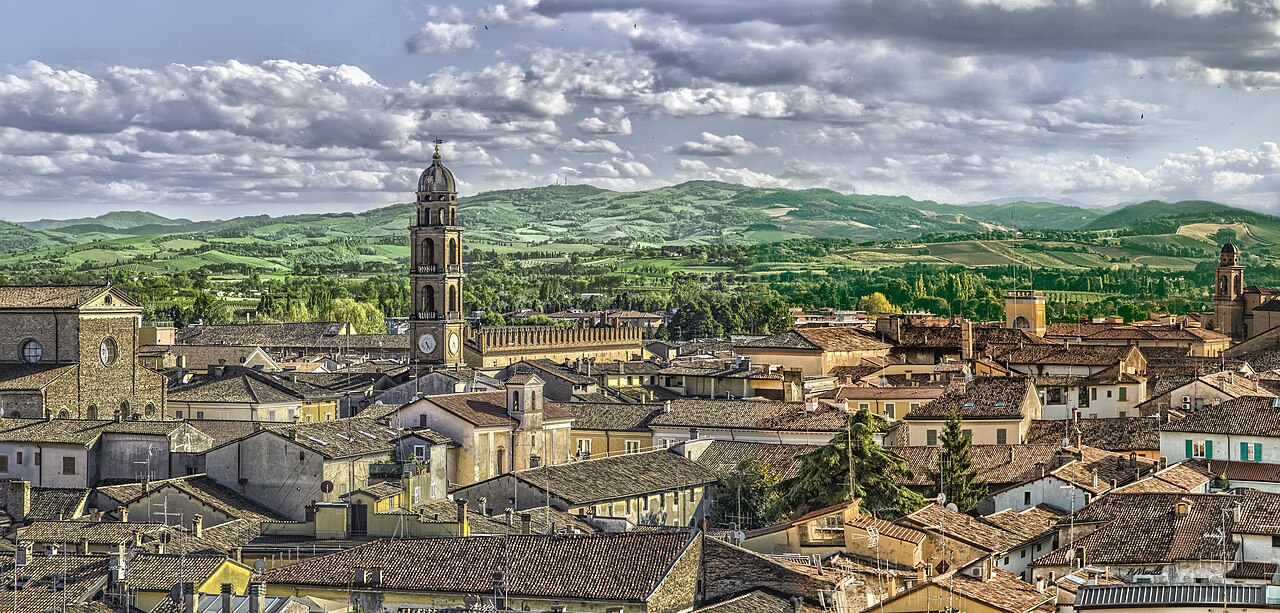

Faenza
Faenza è un comune italiano di 58 821 abitanti della provincia di Ravenna in Emilia-Romagna.
Government administration · Italy · 0 followers
Overview
Faenza è un comune italiano di 58 821 abitanti della provincia di Ravenna in Emilia-Romagna. La città è storicamente nota per la produzione di ceramica artistica, al punto che la maiolica, grazie alla rinomanza della manifattura locale, è conosciuta nel mondo come faience.
Interested in working with us in the future?
Follow to see new jobs and posts in your feed.
No news yet.
About

Faenza è un comune italiano di 58 821 abitanti della provincia di Ravenna in Emilia-Romagna. La città è storicamente nota per la produzione di ceramica artistica, al punto che la maiolica, grazie alla rinomanza della manifattura locale, è conosciuta nel mondo come faience.
Kaynak: Wikipedia · CC BY-SA 4.0
Geografia fisica
Territorio
Il comune di Faenza si trova in Romagna, nella parte sud-occidentale della provincia di Ravenna, sul fiume Lamone e sulla Via Emilia, tra Imola a ovest e Forlì a est, entrambe a circa 15 km dal centro cittadino; da Ravenna dista 35 km, da Cesena circa 40 km, mentre da Bologna dista 55 km.
La città è situata nell'area pedemontana al confine tra la Pianura Padana e le prime colline dell'Appennino faentino. L'altitudine in centro storico è di 44 metri sul livello del mare, mentre per il territorio comunale si va da un minimo di 13 a un massimo di 220 metri s.l.m..
Il territorio comunale ha una spiccata vocazione agricola: i vigneti caratterizzano i versanti collinari, mentre la pianura è prevalentemente coltivata a cereali e frutteti; in quest’area sono ancora leggibili i tracciati della centuriazione romana.
Clima
Faenza presenta un clima temperato umido con estati calde, di tipo subcontinentale secondo la classificazione di Mario Pinna. La città risente sia dell’influenza della Pianura Padana sia della vicinanza delle colline appenniniche, che determinano fenomeni di stau e contribuiscono ad un aumento delle precipitazioni soprattutto in primavera e in autunno.
La temperatura media annua è di circa 14,4 °C. I mesi più caldi sono luglio e agosto, con massime medie prossime ai 30-31 °C, mentre gennaio è il più freddo con minime che si aggirano intorno a 0-1 °C. Le precipitazioni medie annue sono pari a circa 760–770 mm, distribuite in modo irregolare con un picco in novembre (circa 64 mm) e un minimo in gennaio (27 mm); le nevicate, seppur poco frequenti, possono verificarsi tra dicembre e febbraio.
Negli ultimi decenni si è osservato un aumento delle temperature medie, con inverni meno rigidi e ondate di calore estive più frequenti; secondo l’Osservatorio Torricelli, il 2020 è stato l’anno con le temperature più alte a Faenza dal 1946.
Storia

La storia di Faenza inizia in epoca romana, ma le origini della città non sono ben definite. Cronisti medievali le legarono alla mitologia, ma studi archeologici attestano presenze dal neolitico e dall’età del bronzo. Conquistata dai Romani nel II secolo a.C., divenne colonia con il nome di Faventia, sviluppandosi grazie ad agricoltura e ceramica. In età imperiale fu sede della gens Avidia, legata a Lucio Vero, e dal IV secolo attestò la presenza cristiana.
Nel 542 la città fu teatro dell'inizio della controffensiva di Totila nell'ambito della seconda fase della guerra gotica. Il terribile scontro, che vide vittoriosi gli ostrogoti, è ricordato come la Battaglia di Faenza. La dominazione romana del territorio terminò nel 774 con Carlo Magno, che lo cedette alla Chiesa.
Durante il Medioevo, invece, si afferma il modello comunale, che si stava diffondendo in tutto il Nord Italia. Dal 1045 sono attestati i primi consules e dal XII secolo la città divenne comune, con contrasti tra Guelfi e ghibellini. La famiglia Manfredi emerse come protagonista e si impose come una delle più potenti della città. Nell'ambito di numerose lotte con l'Impero, in particolare dovute all'adesione di Faenza alla Lega Lombarda, la città venne più volte assediata. Nel XIII secolo fu più volte assediata da Federico II di Svevia, che ne ordinò la distruzione delle mura, ma la città si riprese. Dante Alighieri citò diversi faentini nella Divina Commedia, come Tebaldello Zambrasi, Frate Alberigo e Maghinardo Pagani.
Dal 1313 i Manfredi governarono Faenza, avviando la Renovatio umanistica e rendendo celebre la maiolica faentina, nota in Europa come Faience. Il dominio terminò con l’assedio di Cesare Borgia (1500) e la cattura di Astorre III Manfredi. Dopo la caduta dei Borgia (1503), Faenza passò sotto il controllo della Repubblica di Venezia, per poi essere ceduta allo Stato Pontificio.
Monumenti e luoghi d'interesse

La storia urbanistica di Faenza, analogamente a quella di molte altre città emiliano-romagnole, si snoda attraverso un continuo processo di rigenerazione dell'originaria struttura romana, che, pur venendo in alcuni casi fortemente intaccata, riesce tuttavia a sopravvivere nell'impianto geometrico della città. Il tessuto urbano, profondamente alterato dalle distruzioni belliche, seppur offrendo numerosi esempi di architettura rinascimentale e barocca (concentrati in maggior numero nel centro cittadino), conserva una caratterizzazione prevalentemente neoclassica sette-ottocentesca, in quanto tra il XVIII e il XIX secolo vi furono grandi opere di trasformazione edilizia alle quali contribuirono gli architetti Giuseppe Pistocchi, Giovanni Antonio Antolini, Pietro Tomba; il Neoclassicismo a Faenza si distinse particolarmente nel panorama italiano ed europeo.
Architetture religiose
L'edificio più antico di Faenza giunto sino a noi quasi integro è il campanile di Santa Maria ad Nives o Santa Maria Vecchia (chiesa originale risalente al VI secolo, poi riedificata), edificato tra il IX e il X secolo. Altro monumento superstite dei tempi a cavallo dell'anno Mille è la cripta della chiesa di Sant'Ippolito. La chiesa più antica pervenuta integra è la chiesa della Commenda, risalente intorno al 1100.
Il principale luogo di culto cattolico della città è la cattedrale di San Pietro Apostolo, ovvero il Duomo, chiesa madre della diocesi di Faenza-Modigliana. La sua costruzione, su progetto di Giuliano da Maiano, fu iniziata nel 1474 e non si concluse prima del 1515, rimanendo tuttavia incompiuta la facciata; la consacrazione al culto di san Pietro apostolo avvenne nel 1581.
Di seguito sono riportate le principali architetture religiose edificate nel territorio comunale:
In città
Duomo - cattedrale di San Pietro Apostolo: principale edificio religioso della città, ricostruito in forme rinascimentali nel XV secolo, conserva opere di grande valore artistico.
Società
Etnie e minoranze straniere
Al 1º gennaio 2025 gli stranieri residenti nel comune erano 7 227, pari al 12,31% della popolazione. Di seguito sono riportati i gruppi più consistenti:
Lingue e dialetti
Il dialetto faentino è una variante del romagnolo parlata nell'area di Faenza e nel suo immediato circondario.
Del faentino è caratteristica l'uscita in -eia dei corrispettivi vocaboli in italiano che terminano in -ia: bugia-busèia, farmacia-farmazèia; interessanti anche le forme delle tre persone singolari del pronome possessivo femminile: mia-meia, tua-tova, sua-sova.
L’infinito dei verbi a Faenza termina in “é” stretto, nelle altre città romagnole esce in “ä”: cantare-canté-cantä, entrare-intré-inträ, mangiare-magné-magnä. Altra inflessione faentina è “il volgere sovente la d in g”, come capita per: tedio-ategi, bandiera-bangera, invidia-invigia, misericordia-misericorgia, obbediente-ubigènt o “permutare il suono c in z aspra”, vedi: facile-fàzil, domicilio-dumizeli, cervello-zervél, accidia-aczidia.
Rispetto al vicino dialetto forlivese, anch’esso classificato come "centrale", il faentino conserva termini arcaici e varianti consonantiche diverse: ad esempio *zòcar* in faentino per “scarpa di legno” contro *sciòcar* in forlivese, oppure *sfrécc* per “scheggia” contro *sbrécc*.
Queste differenze, insieme a particolari sviluppi vocalici e consonantici, rendono riconoscibile la parlata faentina, che continua a essere oggetto di studi e pubblicazioni, tra cui il Vocabolario faentino e italiano di Don Giorgio Antonio Morini.
A Faenza ha sede la Filodrammatica "A. P. Berton", una delle prime filodrammatiche d'Italia, fondata nel 1883. È un'associazione estremamente attiva dal punto di vista teatrale, rinomata in particolare per le commedie in lingua romagnola, contribuendo a mantenerne vivo l'uso e l'interesse, oltre alle iniziative culturali locali.
Cultura

Biblioteca Comunale Manfrediana
La Biblioteca Comunale Manfrediana di Faenza ha sede nell'ex-convento dei Servi di Maria, adiacente all'omonima chiesa sconsacrata nel 1954. Il primo nucleo librario risale al tempo delle soppressioni napoleoniche delle Corporazioni religiose (1797). Nel 1804 l'abate Zannoni, divenuto bibliotecario a vita, arricchì la biblioteca dei suoi fondi personali: edizioni di classici greci e latini, opere d'antiquariato e di pregio.
Superato il dominio napoleonico, la biblioteca venne aperta ufficialmente al pubblico il 25 novembre 1818. Ebbe la funzione di archivio notarile cittadino, fino al 1923, quando gli atti furono trasferiti in altra sede.
Polo Archivistico Faentino
Il Polo Archivistico di Faenza, sezione dell'Archivio di Stato di Ravenna, è un istituto che conserva milioni di documenti che raccontano la storia del territorio, dall’Alto Medioevo fino ai giorni nostri.
Archivio Fototeca Manfrediana
L'archivio storico Fototeca Manfrediana dispone di una collezione di circa diecimila immagini storiche di Faenza. Dal 2010 è gestito dall'associazione di promozione sociale Fototeca Manfrediana A.P.S. - E.T.S.
La fototeca si occupa di archiviazione e recupero di materiale fotografico riguardante la città e i suoi dintorni, documentando i cambiamenti sociali, urbanistici e culturali dal 1860. L'associazione promuove la diffusione e la pratica della fotografia sul territorio faentino e organizza mostre e concorsi. Le fotografie facenti parte dell'archivio storico sono rese disponibili attraverso un portale web.
Parco Scientifico e Tecnologico Torricelli
Il Parco Torricelli delle Arti e delle Scienze Faventia costituisce un polo internazionale per lo sviluppo, ricerca e innovazione dei materiali (in particolare: ceramici, compositi, inorganici, ibridi, polimerici, massivi, porosi, laminari, multifunzionali, nano-strutturati), efficienza energetica, transizione energetica, economia circolare e sostenibilità ambientale.
Geografia antropica

Urbanistica
Faenza ha adottato nel corso della sua storia una serie di politiche urbanistiche che hanno modificato sensibilmente il suo assetto urbano: dal rinnovamento rinascimentale sotto Carlo II Manfredi (1468-77) con nuove facciate palatine e ampliamenti; alla ricostruzione post-bellica, che dopo i bombardamenti del 1944 portò alla ricostruzione di interi quartieri con il piano INA-Casa e la costruzione di infrastrutture come il ponte sul Lamone; fino alle trasformazioni più recenti, fra cui il Piano Strutturale Comunale adottato nel 2010, che ha introdotto la micro zonazione sismica, il censimento dei dissesti idrogeologici, parametri di sostenibilità energetica, zone pedonali e ZTL, progetti di quartieri ecologici (eco-quartiere San Rocco), riqualificazione delle piazze del centro storico e gestione del verde pubblico.
Suddivisioni storiche
Faenza è storicamente suddivisa in Rioni:
I quattro rioni: Giallo, Rosso, Nero e Verde riprendono i colori e l'antica divisione amministrativa del comune, ancora visibile in vecchie mappe cittadine conservate nella biblioteca comunale. I territori rionali sono separati dai quattro corsi cittadini, gli antichi cardo e decumano di epoca romana, e ripropongono la suddivisione storica altomedioevale della città faentina in quattro Rioni.
Il Borgo Durbecco, cioè l'area della città sulla riva destra del fiume Lamone sviluppatasi in epoca tardo-medievale, è stato istituito come Rione nel 1959 per poter coinvolgere anche questo quartiere nelle manifestazioni del Palio del Niballo.
Suddivisioni amministrative
Il territorio comunale è ripartito nei seguenti ambiti territoriali:
Centro: area del centro storico, ricompresa tra quest’ultimo e il perimetro costituito dal tracciato ferroviario Rimini-stazione-Brisighella, la circonvallazione e il fiume Lamone;
Nord: periferia urbana a nord della città, dal tracciato ferrovia-via Emilia fino all’autostrada; ricomprende le aree industriali e le espansioni urbane attuali e future lungo gli assi Ravegnana e via Granarolo;
Economia
L’economia di Faenza unisce la storica vocazione della ceramica artistica e industriale a un tessuto produttivo che comprende la meccanica di precisione, l’agroalimentare e l’innovazione tecnologica. Importante è anche il ruolo dei servizi e del commercio, che ne fanno un punto di riferimento per l’intera area della Romagna.
Agricoltura
L'agricoltura locale si basa sulla produzione di cereali, frumento, ortaggi (ad esempio scalogno, patata, zucchino di Faenza), foraggi, uve (tra cui Albana, Centesimino, Sangiovese) e frutta (ad esempio Pesca Nettarina, pesca piatta, kiwi, pera mora di Faenza, albicocca, melagrana Grossa di Faenza), integrata dall'allevamento di bovini, suini, ovini, caprini, equini e avicoli.
Storicamente fu nota la coltivazione e diffusione di varietà locali di fragola e di cocomero, prodotte prevalentemente presso l'area di Punta degli Orti.
Per quanto riguarda la gestione agricola, il Comune di Faenza offre diversi servizi e supporti agli agricoltori locali. Tra questi, l'Associazione Provinciale Imprese Meccaniche e Agricole Industriali (A.P.I.M.A.I.) fornisce consulenze tecniche, amministrative e fiscali, oltre a supporto per l'accesso a contributi e finanziamenti della Politica Agricola Comune (PAC), come la Domanda Unica e il Programma di Sviluppo Rurale (PSR).
La cooperativa agricola Agrintesa associa circa 4.000 produttori di ortofrutta e vino, offrendo servizi di raccolta, lavorazione e commercializzazione dei prodotti agricoli.
Artigianato
Faenza è rinomata soprattutto per la lavorazione della ceramica artistica (la Faience) e del ferro battuto.
Botteghe storiche
In attuazione della legge regionale sulla valorizzazione e promozione delle botteghe storiche, il Comune ha iscritto le botteghe storiche cittadine tuttora operative in un apposito Albo Comunale, in quanto attività artigianali significative per la tradizione e la cultura della città.
Infrastrutture e trasporti

Strade
Faenza è attraversata da sud-est verso nord-ovest dalla strada statale 9 Via Emilia e dall'Autostrada A14 Bologna-Taranto e da nord-est verso sud-ovest dalla strada provinciale 302 Brisighellese Ravennate.
Ferrovie
La stazione di Faenza si trova sulla linea Bologna-Ancona e funge da capolinea della Firenze-Faenza, della Faenza-Ravenna e della Faenza-Lavezzola.
Mobilità urbana
Faenza dispone di un servizio urbano costituito da due autolinee gestite da Start Romagna, che opera anche i servizi interurbani con capolinea nei pressi della Stazione FS.
Dal 2013 è attivo un servizio gratuito di trasporto pubblico su minibus elettrici (Green-Go Bus) costituito da due linee che collegano sia la parte ovest sia la parte est di Faenza con il centro città.
Amministrazione
L'amministrazione di Faenza fu caratterizzata da una fase comunale, con figure di spicco come i consoli, seguiti dal podestà forestiero, e successivamente, nel periodo tra le due guerre, da una giunta popolare guidata dal sindaco conte avvocato Antonio Zucchini. Questa giunta, espressione del Partito Popolare, si distinse per impegno, onestà e per il sostegno offerto alle categorie produttive e ai mezzadri, contrastando l'ascesa del fascismo.
Altre informazioni amministrative
Il Comune di Faenza dal 1º gennaio 2012 è sede amministrativa dell'Unione della Romagna Faentina, che comprende oltre a Faenza i comuni di Brisighella, Casola Valsenio, Castel Bolognese, Riolo Terme, Solarolo.
Sport

Formula 1
La città vanta la presenza storica di un team di F1: fondato nel 1979 da Giancarlo Minardi con il nome di Minardi Team, il gruppo è stato poi acquisito nel 2005 dall'austriaca Red Bull e ribattezzato Scuderia Toro Rosso. Dal 2020, ai fini di marketing, diviene Scuderia AlphaTauri. Dal 2024, a seguito di una riorganizzazione generale, cambia denominazione in Racing Bulls F1 Team.
Di particolare rilievo la prima vittoria assoluta del Team con la Toro Rosso STR3 da parte del pilota Sebastian Vettel al Gran Premio d'Italia 2008 a Monza e la vittoria di Pierre Gasly nel 2020, sempre a Monza, con la AlphaTauri AT01.
Lotta
Il Club Atletico Faenza Sezione Lotta "CISA" è attivo nella lotta greco-romana. Dal 1919 molti atleti, anche a livello olimpico, hanno ottenuto un numero importante di vittorie. Della società hanno fatto parte Ercole Gallegati, Gian Matteo Ranzi, Antonio Randi e Vincenzo Maenza (bicampione olimpico 1984 e 1988), nonché Andrea Minguzzi (campione olimpico 2008) e Daigoro Timoncini (tre Olimpiadi: Pechino 2008, Londra 2012 e Rio de Janeiro 2016).
Motociclismo
Nel 1905 un gruppo di motociclisti locali organizza ritrovi in moto e crea il Moto Club Faenza. Nel 1911 il sodalizio entra a far parte del Moto Club Italia (che diventerà FMI nel 1946). Dal 1932 al 1956 fu in funzione il circuito extracittadino delle «Bocche dei Canali», all'epoca il più veloce fra i circuiti nazionali. Le maggiori Case motociclistiche lo utilizzarono per provare in anteprima le moto debuttanti nei Gran Premi: modelli come la Gilera 125 “Mosca Bianca”, la Mondial 125 e la MV 125 del 1947 furono testate a Faenza.
Il circuito faentino raggiunse notorietà internazionale in occasione del Gran Premio delle Nazioni (così si chiamava il Gran Premio d'Italia) del 1948, che per la prima volta abbandonò la sede storica di Monza per disputarsi in terra di Romagna. Vi corsero le categorie 125 cm³, 250 cm³ e 500 cm³. Lo stesso anno si ritirò dalla carriera il campione faentino Francesco Lama, uno dei protagonisti del motociclismo italiano degli anni 1930. Negli anni successivi, il circuito delle «Bocche dei Canali», fu sede della Coppa «Città delle Ceramiche», più volte valida come prova di campionato italiano di velocità I categoria.
Altri progetti
Wikimedia Commons contiene immagini o altri file su Faenza
Wikivoyage contiene informazioni turistiche su Faenza
Kaynak: Wikipedia – Faenza · CC BY-SA 4.0
Coğrafi konumu
Faenza antik Roma yolu olan "Via Wmilia" üzerinde olup Apeninlerin önlerinde bulunan tepeler üzerinde kurulmuştur. Şehrin yerleşim yeri etrafındaki tarımsal alanlara hakim bir mevkidedir. Etrafında bulunan tarım alanları ta antik Romalılar döneminden kalma teraslanmış tepelerde bulunan bağlar; meyvalıklar ve diğer tarımsal ürünler ile düzlük yerlerde mümbit sebze üretim bahçelerinden oluşur. Yakınlarında bulunan yeşil vadilerden Samoggia Çayı ve Lamone Çayı geçer. Bu akarsular kıyılarında 18. ve 19. yüzyılda etrafında büyük bahçeleri olan ve yanlarında uzun selviler dikilmiş giriş yolları bulunan büyük malikaneler yapılmıştır.
Nüfus gelişimi
Faenza'nin belediye sınırları içinde nüfusu (30.6.2010 itibarıyla) 57.929 kişidir.
19. yüzyıl ve 20. yüzyılda Faenza'nin nüfusunun gelişmesi şu gösterimde görülebilir:
Görülebilecek turistik yerler
Faenza'da görülebilecek turistik yerler şunlardır:
Komşu komünler
Faenza komünü şu komünlerle sınır komşusudur:Bagnacavallo, Brisighella, Castel Bolognese, Cotignola, Riolo Terme, Russi, Solarolo, Forli (FC)
Kardeş şehirler
Faenza'nin şu kentlerle kardeş şehir bağlantıları bulunmaktadır:
Kaynak: Wikipedia – Faenza · CC BY-SA 4.0
Geography
Territory
The municipality of Faenza is situated in Romagna, in the southwestern part of the Province of Ravenna, along the Lamone River and the Via Emilia, between Imola to the west and Forlì to the east, both approximately 15 km from the city center. It is 35 km from Ravenna, about 40 km from Cesena, and 55 km from Bologna.
The city lies in a foothill area at the boundary between the Po Valley and the initial hills of the Faenza Apennines. The official elevation is 35 meters above sea level, while the municipal territory ranges from a minimum of 13 meters to a maximum of 220 meters above sea level.
The territory of Faenza features an agricultural landscape, divided between vineyards on the hilly slopes and cultivated fields, with traces of ancient Roman centuriation in the plains.
Climate
Due to its location, Faenza experiences a humid temperate climate with hot summers, exhibiting subcontinental characteristics (according to Mario Pinna), influenced by the orographic lift effect of the adjacent hilly areas.
History
The history of Faenza begins in the Roman era, though the city's origins are not precisely defined. Among the early hypotheses is one tied to mythology, but more accurate information emerges from the Roman conquest in the 2nd century BC. Roman dominion over the territory ended in 774 when Charlemagne ceded it to the Papal States. During the Middle Ages, the communal system, widespread in northern Italy, took hold. In this period, the Manfredi family consolidated its power, becoming one of the city's most influential families. Amid numerous conflicts with the Empire, particularly with Frederick II, due to Faenza's allegiance to the Lombard League, the city faced several sieges. In the 16th century, it came under papal control and later emerged as a significant Neoclassical center in Italy. From the last two decades of the 19th century, Faenza experienced notable development but suffered multiple bombings during World War II before its liberation by the Allies.
Symbols
The symbol of the municipality, depicted on its coat of arms, is a rampant lion. The official description of the coat of arms is recorded in the decree of recognition dated 5 July 1928, issued by the then head of government Benito Mussolini, preserved at the Municipal Library of Faenza:
Argent, a lion gules, armed, langued, and crowned or, grasping with the right forepaw a sword proper, hilted or, positioned in bend sinister. Chief azure, charged with five fleurs-de-lis or, arranged in fess, between a label of six pendants, gules. External ornaments of a Comune.
The symbol first appears on a seal, likely from the 14th century, with the inscription "Sigillum Comunis et Populi Civitatis Favencie". The chief of Anjou, a typical Guelph symbol, features five fleurs-de-lis instead of the usual three, alternating with six pendants of the label instead of four. The shield is topped with a city crown.
Monuments and places of interest
Faenza's urban history, like that of many other Emilia-Romagna cities, unfolds through a continuous process of regeneration from its original Roman structure. While this structure was significantly altered in some cases, it persists in the city's geometric layout. The urban fabric, heavily impacted by wartime destruction, retains numerous examples of Renaissance and Baroque architecture, primarily concentrated in the city center, but is predominantly characterized by 18th- and 19th-century Neoclassical features due to significant building transformations led by architects Giuseppe Pistocchi, Giovanni Antonio Antolini, and Pietro Tomba. These efforts positioned Faenza as a leading center of Neoclassicism in Europe.
Religious architecture
The oldest surviving building in Faenza, largely intact, is the bell tower of Santa Maria ad Nives, or Santa Maria Vecchia (the original church dating to the 6th century, later rebuilt), constructed between the 9th and 10th century. Another surviving monument from around the year 1000 is the crypt of the Church of Santi Ippolito. The oldest fully preserved church is the Church of the Commenda, dating to around 1100.
The main place of worship for Catholicism in the city is the Cathedral of San Pietro Apostolo, the mother church of the Diocese of Faenza-Modigliana. Its construction, designed by Giuliano da Maiano, began in 1474 and was not completed before 1515, with the facade remaining unfinished. It was consecrated to Saint Peter in 1581.
Below is a list of the main religious buildings built within the municipal territory:
Osservanza Cemetery: The city's monumental cemetery, named after the adjacent monastery, featuring numerous tombs designed by artists such as Felice Giani, Lucio Fontana, and Domenico Rambelli.
Faenza War Cemetery: Known as the "English Cemetery," it houses the graves of soldiers who died during the World War II liberation campaigns, recognized by the Commonwealth War Graves Commission.
Society
Ethnic groups and foreign minorities
As of 31 December 2023, foreign residents in the municipality totaled 6,483, or 12.68% of the population.
Languages and dialects
Faenza is deeply tied to its Romagnol cultural roots, particularly its dialect. Alongside Forlì, it is renowned as a center of the Romagnol dialect typical of central-western Romagna, though notable differences exist between the two centers. Even between hamlets a few kilometers apart, variations in terms and accents can be observed. The dialect tends to lose certain peculiarities as one moves away from the central core.
The Filodrammatica "A. P. Berton," one of Italy's first amateur theater companies founded in 1883, is based in Faenza. It is highly active in theatrical productions, particularly renowned for comedies in the Romagnol dialect. Since 1994, it has had a permanent venue: the Filodrammatici Theatre.
Religion
Faenza is the seat of the Diocese of Faenza-Modigliana of the Catholic Church.
The patroness of Faenza and its diocese is the Blessed Virgin of Graces. Devotion to the patroness stems from an apparition of the Virgin, invoked by a devotee named Giovanna during the plague of 1412. In iconography, the Madonna is depicted with arms raised, holding six broken arrows, symbolizing the plague's end through her intercession. The sacred image was painted as an ex-voto on a wall (in muro sub pontile) of the Church of San Domenico. On 12 May 1420, a chapel dedicated to the Virgin was consecrated within the church. Since then, the second Sunday of May has been the Feast of Our Lady of Graces, now observed on the preceding Saturday. In 1631, during another plague outbreak, the image was crowned.
Since 1762, Our Lady of Graces has been venerated in the Cathedral, in a marble altar beside the presbytery. In April 1781, an earthquake swarm struck Faenza. The first strong quake was felt on the evening of 4 April, followed by others. The people of Faenza offered the city keys to the Virgin in a symbolic act of submission. All subsequent tremors were less intense, leading the municipality to establish 4 April as a feast day on 20 May 1781. The city chose the Virgin of Graces as its patroness.
Culture
Manfrediana Municipal Library
The Manfrediana Municipal Library is housed in the former Servi di Maria convent, adjacent to the namesake church, deconsecrated in 1954. The initial collection dates to the Napoleonic suppressions of religious associations (1797). In 1804, Abbot Zannoni, appointed librarian for life, enriched the library with his personal collection: editions of Greek and Latin classics, antiquarian works, and valuable texts. After the Napoleonic era, the library officially opened to the public on 25 November 1818. The Great Hall is on the first floor, alongside the most architecturally significant room: the "18th-Century Room," with lacquered shelves built in 1784. It served as the city’s notarial archive until 1923, when the records were relocated. The library holds numerous collections, including the Zauli Naldi Counts’ collection, gathered by Monsignor Domenico Zauli, the philosophical collection donated by Monsignor Vincenzo Poletti, the collection donated by Monsignor Carlo Mazzotti, drawings by Romolo Liverani and Domenico Rambelli, the drawings of Giuseppe Pistocchi, Italy's largest collection of Liberty-era matchboxes (approximately 35,000 pieces), and the Codex 117 (Bonadies), a 15th-century musical manuscript. According to a medieval legend, a basilisk lurks in the well in the courtyard.
Faenza Archival Hub
The Faenza Archival Hub, a section of the Ravenna State Archive, preserves millions of documents chronicling the region's history from the Early Middle Ages to the present.
Manfrediana Photo Archive
The Manfrediana Photo Archive holds a collection of approximately ten thousand historical images of Faenza. Since 2010, it has been managed by the non-profit association Fototeca Manfrediana A.P.S. – E.T.S. The archive focuses on collecting and preserving photographic material about the city and its surroundings, documenting social, urban, and cultural changes since 1860. The association promotes photography in the Faenza area and organizes exhibitions and competitions. The archive's photographs are accessible through a web portal.
Museums

Faenza boasts a rich historical and cultural archive through its museums and art galleries.
International Museum of Ceramics (MIC)
Founded in 1908 by Gaetano Ballardini, who eight years later established the Gaetano Ballardini State Institute of Ceramic Art, now named after him. Tito Pasqui, a native of Forlì, was among the figures on the committee established by Ballardini to support the museum's creation.
The museum has become a significant cultural center for research and documentation of ceramics worldwide, offering the public a comprehensive collection of works from classical antiquity to the modern era. The journey begins with Pre-Columbian ceramics, presented with refined educational support, followed by those from classical antiquity, from prehistory to the Roman era, and then artifacts from the Far East (China, Japan, Korea) and the Middle East. On the upper floor of the old quadrangle, the evolution of Faenza ceramics from the Late Middle Ages to the Renaissance is displayed, which can be compared with the production of the Italian Renaissance, organized by region.
One section illustrates the subsequent developments of Italian ceramics from the 17th century to the 19th century, where the eighteenth-century Faenza ceramics from the Conti Ferniani manufactory can be admired, while the Europe Room showcases a selection of products from the main European manufactories. Of notable interest is the Zucchini Nativity Scene, displayed in a dedicated room, a rare example of a monumental nineteenth-century Faenza nativity scene created for the Conti Zucchini family by the set designer Romolo Liverani. The museum is not only focused on ceramics of the past but also pays attention to contemporary production. Thus, extensive spaces are dedicated to the contemporary era, starting with works from the Premio Faenza, an international competition held since 1938. The section includes, in addition to a selection of designers, masterpieces by universally recognized artists such as Picasso, Matisse, Georges Rouault, Fernand Léger, Chagall, Salvatore Fancello, Lucio Fontana, Leoncillo, Alberto Burri, Arturo Martini, Fausto Melotti, Ugo Nespolo, Enrico Baj, Arman, and Roberto Matta. Finally, in the new conference room, visitors can access a multimedia presentation on the museum's origins.
Media
(Since 1845) "Lunêri di Smémbar", likely the oldest almanac in Italy among those still in existence; it remains one of the most purchased calendars by the people of Romagna
(Since 1899) "Il Piccolo", a weekly diocesan publication
(Since 1996) "Sette Sere", a weekly publication
Television
Tele1, a historic local and regional broadcaster, owned since 2014 by the Imola-based Di.TV
Art

Ceramics
Faenza is historically and internationally renowned for the production of artistic ceramics. The city's very name has become synonymous with ceramics (maiolica) in many languages, including the French faïence and the English faience. The first ceramic workshops emerged in Faenza in the 1st century BC. The production of ceramics was likely facilitated by the characteristics of the clays available in the waters of the Lamone River. However, Faenza became celebrated for its ceramics during the Renaissance. Faenza ceramics, known as maiolica, are ceramics coated with a tin-opacified glassy layer, a product that underwent slow and steady development in both ceramic techniques and color schemes and decorations, reaching the height of success in the 16th century, particularly thanks to the "Bianchi di Faenza".
In the city, numerous ceramic art workshops are active, producing both traditional and contemporary styles, whose activities and development are protected and promoted by the Ente Ceramica Faenza and the Italian Association of Ceramic Cities (AICC) Archived 29 October 2020 at the Wayback Machine through events and fairs that annually attract enthusiasts and artisans from around the world. Ceramic works, often donated by artists, are commonly and distinctively placed in municipal parks and gardens or at the center of roundabouts, traffic islands, or other structures.
In 2025, Faenza will join the UNESCO Creative Cities Network in the category of Crafts and Folk Arts, thanks to its historic ceramic tradition, which combines craftsmanship, design, research, and education within a distinctive creative system.
Neoclassicism
Neoclassicism was the cultural and artistic moment that characterized the city, particularly between 1780 and 1820. The exceptional creation of buildings, paintings, sculptures, decorations, and furnishings, involving artists and artisan workshops, made Faenza a reference point for neoclassical art throughout Europe. The works of architects and artists such as Giuseppe Pistocchi, Giovanni Antonio Antolini, Pietro Tomba, Felice Giani, Antonio Trentanove, Giovan Battista Ballanti Graziani, and Romolo Liverani were of great significance. The ultimate example of Faenza and Romagna neoclassical art is embodied in the Palazzo Milzetti, now a national museum.
Theatre
Several theatre associations are active in the area. Notable among them are:
Accademia Perduta / Romagna Teatri, which organizes theatrical events in Romagna, including at the Masini Theatre in Faenza
Filodrammatica Berton at the Teatro dei Filodrammatici
Compagnia delle Feste at the Teatro Fellini
Compagnia Teatrale Angelo Solaroli at Palazzo Mazzolani
Compagnia del Cancello and Compagnia L’InStabile at the Teatro San Giuseppe Artigiano
Cinema
Films shot in Faenza
The Doll (1963), directed by Giuseppe Orlandini
China Is Near (1967), directed by Marco Bellocchio
Corbari (1970), directed by Valentino Orsini
The President of Borgorosso Football Club (1970), directed by Luigi Filippo D’Amico
Holy God, Here Comes the Passatore! (1972), directed by Giuliano Carnimeo
Claretta and Ben (1974), directed by Gian Luigi Polidoro
Sex with a Smile (1976), directed by Sergio Martino
The Eyes, the Mouth (1982), directed by Marco Bellocchio
The Passionate (1988), directed by Gianfranco Mingozzi
Ladronaia (1993), directed by Andrea Pedna
Il più lungo giorno (1998), directed by Roberto Riviello
The Pantani Case – The Murder of a Champion (2020), directed by Domenico Ciolfi
Va bene così (2021), directed by Francesco Marioni
Laura Pausini – Nice to Meet You (2022), directed by Ivan Cotroneo
Cuisine
In the Faenza area, in addition to the typical cuisine of Romagna, local recipes are offered, such as:
San Lazzaro Tortelli
The "turtèll d'San Lazar" are made exclusively in Faenza on the occasion of the feast of Saint Lazarus, the fifth Sunday of Lent, in the Borgo Durbecco area and its surroundings. The tortello has an elongated shape with a wheat-spike closure, and some historians suggest that this shape may have been inspired by the figure of Lazarus wrapped in burial bandages. It was originally a simple dessert, but it has become more elaborate as living conditions have improved: today, the dough is made by mixing flour, eggs, milk, butter, and sugar, and the filling is a blend of boiled chestnuts with chocolate, jam, candied fruit, etc. It is served soaked in saba.
Faenza Ciambella
A local variant of the ciambella, which uses flour, sugar, butter, almonds, egg, lemon zest, yeast, and breadcrumbs.
Sugali
The "sugàl" (sugali) are pudding-like desserts traditionally prepared and consumed in autumn during the grape harvest. The Faenza recipe involves preparation with filtered grape must, wheat flour, and breadcrumbs, with the possible addition of cornmeal, lemon zest, and anise seeds.
Curzul
The curzùl are an egg pasta typically produced in the Ravenna and Forlì areas of Romagna, named for their resemblance to shoelaces: "curzul" in Romagnol means "laces". The typical recipe pairs it with ragù made with shallot.
Fried polenta
A distinctive preparation of polenta specific to the Faenza, Brisighella, and Castel Bolognese areas. It is prepared thick and firm and then fried.
Events
Independent Labels Meeting
In Faenza, during the last weekend of September, and in the past during November, the event that has brought the largest number of visitors to the city takes place: the Independent Labels Meeting (MEI), a music event where record labels and musicians who identify as independent from major labels gather. Nationally renowned musicians participate with concerts over the 2–3 evenings of the event.
The event takes place in the historic center.
100 km del Passatore
On the last Saturday of May, the "100 km del Passatore" is held. It is an ultramarathon, considered by many to be folkloric but highly demanding, attracting over 1,000 participants from around the world each year. The race, first held in 1973, is named after the Passatore, a popular figure in the history and Romagnolo folklore.
The race's challenge lies not only in the distance (100 km, certified by IAU/IAAF) but also in the elevation: it starts in Florence (52 meters a.s.l.) and crosses the Apennines, reaching the highest point at the Colla di Casaglia Pass (913 m a.s.l.) before descending to Faenza (34 m a.s.l.). The race's significance in the ultramarathon landscape stems from its multiple designations as a European championship and, in 1991, a world championship.
International ceramic art events
Highly significant are the international events for contemporary and ancient artistic ceramics, organized by the Ente Ceramica, which attract artists, collectors, and maiolica enthusiasts from around the world. Among these, notable events include:
Argillà Italia, a market-exhibition dedicated to artistic ceramics, accompanied by conferences and cultural events, held every two years on the first weekend of September along the streets of the historic center, stretching from the main square to the International Museum of Ceramics
Buongiorno Ceramica, an event held annually on the first weekend of June, involving all cities part of the Italian Association of Ceramic Cities, consisting of special openings of ceramic museums and workshops with guided tours and workshops for enthusiasts
Human geography
Historical subdivisions
Faenza is historically divided into districts:
The four districts—Giallo, Rosso, Nero, and Verde—reflect the colors and ancient administrative division of the municipality, still visible in old city maps preserved in the municipal library. The district territories are separated by the four main city streets, the ancient cardo and decumanus from the Roman period, and they replicate the historical early medieval division of the city of Faenza into four districts.
The Borgo Durbecco, the area of the city on the right bank of the Lamone River developed during the late medieval period, was established as a district in 1959 to include this neighborhood in the events of the Palio del Niballo.
Administrative subdivisions
The municipality is divided into five circoscrizioni, each hosting its respective neighborhood advisory bodies:
Hamlets
The municipality of Faenza includes the following hamlets and localities (in alphabetical order):
Economy
Industry
Faenza is an industrialized city. The most developed sectors in the area include: mechanical engineering, automation and robotics, advanced composite materials and ceramics, industrial ceramics, and the food industry.
Several companies are based in the city, notably: CISA, a lock manufacturing company; Caviro, a leader in wine and alcohol production; Mokador and Rekico, coffee roasting companies from this area; Tampieri Holding, specialized in energy production, vegetable oils, and water purification; Bucci Industries, a leader in mechanical engineering, automation, and composite materials.
In the automotive sector, two prominent teams are present: Racing Bulls F1 Team (formerly known as Minardi and Toro Rosso / AlphaTauri) and Gresini Racing, both active in world-class championships.
The industrial zone is spread across geographically distinct areas:
San Silvestro Industrial Zone, north of the city along Via Granarolo, between Via San Silvestro and the Faenza-Ravenna railway line;
Autostrada Industrial Zone, between the provincial road 7 ("Felisio") and the A14 motorway;
Boària Industrial Zone, west of the city center along Via della Boària and Viale Risorgimento, between the Faenza-Florence railway line and the northern side of the Via Emilia;
Filippina Industrial Zone, east of the city center, between Via Reda and Via Soldata.
Crafts
Faenza is particularly renowned for the production of artistic ceramics (known as faience) and wrought iron.
Historic workshops
In accordance with the regional law on the promotion and enhancement of historic workshops, the municipality has registered the city's still-operational historic workshops in a dedicated Municipal Register, as craft activities significant for the city's tradition and culture.
Agriculture
Local agriculture is based on the production of cereals, wheat, vegetables (such as shallot, potato, zucchini), fodder, grapes (including Albana, Centesimino, Sangiovese), and fruits (such as peach and nectarine, flat peach, kiwifruit, pear, apricot, pomegranate), complemented by the breeding of cattle, pigs, sheep, goats, horses, and poultry.
Infrastructure and transport
Roads
Faenza is crossed from southeast to northwest by the State road 9 Via Emilia and the A14 Bologna-Taranto motorway and from northeast to southwest by the provincial road 302 Brisighellese Ravennate.
Railways
The Faenza railway station is located on the Bologna-Ancona line and serves as the terminus for the Florence-Faenza, Faenza-Ravenna, and Faenza-Lavezzola lines.
Urban mobility
Faenza has an urban transport service consisting of two bus lines operated by Start Romagna, which also manages intercity services based at the terminal in Viale delle Ceramiche.
Since 2013, a free public transport service with electric minibuses (Green-Go Bus) has been active, consisting of two lines connecting both the western and eastern parts of Faenza with the city center.
Administration
The administration of Faenza was characterized by a communal period, with prominent figures such as consuls, followed by a foreign podestà, and later, in the period between the two world wars, by a people's council led by Mayor Count Antonio Zucchini. This council, representing the People's Party, was distinguished for its commitment, integrity, and support for productive sectors and tenant farmers, opposing the rise of fascism.
Since 1 January 2012, the municipality of Faenza has been the capital of the Faenza Romagna Union.
Sports
Formula 1
The city boasts a historic presence of a F1 team: founded in 1979 by Giancarlo Minardi as the Minardi Team, the group was acquired in 2005 by Red Bull and renamed Scuderia Toro Rosso. From 2020, for marketing purposes, it became Scuderia AlphaTauri. From 2024, following a general reorganization, it was renamed Racing Bulls F1 Team.
Of particular note is the team's first overall victory with the Toro Rosso STR3 by driver Sebastian Vettel at the 2008 Italian Grand Prix in Monza and the victory of Pierre Gasly in 2020, also at Monza, with the AlphaTauri AT01.
Wrestling
The Club Atletico Faenza Wrestling Section "CISA" is active in Greco-Roman wrestling. Since 1919, many athletes, including at the Olympic level, have achieved a significant number of victories. Members of the club have included Ercole Gallegati, Gian Matteo Ranzi, Antonio Randi, and Vincenzo Maenza (two-time Olympic champion in 1984 and 1988), as well as Andrea Minguzzi (Olympic champion in 2008) and Daigoro Timoncini (three Olympics: Beijing 2008, London 2012, and Rio de Janeiro 2016).
Motorcycling
In 1905, a group of local motorcyclists organized motorcycle gatherings and created the Faenza Moto Club. In 1911, the association became part of the Moto Club Italia (which became the FMI in 1946). From 1932 to 1956, the out-of-town "Bocche dei Canali" circuit was in operation, at the time the fastest among national circuits. Major motorcycle manufacturers used it to test bikes debuting in Grand Prix races: models such as the Gilera 125 "Mosca Bianca", the Mondial 125, and the MV 125 of 1947 were tested in Faenza.
The Faenza circuit gained international fame during the Grand Prix of the Nations (as the Italian Grand Prix was then called) in 1948, which for the first time left its historic venue in Monza to be held in Romagna. The 125 cm³, 250 cm³, and 500 cm³ categories competed. That same year, Faenza champion Francesco Lama, one of the protagonists of Italian motorcycling in the 1930s, retired from his career. In subsequent years, the "Bocche dei Canali" circuit hosted the "City of Ceramics" Cup, often valid as a race in the Italian Speed Championship Category I.
Kaynak: Wikipedia – Faenza · CC BY-SA 4.0