


Grand Rapids
Grand Rapids es una ciudad y sede del condado de Kent en el estado estadounidense de Míchigan.
Government administration · United States · 0 followers
Overview
Grand Rapids es una ciudad y sede del condado de Kent en el estado estadounidense de Míchigan. En el censo de 2020, la ciudad tenía una población de 198 917 habitantes, lo que la ubica como la segunda ciudad más poblada del estado después de Detroit. Grand Rapids es la ciudad central del área metropolitana de Grand Rapids, que tiene una población de 1 087 592 habitantes y una población de área estadística combinada de 1 383 918 habitantes.
Interested in working with us in the future?
Follow to see new jobs and posts in your feed.
No news yet.
About

Grand Rapids es una ciudad y sede del condado de Kent en el estado estadounidense de Míchigan. En el censo de 2020, la ciudad tenía una población de 198 917 habitantes, lo que la ubica como la segunda ciudad más poblada del estado después de Detroit. Grand Rapids es la ciudad central del área metropolitana de Grand Rapids, que tiene una población de 1 087 592 habitantes y una población de área estadística combinada de 1 383 918 habitantes.
Kaynak: Wikipedia · CC BY-SA 4.0
Historia

Asentamiento nativo
Durante miles de años, las sucesivas culturas de los pueblos indígenas ocuparon la zona. Hace más de 2000 años, las personas asociadas con la cultura Hopewell ocuparon el Grand River Valley. Más tarde, una tribu del río Ottawa viajó al valle del Grand River, librando tres batallas con los indios de las praderas que se establecieron en la zona. Más tarde, la tribu se dividió, y los chippewas se establecieron en el norte de la península inferior, los pottawatomies se quedaron al sur del río Kalamazoo y los ottawa se quedaron en el centro de Míchigan.
A fines del siglo XVII, los ottawa, que ocupaban territorios alrededor de los Grandes Lagos y hablaban una de las numerosas lenguas algonquinas, se trasladaron al área de Grand Rapids y fundaron varias aldeas a lo largo del Grand River. Los ottawa se establecieron en el río, al que llamaron O-wash-ta-nong, o agua lejana por la longitud del río, donde «cultivaron maíz, melones, calabazas y frijoles, a los que agregaron caza del bosque, y los peces de los arroyos».
En 1740 nació un ottawa que más tarde sería conocido como Chief Noonday (Jefe Mediodía) o como Noahquageshik y que se convertiría en el futuro jefe de los ottawa. Entre 1761 y 1763, el Jefe Pontiac visitó el área anualmente, reunió a más de 3000 nativos y les pidió que se ofrecieran como voluntarios para sitiar el fuerte británico en Detroit, que culminaría con la guerra de Pontiac. A fines de la década de 1700, se estimaba que había 1000 ottawa en el área del condado de Kent.
Puesto comercial
Después de que los franceses establecieron territorios en Míchigan, los misioneros y comerciantes de la Compañía de Jesús viajaron por el lago Míchigan y sus afluentes. A principios del siglo XIX, los comerciantes de pieles europeos (en su mayoría francocanadienses y métis) y misioneros establecieron puestos en el área entre los ottawa. Por lo general, vivían en paz, intercambiando artículos metálicos y textiles europeos por pieles de piel.
Geografía
La ciudad está situada en el río Grande a una altitud de 185 928 m s. n. m. (metros sobre el nivel del mar) y unos 50 km al este del lago Míchigan. La capital del estado, Lansing, se encuentra a 100 km al estesudeste y Kalamazoo a 80 km al sur. El término municipal tiene un área total de 117,4 km², de los cuales 115,6 km² son tierra y 1,8 km² son agua (principalmente el Grand River).
Demografía
Según el censo de 2010, la población se estimaba en 197 800 habitantes y el área metropolitana de Grand Rapids tenía una población de 774 160. Junto con un área combinada de Grand Rapids-Muskegon-Holland, la población es de 1 321 557, que la constituye como la segunda ciudad más grande del estado (después de Detroit) y la principal de la región de West Michigan.
Economía
Grand Rapids es la sede de cinco de las principales empresas de muebles de oficina del mundo y es conocida como la «Ciudad del mueble». La ciudad y las comunidades circundantes son económicamente diversa, y contribuyen en gran medida a la atención de la salud, tecnología de la información, industria automotriz, aviación, las industrias manufactureras, bienes de consumo, entre otros.
Con sede en Grand Rapids, Spectrum Health es el mayor empleador en el oeste de Míchigan, con 16 000 empleados y 1500 médicos. [42] El Spectrum Health Center, el Lemmen-Holton Pabellón de cáncer, y el Hospital Butterworth, se encuentran en la Milla Médica de Gran Rapids, que cuenta con instalaciones de primer nivel centrados en las ciencias de la salud. Estas instalaciones incluyen el [[|Instituto de Investigación Van Andel|Instituto Van Andel]], Cook-DeVos, Grand Valley State University, Centro de Ciencias de la Salud, la Michigan State University College de Derechos Humanos y el Centro de Medicina de Secchia. Estas instalaciones han atraído a numerosas empresas de ciencias de la salud de la zona.
Grand Rapids ha sido durante mucho tiempo un centro de muebles, automóviles, y la fabricación de la aviación; América Seating, Steelcase, Haworth y Herman Miller, los principales fabricantes de mobiliario de oficina, tienen sus instalaciones en el área de Grand Rapids. El área sirve como un lugar importante para GE Sistemas de Aviación. El área de Grand Rapids es la sede de una serie de empresas bien conocidas, como Alticor / Amway (un fabricante de bienes de consumo y distribución), Highlight Industries (una empresa líder en equipos de película estirable), Tiendas Spartan (un distribuidor de alimentos y cadena de supermercados ), la empresa Foremost Insurance (una empresa especializada en las líneas de seguros), Meijer (una cadena de supercentro regional), GE Aviation (anteriormente Smiths Industries, una compañía de productos aeroespaciales), Wolverine World Wide (un diseñador y fabricante de zapatos, botas y ropa), MC Sports, Inc. (una cadena de deportes regional al por menor), Universal Forest Products (una empresa de materiales de construcción), y los libros Schuler y Música, una de las mayores librerías independientes en el país.
Arte y cultura
En 1969, la escultura abstracta de Alexander Calder, La Grande Vitesse, que se traduce del francés como «la gran rapidez» o, más libremente, «grand rapids», se instaló en el centro de la ciudad, en Vandenberg Plaza, el escenario rediseñado del Ayuntamiento de Grand Rapids. Fue la primera obra de arte público en los Estados Unidos financiada por el Fondo Nacional de las Artes. La escultura se conoce informalmente como "el Calder" y, desde su instalación, la ciudad ha acogido un Festival de las Artes anual en el área que rodea la escultura, ahora conocida informalmente como "Calder Plaza".
El 10 de noviembre de 2004 se celebró en Grand Rapids el gran estreno de la película The Polar Express. Fue adaptado del libro infantil del autor e ilustrador Chris Van Allsburg, que vive en la ciudad. Su personaje principal en el libro (y la película) también vive en Grand Rapids, y la película se desarrolla brevemente en la ciudad.
A mediados de 2004, el Museo de Arte de Grand Rapids (GRAM) inició la construcción de un edificio nuevo y más grande para su colección; Se inauguró en octubre de 2007 en 101 Monroe Center NW. El nuevo sitio de construcción está frente a la escultura Ecliptic, de Maya Lin, en Rosa Parks Circle. El museo se completó en 2007. Fue el primer museo de arte nuevo en lograr la certificación LEED de nivel oro otorgada por el U.S. Green Building Council.
ArtPrize, la competencia de arte anual más grande del mundo determinada por votación pública, se llevó a cabo por primera vez en Grand Rapids del 23 de septiembre al 10 de octubre de 2009. Este evento fue fundado por Rick DeVos, nieto del cofundador de Amway Corp., Richard DeVos, quien ofreció 449.000 dólares en premios en efectivo. Un total de 1.262 artistas expusieron sus obras durante dos semanas y se emitieron un total de 334.219 votos. El primer premio, que incluye 250.000 dólares en efectivo, fue para el pintor de Brooklyn Ran Ortner.
Educación

Grand Rapids es la sede de varios colegios y universidades. Tiene una gran cantidad de escuelas religiosas, como la Catholic Central High School. Además, las escuelas privadas religiosas, como el Aquinas College, el Calvin College, la Universidad de la Piedra Angular, el Grace Bible College, y el Kuyper College tienen campus en la ciudad. Thomas M. Cooley Law School, una institución privada, también tiene un campus en Grand Rapids. Northwood University, una universidad privada con su campus principal en Midland, MI, tiene un campus satélite situado en el centro cerca de la Milla médica. La Universidad de Davenport, una organización privada, sin fines de lucro, con 14 campus en todo el estado, tiene su campus principal en las afueras de Grand Rapids.
Grand Rapids es la sede del Centro de educación médica Secchia, una instalación de $90 000 000 (noventa millones de dólares), de 7 pisos y 180 000 pies cuadrados (17 000 m²) ubicada en Michigan Street y la avenida División que forma parte de la Milla Médica de Grand Rapids. El edificio es la sede del Campus de Medicina Humana de la Universidad Estatal de Míchigan. Este campus capacita a los estudiantes de medicina a través de los cuatro años de su educación médica. El establecimiento del estado de la técnica incluye salas de examen clínico, suites de simulación, aulas, oficinas y áreas de los estudiantes. También esta El Centro de Cook-DeVos de Ciencias de la Salud, que se encuentra en la Milla médica, es parte del campus de Grand Valley State University de Grand Rapids.
El Grand Rapids Community College (Colegio Comunitario Grand Rapids) sirve Grand Rapids y tiene el campo principal.
Las Escuelas Públicas de Grand Rapids sirven la ciudad.
Hijos ilustres
En esta ciudad nació el actor Taylor Lautner, el cantante Anthony Kiedis, el boxeador Floyd Mayweather, Jr., el autor de cómic Jeffrey Brown y actualmente reside el cantante del grupo post-hardcore Sleeping With Sirens, Kellin Quinn.
History

Trading post
After the French established territories in Michigan, Jesuit missionaries and traders traveled down Lake Michigan and its tributaries.
In 1806, white trader Joseph La Framboise and his Métis wife, Madeline La Framboise, traveled by canoe from Mackinac Island and established the first trading post in West Michigan in present-day Grand Rapids on the banks of the Grand River, near what is now Ada Township, the junction of the Grand and Thornapple Rivers. They were French-speaking and Roman Catholic. They likely both spoke Odawa, Magdelaine's maternal ancestral language. In the fall of 1806, Joseph was fatally stabbed by a member of the Potawatomi tribe named Nequat. Joseph had been with his family and an entourage of voyageurs traveling between Grand River and Grand Rapids. The Potawatomi man had insisted that Joseph trade liquor with him. When Joseph refused, the man left, only to return at dusk when Joseph, who faithfully performed the ritual of Angelus every day at that time, was in prayer. Nequat stabbed the trader, fatally wounding him, leaving Joseph's wife, Magdelaine, a widow at age twenty-four.
The next spring, a delegation from the Potawatomi tribe brought the offender, Nequat, before Magdelaine for her sentence upon him for the death of her husband. It was their tradition for the victim's family to avenge deaths within that tribe. Magdelaine refused to sentence him and, in an act of forgiveness, told the Potawatomi tribe members to let him go and that God would be his judge. Though Magdelaine had forgiven Nequat, the tribe had not. Nequat's body was found stabbed with his own knife the next season.
After Joseph's murder while en route to Grand Rapids, Magdelaine La Framboise carried on the trade business, expanding fur trading posts to the west and north, creating a good reputation among the American Fur Company. La Framboise, whose mother was Odawa and father French, later merged her successful operations with the American Fur Company.
Geography

Neighborhoods
According to city government data, Grand Rapids has 37 distinct neighborhoods:
Topography
Grand Rapids developed on the banks of the Grand River, where there was once a set of rapids, at an altitude of 610 feet (186 m) above sea level. Ships could navigate on the river up to this fall line, stopping because of the rapids. The river valley is flat and narrow, surrounded by steep hills and bluffs. The terrain becomes more rolling hills away from the river. The countryside surrounding the metropolitan area consists of mixed forest and farmland, with large areas of orchards to the northwest. It is approximately 25 mi (40 km) east of Lake Michigan. The state capital of Lansing lies about 70 mi (110 km) to the east-by-southeast, and Kalamazoo is about 50 mi (80 km) to the south.
Grand Rapids is divided into four quadrants, which form a part of mailing addresses in Kent County. The quadrants are NE (northeast), NW (northwest), SE (southeast), and SW (southwest). Fulton Street serves as the north–south dividing line, while Division Avenue serves as the east–west dividing line separating these quadrants.
According to the United States Census Bureau, the city has a total area of 45.27 square miles (117.25 km2), of which 44.40 square miles (115.00 km2) is land and 0.87 square miles (2.25 km2) is water.
Climate
Grand Rapids has a humid continental climate (Köppen Dfa), with very warm and humid summers, cold and snowy winters, and short and mild springs and autumns.
Even though it is in the middle of the continent, the city experiences some maritime effects due to its location east of Lake Michigan, including a high number of cloudy days during the late fall and winter, delayed heating in the spring, delayed cooling in fall, somewhat moderated temperatures during winter and lake effect snow. The city averages 75.6 in (192 cm) of snow a year, making it one of the snowiest major cities in the United States. The area often receives quick and sudden lake effect snowstorms, producing significant amounts of snowfall.
Demographics
2020 census
As of the 2020 census, the most reported ancestries were:
2010 census
As of the 2010 census, there were 188,036 people, 72,126 households, and 41,015 families residing in the city. The population density was 4,235.1 inhabitants per square mile (1,635.2/km2). There were 80,619 housing units at an average density of 1,815.7 per square mile (701.0/km2). The city's racial makeup was 64.6% White (59.0% Non-Hispanic White), 20.9% African American, 0.7% Native American, 1.9% Asian, 0.1% Pacific Islander, 7.7% from other races, and 4.2% from two or more races. Hispanic or Latino residents of any race were 15.6% of the population.
Of the 72,126 households, 31.1% had children under the age of 18 living with them, 35.5% were married couples living together, 16.4% had a female householder with no husband present, 5.0% had a male householder with no wife present, and 43.1% were non-families. 32.3% of all households were made up of individuals, and 10.1% had someone living alone who was 65 years of age or older. The average household size was 2.49 and the average family size was 3.20.
The median age in the city was 30.8 years. 24.7% of residents were under the age of 18; 14.5% were between the ages of 18 and 24; 28.6% were from 25 to 44; 21.2% were from 45 to 64; and 11.1% were 65 years of age or older. The city's gender makeup was 48.7% male and 51.3% female.
2000 census
There were 73,217 households, of which 32.0% had children under the age of 18 living with them, 40.3% were married couples living together, 15.8% had a female householder with no husband present, and 39.4% were non-families. 30.8% of all households were made up of individuals, and 10.0% had someone living alone who was 65 years of age or older. The average household size was 2.57 and the average family size was 3.24.
In the city, the age distribution shows 27.0% under the age of 18, 13.1% from 18 to 24, 31.5% from 25 to 44, 16.7% from 45 to 64, and 11.6% who were 65 years of age or older. The median age was 30 years. For every 100 females, there were 95.8 males. For every 100 females age 18 and over, there were 92.5 males.
Economy

Headquartered in Grand Rapids, Corewell Health (formerly Spectrum Health) is West Michigan's largest employer, with over 60,000 staff and 11,500 physicians in 2023. Corewell Health's Meijer Heart Center, Lemmen-Holton Cancer Pavilion, and Butterworth Hospital, a level I trauma center, are on the Grand Rapids Medical Mile, which has world-class facilities that focus on the health sciences. They include the Van Andel Research Institute, Grand Valley State University's Cook-DeVos Center for Health Sciences, and the Michigan State University College of Human Medicine medical school's Secchia Center, along with Ferris State University's College of Pharmacy. Nearly a billion dollars has been invested in the Corewell Health Cancer Pavilion, the Corewell Health Helen DeVos Children's Hospital, and the expansion to the Van Andel Institute. These facilities have attracted many health science businesses to the area.
Grand Rapids has long been a center for manufacturing, dating back to its original roots in furniture manufacturing. Office furniture manufacturers such as American Seating, Steelcase (and its subsidiaries Coalesse and Turnstone), Haworth, and Herman Miller are based in and around the Grand Rapids area. In 1881, the Furniture Manufacturers Association (FMA) was organized in Grand Rapids; making it the country's first furniture manufacturing advocacy group. The Kindel Furniture Company and the Hekman Furniture Company have been designing and manufacturing furniture in Grand Rapids since 1912 and 1922 respectively.
The Grand Rapids area is also known for its automobile and aviation manufacturing industries, with GE Aviation Systems having a location in the city.
The Grand Rapids area is home to a number of well-known companies including Alticor/Amway (a multi-level marketing company), Bissell (a privately owned vacuum cleaner and floor care product manufacturer), SpartanNash (a food distributor and grocery store chain), Foremost Insurance Company (a specialty lines insurance company), Meijer (a regional supercenter chain), GE Aviation (formerly Smiths Industries, an aerospace products company), Wolverine World Wide (a designer and manufacturer of shoes, boots and clothing), Universal Forest Products (a building materials company), and Schuler Books & Music, one of the country's largest independent bookstores.
Arts and culture

In 1969, Alexander Calder's abstract sculpture, La Grande Vitesse, which translates from French as "the great swiftness" or more loosely as "grand rapids," was installed downtown on Vandenberg Plaza, the redesigned setting of Grand Rapids City Hall. It was the first work of public art in the United States funded by the National Endowment for the Arts. The sculpture is informally known as "the Calder", and since its installation the city has hosted an annual Festival of the Arts in the area surrounding the sculpture, now known informally as "Calder Plaza". During the first weekend in June, several blocks of downtown surrounding the Calder stabile in Vandenberg Plaza are closed to traffic. The festival features several stages with free live performances, food booths selling a variety of ethnic cuisine, art demonstrations and sales, and other arts-related activities. Organizers bill it as the largest all-volunteer arts festival in the United States. Vandenberg Plaza also hosts various ethnic festivals throughout the summer season.
Each October, the city celebrates Polish culture, historically based on the West side of town, with Pulaski Days.
In 1973, Grand Rapids hosted Sculpture off the Pedestal, an outdoor exhibition of public sculpture, which assembled works by 13 world-renowned artists, including Mark di Suvero, John Henry, Kenneth Snelson, Robert Morris, John Mason, Lyman Kipp, and Stephen Antonakos, in a single, citywide celebration. Sculpture off the Pedestal was a public/private partnership, including financial support by the National Endowment for the Arts, educational support from the Michigan Council for the Arts, and in-kind contributions from individuals, business, and industry. Fund-raising events, volunteers, and locals housing artists contributed to the public character of the event.
Sports

Grand Rapids is home to several professional and semi-professional sports teams. The West Michigan Whitecaps of the Midwest League play at LMCU Ballpark and won the Championship Series six times (1996, 1998, 2004, 2006, 2007, 2015) and had the best regular-season record six times (1997, 1998, 2000, 2006, 2007, 2017). The Whitecaps are the Class High A affiliate of the Detroit Tigers. The Grand Rapids Griffins, an ice hockey team of the American Hockey League, play at the Van Andel Arena and won the IHL Fred A. Huber Trophy in 2001, and were AHL Calder Cup Champions in the 2012–2013 and 2016–2017 seasons. The Griffins are the AHL affiliate of the Detroit Red Wings. Grand Rapids Gold is an NBA G League basketball team that plays at the Van Andel Arena, with the team being an affiliate of the Denver Nuggets. The Grand Rapids Rise also play in the Van Andel Arena, and are one of seven inaugural members of the Pro Volleyball Federation (PVF), a professional women's indoor volleyball league. The Vibe lost in the PVF Championship match to the Omaha Supernovas in May 2024.
Grand Rapids FC was the city's highest-level soccer club from 2014 to 2021; the men's team played in the National Premier Soccer League for four seasons and moved to USL League Two before folding. The team averaged 4,509 spectators at Houseman Field during their inaugural season. The women's team joined United Women's Soccer in 2017 and was renamed to Midwest United FC after it was acquired by a local soccer program in 2019. They won a national championship in the 2017 season. In 2022, Midwest United moved to the USL W League and established a men's team in USL League Two. Amway Stadium, planned to be built with 8,500 seats for a yet-unnamed professional soccer team, is scheduled to open in 2027.
Former sports teams include the Grand Rapids Danger, Grand Rapids Dragonfish, Grand Rapids Cyclones, Grand Rapids Tackers, Grand Rapids Rampage, Grand Rapids Hoops (Grand Rapids Mackers), Grand Rapids Flight, Grand Rapids Owls (1977–80), Grand Rapids Rockets, Grand Rapids Chicks, Grand Rapids Blazers and the Grand Rapids Shamrocks. The Grand Rapids Blazers won the United Football League Championship in 1961.
Government
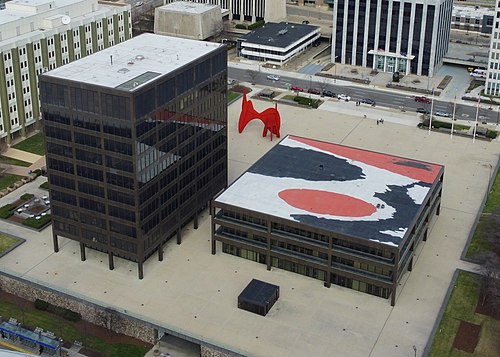
Under Michigan law, Grand Rapids is a home rule city and adopted a city charter in 1916 providing for the council-manager form of municipal government. Under this system, the political responsibilities are divided between an elected City Commission, an elected City Comptroller and a hired full-time City Manager. The City Commission is made up of the mayor and two commissioners from each of three wards, for a total of seven commissioners. Each ward elects a commissioner to a four-year term every two years. The races—held in even-numbered years—are officially non-partisan, although the party and other political affiliations of candidates do sometimes come up during the campaign period. The Commission sets policy for the city, and is responsible for hiring the City Manager and other appointed officials. The elected City Comptroller verifies financial policies and budgets are followed and prepares the annual financial report. The city levies an income tax of 1.5 percent on residents and 0.75 percent on nonresidents.
Mayor
The part-time mayor is elected every four years by the city at large and serves as chair of the commission, with a vote equal to a commissioner. In 2014, a limit of two terms was approved.
Politics
The city proper and inner-suburbs favor the Democratic Party, while outer-suburbs of Grand Rapids tend to support the Republican Party.
Traditionally, Grand Rapids has supported the Republican Party. The city is located in the 3rd Congressional District, represented by Democrat Hillary Scholten. Former President Gerald Ford represented the district (then numbered as the 5th) from 1949 to 1973 and is buried on the grounds of his Presidential Museum in Grand Rapids.
All four of the city's representatives in the Michigan State House are Democrats. In the Michigan Senate, the city is represented by one Republican and one Democrat. The 30th State Senate District, which includes the northern half of the city, is represented by Republican Mark Huizenga. The 29th State Senate district, which includes the southern half of the city, was won by Democrat Winnie Brinks in 2018.
Education

K–12 public education is provided by the Grand Rapids Public Schools (GRPS) as well as a number of charter schools. City High-Middle School, a magnet school for academically talented students in the metropolitan region operated by GRPS. Grand Rapids is also home to the oldest co-educational Catholic high school in the United States, Catholic Central High School. National Heritage Academies, which operates charter schools across several states, has its headquarters in Grand Rapids.
Grand Rapids is home to several colleges and universities. The private, religious schools: Aquinas College, Calvin University, Cornerstone University, Grace Christian University, and Kuyper College, each have a campus within the city. The seminaries Calvin Theological Seminary, Grand Rapids Theological Seminary, and Puritan Reformed Theological Seminary are in Grand Rapids. Northwood University, a private university with its main campus in Midland, Michigan, has a satellite campus downtown near the "medical mile". Davenport University, a private, non-profit, multi-location university with 14 campuses statewide, has its main campus just outside Grand Rapids.
As for public tertiary institutions, Grand Rapids Community College (GRCC) maintains a campus downtown and facilities in other parts of the city and surrounding region.
Grand Valley State University, with its main campus in nearby Allendale, continues to develop its presence downtown by expanding its Pew Campus, begun in the 1980s on the west bank of the Grand River. This downtown campus covers 67 acres (27 ha) in two locations and is home to 12 buildings and three leased spaces. Into the 2000s, Grand Valley State University expanded its medical education programs into Medical Mile, constructing various facilities such as the Cook-DeVos Center for Health Sciences in 2003. The university expanded across I-196 from the Medical Mile into the Belknap Lookout neighborhood in the 2010s, constructing the Raleigh Finkelstein Hall to assist with medical and nursing studies.
Media
The Grand Rapids Press is a daily newspaper, while Advance Newspapers publishes a group of weekly papers that provide community-based news. Gemini Media is a niche, regional publishing company that produces the weekly newspaper Grand Rapids Business Journal; the magazines Grand Rapids Magazine, Grand Rapids Family and Michigan Blue; and several other quarterly and annual business-to-business publications. El Vocero Hispano publishes West Michigan's largest Spanish language newspaper for the Latino community. Two free monthly entertainment guides are distributed: REVUE, which covers music and the arts, and RECOIL, which covers music and offers Onion-style satire. The Rapidian is an online-based citizen journalism project funded by grants from the Knight Foundation and local community foundations. It is reprinted or cited by other local media outlets.
Grand Rapids, combined with nearby Kalamazoo and Battle Creek, was ranked in 2019 as the 45th-largest television market in the U.S. by Nielsen Media Research. The market is served by stations including: WOOD-TV (channel 8, NBC), WZZM-TV (channel 13, ABC), WXMI (channel 17, Fox), and WXSP-CD (channel 15, MyNetworkTV); Battle Creek-based WOTV (channel 41, ABC and The CW on DT2) and WZPX-TV (channel 43, Ion); Kalamazoo-based WWMT (channel 3, CBS) and WLLA (channel 64, Independent); and Muskegon-based WTLJ (channel 54, TCT); along with other surrounding stations. WGVU-TV is the area's PBS member station.
The Grand Rapids area is served by 16 AM radio stations and 28 FM stations.
Infrastructure

Law enforcement
The Grand Rapids Police Department was established in 1871. The police dispatch service was consolidated with the Wyoming Police Department in 2011.
Air transportation
Grand Rapids was home to one of the first regularly scheduled passenger airlines in the United States when Stout Air Services began flights from the old Grand Rapids airport to Detroit (Ford Airport in Dearborn, Michigan), on July 31, 1926.
Major highways
I-96 runs along the northern and northeastern sides of the city, linking with Muskegon to the west and Lansing and Detroit to the east
I-196, also named the Gerald R. Ford Freeway, runs east–west through the city, connecting to I-96 just east of Grand Rapids and I-94 in Benton Township
I-296, an unsigned route running concurrently with US 131 between I-96 and I-196
US 131 runs north–south through the city, linking with Kalamazoo to the south and Cadillac to the north
M-6 is the Paul B. Henry Freeway running along the south side connecting I-96 and I-196
M-11 runs along Ironwood/Remembrance Road, Wilson Avenue, and 28th Street
M-37 follows Alpine Avenue to the north, I-96, East Beltline Avenue and Broadmoor Avenue to the south
M-45 follows Lake Michigan Drive west toward Allendale and Lake Michigan
Bus
The Interurban Transit Partnership, which brands itself as The Rapid, provides public bus transportation. Transportation is also provided by the DASH buses: the "Downtown Area Shuttle." DASH bus rides are free. These provide transportation to and from the parking lots in the city of Grand Rapids to designated loading and unloading spots around the city. The area's Greyhound Bus terminal is integrated into the Central Station of the Rapid, simplifying transfers between Greyhound and local buses.
Indian Trails provides daily intercity bus service of varying frequencies between Grand Rapids and Petoskey, Michigan, between Grand Rapids and Benton Harbor, Michigan, and between Grand Rapids and Kalamazoo, Michigan with intermediate stops.
Places of interest
Grand Rapids is the home of John Ball Zoological Garden, Belknap Hill, and the Gerald R. Ford Presidential Museum. Gerald Ford and former First Lady Betty Ford were buried on the site. Significant buildings in the downtown area include the DeVos Place Convention Center, Van Andel Arena, the Amway Grand Plaza Hotel, and the JW Marriott Hotel. The Urban Institute for Contemporary Arts is also downtown and houses art exhibits, a movie theater, and the urban clay studio.
Along the Grand River are reconstructed earthwork burial mounds, which were constructed by the prehistoric Hopewell tribe; a fish ladder, and a riverwalk.
Grand Rapids is home to the Van Andel Museum Center. Founded in 1854, it is among the oldest history museums in the United States. The museum's sites include its main building, constructed in 1994 on the west bank of the Grand River (home to the Roger B. Chaffee Planetarium); the Voigt House Victorian Museum, and the City Archives and Records Center. The latter held the museum and planetarium before 1994. Since the late 20th century, the museum has hosted notable exhibitions, including one on the Dead Sea Scrolls, and The Quest for Immortality: the Treasures of Ancient Egypt. A non-profit institution, it is owned and managed by the Public Museum of Grand Rapids Foundation. Heritage Hill, a neighborhood directly east of downtown, is one of the largest urban historic districts in the country. The first "neighborhood" of Grand Rapids, its 1,300 homes date from 1848 and represent more than 60 architectural styles. Of particular significance is the Meyer May House, a Prairie-style home Frank Lloyd Wright designed in 1908. It was commissioned by local merchant Meyer May, who operated a men's clothing store (May's of Michigan).
The house is now owned and operated by Steelcase Corporation. Steelcase manufactured the furniture for the Johnson Wax Building in Racine, Wisconsin, which was also designed by Wright and is recognized as a landmark building. Because of those ties, Steelcase purchased and restored the property in the 1980s. The restoration has been heralded as one of the most accurate and complete of any Wright restoration. The home is used by Steelcase for special events and is open to the public for tours.