
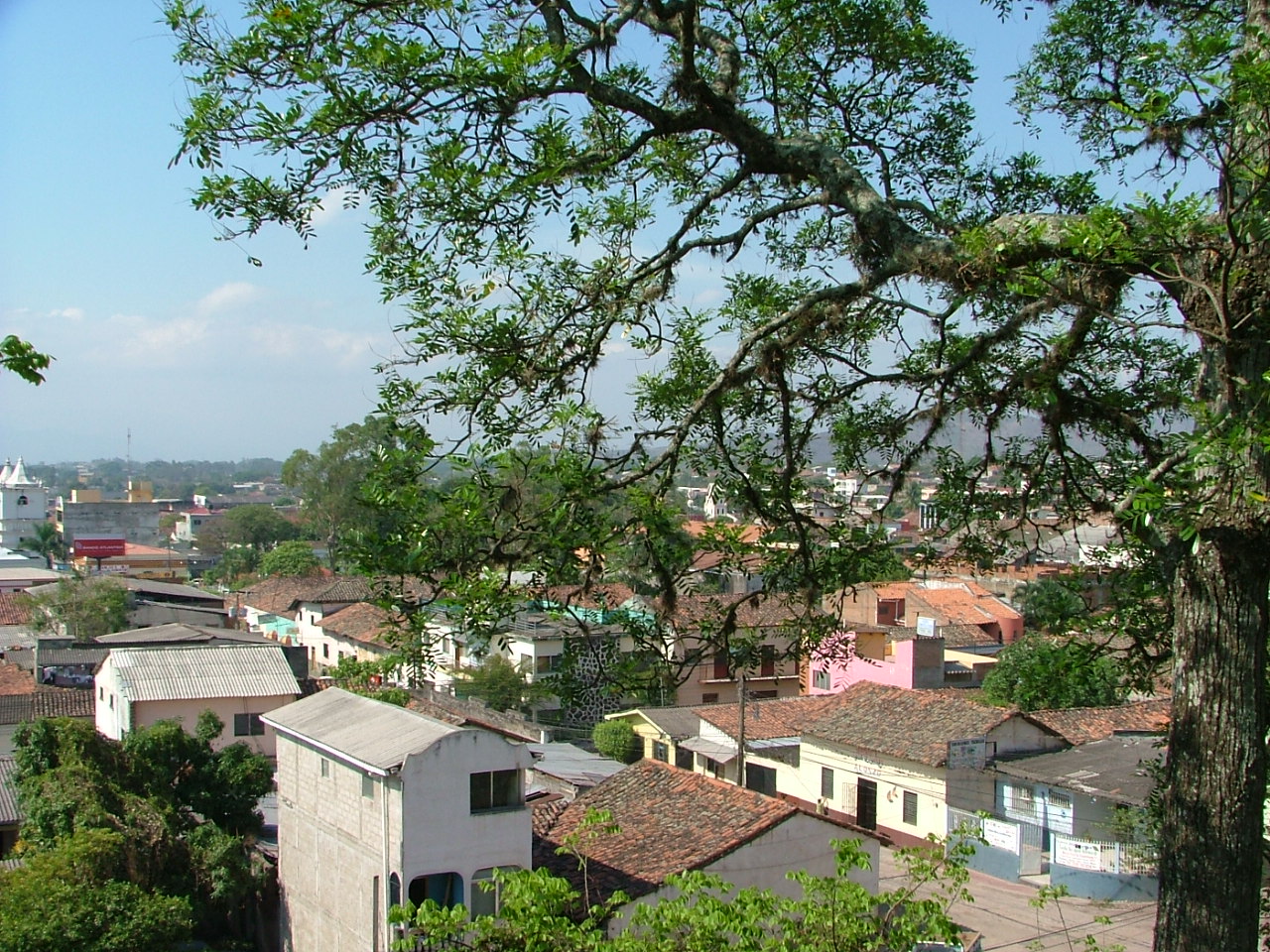
Juticalpa
Juticalpa es un municipio y una ciudad de la República de Honduras, cabecera del departamento de Olancho.
Government administration · Honduras · 0 followers
Overview
Juticalpa es un municipio y una ciudad de la República de Honduras, cabecera del departamento de Olancho.
Interested in working with us in the future?
Follow to see new jobs and posts in your feed.
No news yet.
About

Juticalpa es un municipio y una ciudad de la República de Honduras, cabecera del departamento de Olancho.
Kaynak: Wikipedia · CC BY-SA 4.0
Toponimia
El nombre de la ciudad proviene del idioma náhuatl (clásico) y significa “En la casa de los caracoles”. Los españoles le llamaron originalmente Jutiapa[cita requerida].
Límites
La extensión territorial del Municipio de Juticalpa es de 2,649.8 km² y está ubicada en la parte norte del Valle del Guayape, bañado por el Río Juticalpa.
Clima
La ciudad posee un clima tropical de sabana (Aw), lluvioso todo el año. La época de lluvias es de mayo a octubre.
Historia

En 1791, Juticalpa ya aparece en los registros coloniales como San Juan de Juticalpa.
En 1835 (16 de junio), se cambia el nombre de San Juan de Juticalpa por Juticalpa y recibe el título de ciudad.
En 1865, Juticalpa pasó a ser la cabecera del departamento de Olancho, luego que en el departamento se dieran varios levantamientos armados, en contra de las autoridades de la localidad de Manto, la antigua cabecera, y del gobierno central de Honduras. En los registros oficiales, Juticalpa aparece como la cabecera oficial del departamento a partir del 12 de agosto de 1865.
A través de los años Juticalpa ha sabido mantener su patrimonio colonial, que en algunas áreas contrasta con ciertas estructuras modernas de la ciudad.
Población
La ciudad de Juticalpa es el área con 2,605 km² cuadrados. Su ciudad está a uno de los costados del municipio con 152,711 habitantes, es una ciudad en desarrollo, es la más importante y desarrollada del departamento de Olancho, es la cabecera Departamental de Olancho. Olancho tiene una extensión de 23,905 km² cuadrados y Juticalpa es la cuarta parte del departamento.
La educación en el municipio de Juticalpa es un componente fundamental para el desarrollo de la comunidad. En la actualidad, la ciudad cuenta con una amplia gama de opciones educativas que abarcan desde la educación primaria hasta el nivel universitario, tanto en el ámbito público como en el privado.
En el nivel de educación primaria, Juticalpa cuenta con varias escuelas que brindan una base sólida para los estudiantes. Estas instituciones están comprometidas con la formación de las futuras generaciones y juegan un papel crucial en la construcción de los cimientos educativos de los niños y niñas del municipio.
Para aquellos que desean continuar su educación secundaria, Juticalpa ofrece varios institutos de renombre. Entre ellos, destaca el Instituto Departamental la Fraternidad, una institución con más de 100 años de historia al servicio de la población juticalpense. Este instituto ha demostrado su compromiso con la excelencia académica y ha contribuido significativamente al desarrollo educativo de la región.
Además, el municipio cuenta con una presencia universitaria en constante crecimiento. Algunas de las instituciones de educación superior que operan en Juticalpa incluyen:
Universidad Tecnológica de Honduras (UTH) - Campus Juticalpa: Esta universidad ofrece una amplia variedad de programas académicos y se dedica a preparar a los estudiantes para enfrentar los desafíos del mundo moderno con una sólida formación técnica y profesional.
Deportes
La ciudad posee 2 equipos de fútbol uno llamado Juticalpa F. C., que fue fundado oficialmente el 14 de agosto de 2004.
Y el otro equipo es el Olancho F. C., fundado en 2016. Ambos participan actualmente en la Liga Nacional de Honduras.
Ambos juegan sus partidos de local en el Estadio Juan Ramón Brevé Vargas que cuenta con una capacidad de 12.000 espectadores, este estadio fue inaugurado en julio de 2015.
Economía
Sus principales actividades económicas son la agricultura, la ganadería y el comercio.
La base del sustento económico de Juticalpa, es la agricultura, de las cuales se cosechan, tanto cereales, como frutas, verduras y hortalizas (frijol, maíz, arroz, banano, tomate, plátano, cebolla, patatas (papas), cítricos, pepino, ayote, etc.)
La ganadería ocupa gran parte del territorio de Juticalpa, hay haciendas con crianza bovina, porcina, equino y granjas avícolas.
Turismo
Monumentos históricos
La Alcaldía Municipal, la Catedral, la Casa de la Cultura, la Escuela "Rosa Luisa H. de Ochoa" son, entre otros, monumentos un fiel recordatorio de la historia de Juticalpa y el departamento de Olancho.
Esta ciudad cuenta con una muy buena infraestructura hotelera, excelentes restaurantes y discotecas. También son atractivos turísticos:
Las Cuevas de Talgua ubicadas en el municipio vecino de Catacamas
Gastronomía
Tapado Olanchano, cazuela, Albóndigas, arroz de maíz, mondongo, Horchata...etc.
Personas Destacadas
La Familia Guifarro desde 1800 hasta la fecha.
Kaynak: Wikipedia – Juticalpa · CC BY-SA 4.0
Geography
The Juticalpa area encompasses the Guayape River valley, bordered by the Sierra de Agalta range.
Among the most notable of the small villages in the area is La Concepción and La Empalizada. The nearest town is Catacamas, 30 miles to the northeast.
Climate
The climate is significantly warmer than Tegucigalpa or nearby Campamento because of the Valle de Juticalpa's elevation. Several thunderstorms occur during the period of May through September (wet season). October, November and December are cooler and often cloudy with drizzle. From January through April, the region receives very little rain (Dry Season). During this season field fires are often observed, some are intentionally created due to an old unlawful practice for renewing crops, and others are the result of severe heat or arson; these fires create a thick blanket of smoke that settles over the Juticalpa Valley for almost a month. The air improves after the first rain. During the rainy season, the incidence of dengue fever is quite high due to the many mud puddles that become breeding grounds for mosquitoes.
Layout
The town is divided into twelve major neighbourhoods, called Barrios or "Colonias": Barrio El Centro, Barrio de Jesús, Barrio Calona, Barrio La Hoya, Barrio Belén, Colonia San Miguel, Barrio El Portillo, Barrio El Campo, Colonia El Campo Uno, Colonia El Campo Dos, Barrio El Cementerio, Barrio El Chicle and Barrio de la Cruz. The majority of town lies on a gradual slope on the southwestern side of the Juticalpa river. There are many smaller communities in the surrounding area. Juticalpa's sister city, Catacamas, is located at the easternmost terminus of the paved Olancho highway.
The Boulevard Los Poetas connects Barrio El Centro to the Olancho highway and receives Honduran intercity bus traffic. The main bus station is located at the beginning of the "Boulevard Los Poetas" and several bus companies serve all of Olancho's 23 counties or "municipios". Two bus companies, Discovery and Aurora, send regular and executive service buses to Tegucigalpa and Catacamas.
Juticalpa also has two public parks, Parque Central located in Barrio El Centro with the cathedral dedicated to the Virgin of Concepción on one side, and the city hall (alcaldía) on the opposite side. The second smaller park Parque Infantil is located in Barrio Belén across the Santa Clara school.
Remnants of pre-Columbian civilisations can be found occasionally in Barrio Belén.
Demographics
At the time of the 2013 Honduras census, Juticalpa municipality had a population of 124,828. Of these, 91.20% were Mestizo, 6.71% White, 1.05% Black or Afro-Honduran, 0.43% Indigenous and 0.60% others.
Economy
Juticalpa's economy is primarily agricultural and commercial. Olancho's wide, fertile river valleys support maize, cattle and dairy farms. Queso Olanchano a hard and salty cheese, and "Mantequilla Crema" white cream, are produced in great quantities at several dairies and exported throughout the country, the Central American region, and United States. Because of its proximity to successful farms and its position on the only paved highway in Olancho, Juticalpa's economy has led to relative prosperity.
Despite its strong agricultural base, unemployment in Juticalpa is high. To support themselves, many citizens of Juticalpa run small stores called pulperías where they sell household items and food stores to neighbors.
Juticalpa contains a number of small businesses, many restaurants (ranging from taco stands to dine-in establishments with air conditioning), a hospital donated by the Japanese government, medical clinics, and a number of public and private schools. ATMs are easily found throughout the town and inside local bank branches. A new mall opened at the beginning of Boulevard Los Poetas, and four fully supplied supermarkets are well distributed across town. Recent road paving projects were finished in Barrio El Centro and Barrio de Jesús, but most of the town peripheral streets remain unpaved.
The area serves as a transit hub for the tourists headed to The Sierra de Agalta National Park, and for tourists visiting The Cuevas de Talgua, limestone caves containing the calcified phosphorescent remains of ancient inhabitants of the area.
In Honduras, Juticalpa is most famous for the production of an alcoholic palm Coyol tree wine known as coyol wine. Residents knock down palm trees in the middle of the dry season (March and April) and enjoy the wine at the sites, or transport the beverage to the marketplace in plastic bottles. The easiest place to find the drink is in the village of La Concepción, a few kilometers west of Juticalpa on the highway to Tegucigalpa.
Education
The city is served by various public and private schools, high schools and universities. One private bilingual school is Day Star School School, started by two Americans from Minnesota that serves pre-kindergarten to 12th grade.
Culture and entertainment
City fair
Juticalpa's fair is celebrated on 8–14 December and is dedicated to "The Virgin of Concepción". During this period several activities take place across the city's main streets, at the Parque Central and at the AGAO "Asociación de Ganaderos y Agricultores de Olancho".
Gastronomy
Being the commercial centre of Olancho, Juticalpa is able to offer a variety of local cuisine based on fresh produce, dairy and meat.
Typical dishes include Carne Asada (one of the best offered in the country), the renowned Tapado Olanchano, Yuca con Chicharrón, Baleadas, Tacos, Tajaditas, Enchiladas, Pastelitos de Carne, and other local delicacies.
Rosquillas, quesadillas and hojaldras are corn and cheese based; due to the extensive cheese resources, and the high production of corn in the area, the best are found in Juticalpa, specifically in the village of La Concepción.
In late years tilapia farms have been a success in the area, giving way to popularity and availability of fresh tilapia fish in many of Juticalpa's restaurants.
Sports
The city's football team is Juticalpa F.C., nicknamed "Los Canecheros", the stadium is called Juan Ramón Brevé Vargas.
People from Juticalpa
Porfirio Lobo Sosa, (Born in 1947) Honduran President 2010–2014, Economics Professor and Politician.
Froylán Turcios, (1875–1943) Honduran writer, journalist and politician.
Clementina Suárez, (1902–1991) Honduran poet
Kaynak: Wikipedia – Juticalpa · CC BY-SA 4.0