

Lawrence
Lawrence es una ciudad situada en el condado de Douglas, Kansas, Estados Unidos.
Government administration · United States · 0 followers
Overview
Lawrence es una ciudad situada en el condado de Douglas, Kansas, Estados Unidos. Tiene una población estimada, a mediados de 2023, de 96 207 habitantes.
Interested in working with us in the future?
Follow to see new jobs and posts in your feed.
No news yet.
About

Lawrence es una ciudad situada en el condado de Douglas, Kansas, Estados Unidos. Tiene una población estimada, a mediados de 2023, de 96 207 habitantes.
Kaynak: Wikipedia · CC BY-SA 4.0
Geografía

La ciudad está ubicada en las coordenadas 38°57′36″N 95°15′47″O (38.960029, -95.26293).
Demografía
Según la estimación 2018-2022 de la Oficina del Censo, los ingresos medios de los hogares de la ciudad son de $59,963 y los ingresos medios de las familias son de $91,339. Los ingresos per cápita en los últimos doce meses, medidos en dólares de 2022, son de $36,032. Alrededor del 18.7% de la población está por debajo de la línea de pobreza.
Historia
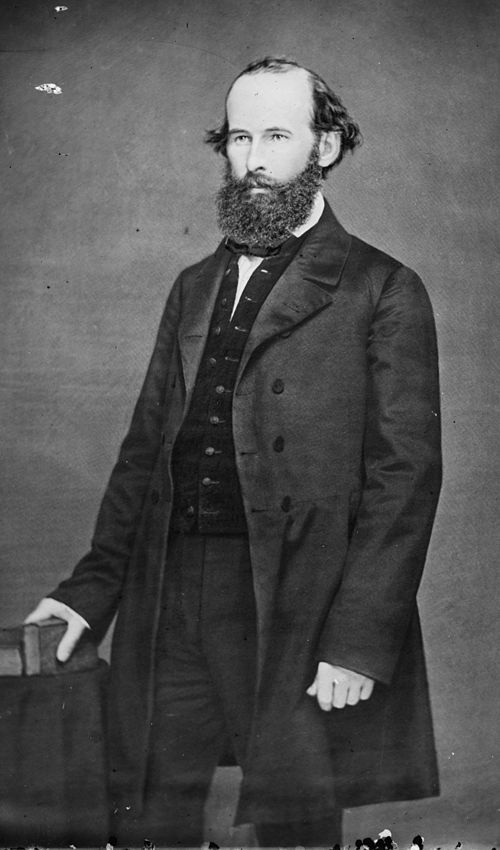
La ciudad fue fundada por colonos enviados por la New England Emigrant Aid Company, un movimiento abolicionista organizado para promover la inmigración antiesclavista en Kansas desde el noreste. Fue nombrada en honor a Amos Adams Lawrence, un comerciante y filántropo multimillonario de Boston que apoyaba a las organizaciones abolicionistas.
En junio de 1854 la compañía envió a dos exploradores, Charles Robinson y Charles Branscomb, para identificar una buena ubicación para una nueva ciudad. A inicios de agosto llegaron los primeros inmigrantes a la zona elegida.
Cuando Kansas se convirtió en el estado número 34 en 1861, la ciudad de Lawrence pasó a ser conocida como la sede de los jayhawkers, un grupo de activistas contra la esclavitud. En 1863, William Quantrill, un líder guerrillero confederado, reunió a un grupo de hombres para saquear la ciudad, destruyendo muchas casas y la mayor parte del distrito comercial. No obstante, la ciudad luego se reconstruyó y siguió creciendo.
El 12 de septiembre de 1866 se fundó en la ciudad la Universidad de Kansas.
La localidad ganó notoriedad en 1980 gracias a la película para la televisión El día después, en razón de que la película se centra en la ciudad y en sus alrededores.
Cultura popular
En la película The Day After (1983), la ciudad de Lawrence es blanco de un misil nuclear enviado por la Unión Soviética.
En la serie de TV Supernatural, Lawrence es el lugar de nacimiento de los hermanos Dean y Sam Winchester.
Personalidades destacadas
El escritor William Burroughs, una de las principales figuras de la generación beat, falleció en la localidad.
James Naismith, el inventor del baloncesto, falleció en esta ciudad en 1939.
Kaynak: Wikipedia – Lawrence (Kansas) · CC BY-SA 4.0
History
Settlement and early years
The Kaw people, also known as the Kansa, settled the region including what is now Lawrence in the late 17th or early 18th century. A series of treaties with the U.S. government compelled the Kaw to relinquish the land to the Shawnee and their Indian Reservation, established in 1830. The Kansas Territory was established in May 1854. During this period, the Oregon Trail ran parallel to the Kansas River, roughly through the area where Lawrence is now. A hill in the area, then known as Hogback Ridge and now known as Mount Oread, which sits on the water divide separating the Kansas and Wakarusa River, was used as a landmark and outlook by those on the trail. While the territory was technically closed to settlement until 1854, there were a few "squatter settlements" in the area, especially just north of the Kansas River.
Lawrence was founded "strictly for political reasons" having to do with slavery, which was heavily debated in the United States in the early to mid-1800s. Northern Democrats, led by Senators Lewis Cass of Michigan and Stephen A. Douglas of Illinois, promoted "popular sovereignty" as a middle position on the slavery issue. Its proponents argued it was more democratic, as it allowed the citizens of newly organized territories (and not Washington, D.C. politicians) to have a direct say as to the legality of slavery in their own lands. (Meanwhile, enemies of the bill, especially in the north, derisively called this idea "squatter sovereignty".) Douglas eventually made popular sovereignty the backbone of his Kansas–Nebraska Act—legislation that effectively repealed the Missouri Compromise of 1820 and created the territories of Kansas and Nebraska—which passed Congress in 1854.
The Christian abolitionist and Protestant minister Richard Cordley later noted that after the bill became law, "there was a feeling of despondency all over the north" because its passage "opened Kansas to [the possibility of] slavery [which many] thought [was] equivalent to making Kansas a slave state". This was largely because nearby Missouri allowed slavery, and many rightly assumed the first settlers in Kansas Territory would come from Missouri, bringing their penchant for slavery with them.
Geography

Lawrence is located approximately 25 miles (40 kilometers) east of Topeka, and 35 mi (56 km) west of Kansas City, Kansas. Though Lawrence has a designated elevation of 866 feet (264 m), the highest elevation is Mount Oread on the University of Kansas campus with an elevation of 1,020 feet (310 m).
The city lies on the southern edge of the Dissected Till Plains, bordering the Osage Plains to the south. According to the United States Census Bureau, the city has a total area of 34.26 square miles (88.73 km2), of which, 33.56 square miles (86.92 km2) is land and 0.70 square miles (1.81 km2) is water, and is split between Wakarusa Township and Grant Township with small portions in Lecompton, Kanwaka and Clinton Townships.
Lawrence is between the Kansas and Wakarusa Rivers. Several major creeks flow through Lawrence. Burroughs Creek in East Lawrence (named after the writer William S. Burroughs, who retired in East Lawrence) and Baldwin Creek in northwestern Lawrence empty into the Kansas River. Yankee Tank Creek in southwest Lawrence and an unnamed creek that flows through central Lawrence converge with the Wakarusa River south of the city. Yankee Tank Creek is dammed to form Lake Alvamar, which was originally called Yankee Tank Lake. The Wakarusa River was dammed to form Clinton Lake. Potter Lake is on the University of Kansas Campus and Mary's Lake is in southeastern Lawrence within Prairie Park. The Haskell-Baker Wetlands, maintained by Haskell University and Baker University, is an extensive open space in the southern part of the city that features wetlands, native plants, hiking and biking trails, and interpretative signage about the prairie and wetland ecosystems.
Lawrence has 54 parks which include community and neighborhood parks, trails, cemeteries and nature preserves. A new, multi-use trail system called the Lawrence Loop ("the Loop") encircles the city and, when fully completed, will create a 22-mile paved recreational trail, a green transportation network, and multiple opportunities for environmental restoration. Community parks include South Park, Buford Watson Park, Broken Arrow Park, Riverfront Park, Holcomb Park, "Dad" Perry Park, Centennial Park and Prairie Park. Cemeteries include Oak Hill, Maple Grove and Memorial Park. The first cemetery in Lawrence, Pioneer Cemetery, is on the University of Kansas campus and is maintained by KU.
Cityscape

Streets
The early settlers of the town named the city's main road "Massachusetts" to commemorate the New England Emigrant Aid Company's home state. As laid out on the first map of Lawrence, the north–south streets to the east of Massachusetts Street were named for the original thirteen colonies running from the geographic south to the north, with only Massachusetts and New Hampshire streets out of order (guaranteeing Massachusetts Street the honor of the central business corridor), while those streets west of Massachusetts Street were named for states in order of admittance to the Union. East–west streets were named after "men who had done something in the sacred cause of liberty". Over the years, however, this plan became marred. A number of streets were placed in the wrong order, North and South Carolina were consolidated into a single Carolina Street near Lawrence High School, and the names of nine states (Alaska, Georgia, Hawaii, Idaho, Nevada, New Mexico, Texas, Washington and Wyoming) were never given to streets. The state street naming system was abandoned after the establishment of Iowa Street, which runs through the center of Lawrence. In 1913, the east–west streets were renamed to numbered streets.
Neighborhoods
Lawrence is designated by neighborhoods. Neighborhoods closest to downtown are Old West Lawrence, North Lawrence, East Lawrence, Oread, Hancock and Pinkney. The neighborhoods west of Iowa Street are Sunset Hills, Prairie Meadows, Deerfield, and Alvamar. There are several neighborhoods listed on the National Register of Historic Places: Old West Lawrence, Oread, Hancock, Breezedale, and most of Rhode Island Street in East Lawrence.
North Lawrence
Grant Township, north of the Kansas River, was annexed to Douglas County in 1870 from southern Sarcoxie Township in Jefferson County. The largest city in the township was Jefferson, founded in 1866 just over the river from Lawrence. Jefferson was renamed North Lawrence in 1869 and it was attempted to annex the town to Lawrence proper but the motion failed. The following year, the State Legislature annexed the town.
Demographics
Lawrence is part of the Kansas City (MO)–Overland Park–Kansas City (KS) Combined Statistical Area.
2020 census
As of the 2020 census, Lawrence had a population of 94,934, 39,688 households, and 19,602 families.
The population density was 2,779.7 per square mile (1,073.3/km2). There were 43,421 housing units at an average density of 1,271.4 per square mile (490.9/km2); 8.6% were vacant, with a homeowner vacancy rate of 1.9% and a rental vacancy rate of 7.7%.
The median age was 30.4 years; 17.8% of residents were under the age of 18, 23.1% were 18 to 24, 28.0% were 25 to 44, 18.5% were 45 to 64, and 12.6% were 65 years of age or older. For every 100 females there were 97.0 males, and for every 100 females age 18 and over there were 95.0 males age 18 and over.
99.8% of residents lived in urban areas, while 0.2% lived in rural areas.
Of the 39,688 households, 23.4% had children under the age of 18; 35.2% were married-couple households; 25.2% had a male householder with no spouse or partner present; and 31.1% had a female householder with no spouse or partner present. About 35.7% of all households were made up of individuals and 9.4% had someone living alone who was 65 years of age or older. The average household size was 2.3 and the average family size was 2.9.
Education
The percent of those with a bachelor's degree or higher was estimated to be 35.9% of the population.
Income
The 2016–2020 5-year American Community Survey estimates show that the median household income was $55,598 (with a margin of error of ± $2,504) and the median family income was $88,286 (± $5,989). Males had a median income of $30,003 (± $3,256) versus $21,802 (± $1,388) for females. The median income for those above 16 years old was $25,556 (± $1,091). Approximately, 7.3% of families and 18.8% of the population were below the poverty line, including 12.0% of those under the age of 18 and 6.6% of those ages 65 or over.
Economy
Lawrence's economy largely depends on educational institutions, namely The University of Kansas, which is the largest employer in the city as of 2020 with 10,116 employees, followed by Maximus (a call center), Lawrence Memorial Hospital (the city's hospital) and Hallmark Cards.
Homelessness
As of 2020, Lawrence's unemployment rate had grown by 3.7%. Since 2019, the city has seen a rise in homelessness. In 2021, NPR reported that Lawrence and nearby Kansas City, Kansas had a large rise in homelessness. In Lawrence, the situation necessitated that the city construct an encampment for people to seek temporary shelter. In early 2021, reportedly 200 homeless people lived on the banks of the Kansas River, and wooded areas near nature trails in Lawrence, and hundreds of others setting up encampments in city parks. In February 2023, the Lawrence City Commission approved an ordinance banning source of income discrimination, disallowing landlords from rejecting housing vouchers. The ordinance also banned discrimination in housing due to immigration status and being a survivor of sexual assault.
Historic sites and museums

South Park is a large park in Downtown Lawrence divided by Massachusetts Street just south of the county courthouse between North Park and South Park Streets. The park originally consisted of four separate parks—Lafayette, Hamilton, Washington and Franklin Parks—but was combined to form one park. South Park was developed in 1854 as part of the original city plat. A gazebo was built in South Park in 1910 and is used for annual city band performances during the summer months.
The Watkins Museum of History is a block north of South Park and houses exhibits from Lawrence and Douglas County. The building is managed by the Douglas County Historical Society and used to be Watkins National Bank (1888–1929) and Lawrence City Hall (1929–1970). The building features a range of architectural styles from the period it was constructed. Today it houses the Watkins Museum of History, which offers free admission and three floors of traditional and computer interactive exhibits. Next door to the museum is a Japanese Friendship Garden designed by the city and representatives from sister city Hiratsuka, Japan. An exhibit on the Bleeding Kansas era and the Freedom's Frontier National Heritage Area is in the old Lawrence Public Library at 9th and Vermont Streets. Other museums on KU campus include the Natural History Museum in Dyche Hall, the Spencer Museum of Art and the Dole Institute of Politics among others.
Centennial Park, between 6th and 9th Streets and Rockledge Road and Iowa Street, was established in 1954 for the city's 100th anniversary. The park features rolling hills, a skatepark, a disc golf course and a Polaris missile constructed during the Cold War. Sesquicentennial Park is near Clinton Lake and was established for Lawrence's 150th anniversary and is mostly undeveloped but features a timeline of Lawrence history and a time capsule to be opened in 2054.
Arts and culture

The city is known for a thriving music and art scene. The New York Times said Lawrence had "the most vital music scene between Chicago and Denver" in a travel column on February 25, 2005.
The Lied Center of Kansas presents Broadway musicals, internationally touring dance companies and headline artists such as The Beach Boys, Kristin Chenoweth, Lyle Lovett and Kansas.
In December 2005, the city announced International Dadaism Month, celebrating the early 20th century art movement. In the spirit of Dada, rather than select a typical calendar month for the occasion, Mayor Dennis "Boog" Highberger set the dates for the "Month" as February 4, March 28, April 1, July 15, August 2, August 7, August 16, August 26, September 18, September 22, October 1, October 17, and October 26, determined by rolling dice and pulling numbers out of a hat.
Lawrence is home to many bands and record labels. Many artists, such as Paw, Mates of State, The New Amsterdams, Kansas, Fourth of July, White Flight, The Anniversary, Minus Story, The Appleseed Cast, Old Canes, Ad Astra Per Aspera, Ghosty, The Esoteric and The Get Up Kids originated in Lawrence or its surrounding areas. KJHK 90.7 FM, the University of Kansas's student-run radio station, is a staple of the local music scene.
The Wakarusa Music and Camping Festival was a four-day-long weekend music festival held annually in early June just outside Lawrence, at Clinton State Park. After its inception in 2004, the festival grew dramatically by 2006, with almost 60,000 tickets sold, and developed a nationwide following that accounted for 80% of ticket sales. The festival featured an eclectic mix of music, with artists like The Flaming Lips, Wilco, STS9, Medeski, Martin and Wood, Neko Case, and Widespread Panic taking the stage. The event is kept smaller than other festivals such as Bonnaroo by an agreement with the state. Activities other than music include disc golf, yoga, hiking, and swimming in Clinton Lake. The festival was relocated to Mulberry Mountain due to a dispute between the organizers and the Kansas Department of Wildlife and Parks over limiting attendees and over rent payment.
Sports

Lawrence is also the home of the University of Kansas (KU) athletic teams. The perennially highly ranked Kansas Jayhawks basketball team (1922 and 1923 Helms Foundation National Champions and 1952, 1988, 2008, and 2022 NCAA Champions) is closely followed by most residents during the winter. Massachusetts Street, the primary street of downtown Lawrence, flooded with fans in 2002, 2003, 2008, 2012, and 2022, after both KU's victories and defeats in the final rounds of the NCAA tournaments those years. KU's football team had their best record in their school history in the 2007–2008 season going 12–1 and culminating with a victory in the Orange Bowl. In 2008, the football and basketball programs achieved a 49-4 record, the most combined wins by the two NCAA sports in a single season.
During the 2026 FIFA World Cup, the Algeria national football team established its team base camp in Lawrence, where it trained at Rock Chalk Park at The University of Kansas and stayed at The Oread hotel throughout the tournament. The city publicly announced the selection in February 2026. Additionally, on June 10, 2026, Rock Chalk Park hosted Algeria's final pre–2026 FIFA World Cup warm-up match, an international friendly against Bolivia, which Algeria won 4–0.
Lawrence honored the University of Kansas's mascot, the Jayhawk, in 2003 when 30 statues of Jayhawks were commissioned by the Lawrence Convention and Visitors Bureau; these can be seen throughout the city as part of an art installation called "Jayhawks on Parade". The Jayhawks also field a soccer team, baseball and softball teams, track and field teams, cross country teams, and a men's club hockey team. KU also has a club rugby team, run by the KU Rugby Football club, with a clubhouse in North Johnny's Tavern. They also run the high school and the club team.
Government

Lawrence is run by a city commission and city manager. Commissioners consists of five individuals elected by the citizens. Three commissioner seats are up for reelection every two years. The two top vote-getters receive a four-year term, third-place finisher receives a two-year term. The commission elects a mayor and vice-mayor every year in April, usually the two top vote-getters, and also hires the city manager. Lawrence uses plurality-at-large voting (also known as block voting) for its municipal elections, whereby voters may choose up to three candidates for office.
While Kansas is a heavily Republican state, Lawrence is often considered a bastion of the modern Democratic Party, and has been since the late 1980s. Douglas County, where Lawrence is situated, was one of only two counties in Kansas whose majority voted for John Kerry in the 2004 presidential election, one of only three that voted for Barack Obama in the 2008 election and one of the only two counties to vote for Hillary Clinton in the 2016 presidential election. Douglas County has supported the Democratic candidate for the past nine presidential elections.
Lawrence is served by Democratic state representatives Suzanne Wikle, Mike Amyx, Barbara Ballard and Brooklynne Mosley, and by state senators Marci Francisco (Democrat), Rick Kloos (Republican), and Patrick Schmidt (Democrat). Lawrence is represented federally by Republican Tracey Mann of the 1st and U.S. Senators Roger Marshall and Jerry Moran, both Republicans. Prior to 2002, Lawrence sat entirely within the 3rd district until reapportionment split Lawrence between the 2nd and 3rd districts. In 2012, Lawrence was placed entirely within the 2nd district. In 2022, the Kansas State Legislature moved Lawrence into the 1st district after legal challenges failed in the Kansas Supreme Court.
Education

Primary and secondary education
The Lawrence USD 497 public school district includes almost all of the Lawrence city limits. This district has 12 elementary schools, four middle schools. and two high schools. The city's 12 public elementary schools include: Langston Hughes Elementary (named after Langston Hughes); Quail Run Elementary, Cordley Elementary (named after Richard Cordley), Hillcrest Elementary, Kennedy Early Childhood (formerly Kennedy Elementary, closed in 2021), Pinckney Elementary, Prairie Park Elementary, New York Elementary, Schwegler Elementary, Sunflower Elementary, Sunset Hill Elementary, Woodlawn Elementary, and Deerfield Elementary. The middle schools include: West, Billy Mills (named after Billy Mills, and formerly named South), Liberty Memorial Central Middle School (Usually shortened to Central or LMCMS), and Southwest. The high schools include: Lawrence High School and Lawrence Free State High School (the athletic teams of the former are nicknamed the Chesty Lions, and those of the latter are the Firebirds).
Newer developments in the northwestern part of the Lawrence area, including a few small parcels of the city limits, are within the boundaries for Perry-Lecompton School District, and students in this area attend Lecompton Elementary, Perry Elementary, Perry-Lecompton Middle School, and Perry-Lecompton High School.
Private schools include Bishop Seabury Academy (grades 6 to 12) (affiliate of Episcopal Church), Veritas Christian School (grades pre-K to 12) (interdenominational), St. John Catholic School (grades pre-K to 8), Corpus Christi Catholic School (grades pre-K to 8), Raintree Montessori School (grades pre-K to 8) (Montessori school), Prairie Moon School (grades pre-K to 8) (Waldorf school), and Limestone Community School (as of 2023, grades K to 4).
Colleges and universities
The University of Kansas is the largest public university in the state with total enrollment of just more than 30,000 students (including approximately 3,000 students at the KU Medical Center in Kansas City, KS). A Big 12 school, the University of Kansas has more than 170 fields of study and the nationally known Kansas Jayhawks athletics programs. Haskell Indian Nations University offers free tuition to members of registered Native American tribes. However, students are required to pay semester fees similar to many other colleges in the United States. It has an average enrollment of more than 1,000 (with students hailing from all 50 U.S. states and from over 150 tribes). Haskell University is also the home of the American Indian Athletic Hall of Fame and the Haskell Cultural Center. Several private Christian colleges and schools are in Lawrence as well, such as Heritage Baptist College.
Media

One of the first businesses established in Lawrence was a newspaper, the Herald of Freedom, which began in October 1854 and ceased publication in 1859. In August 1885, the Lawrence Daily Journal began and the Lawrence Daily World began in June 1895. These papers would merge in 1911 to become the Lawrence Journal-World although the masthead lists the founding as 1858, probably in reference to the Herald of Freedom. Other newspapers include The University Daily Kansan, a student newspaper from the University of Kansas, The Lawrence Times, an online newspaper founded by former Lawrence Journal-World employees, and Change of Heart, a street newspaper sold by homeless vendors.
Radio stations in Lawrence include KLWN, an AM station that began in 1951. FM stations are KU's student station KJHK, KANU, a NPR member station, K241AR, a Christian station that broadcasts Air 1, KCIU-LP, a religious station and KKSW, formerly KLZR, a Top 40 station. KMXN, a country station, also broadcasts from Lawrence but is licensed to Osage City. Listeners can also receive stations from Kansas City and Topeka.
Lawrence is in the Kansas City television market, but viewers can also receive stations from the Topeka market as well. Television stations licensed and/or broadcasting from Lawrence are KUJH-LP, a KU student station, and KMCI which broadcasts from Kansas City, Missouri.
From 1947 until 1981, Lawrence was the location of the Centron Corporation, one of the major industrial and educational film production companies in the United States at the time. The studio was founded by two University of Kansas graduates and employed university students and faculty members as advisers and actors. Also, many talented local and area filmmakers were given their first chances to make movies with Centron, and some stayed for decades. Others went on to successful careers in Hollywood. One of these local residents, Herk Harvey, was employed by Centron as a director for 35 years and in the middle of his tenure there he made a full-length theatrical film, Carnival of Souls, a horror cult film shot mostly in Lawrence and released in 1962. The Centron Corporation soundstage and residing building is now called Oldfather Studios and houses the University of Kansas film program.
Infrastructure

Transportation
Interstate 70, as the Kansas Turnpike, runs east–west along the northern edge of the city, interchanging with U.S. Route 59 which runs north–south along North 2nd Street, 6th Street and Iowa Street. Another east–west route, U.S. Route 40, runs through northern Lawrence along 6th Street roughly 2 miles south of I-70. U.S. 40 runs concurrently east–west with U.S. 59 for approximately 1 mile between Iowa Street and Massachusetts Street. The two routes turn north before crossing I-70. One half-mile north of I-70, U.S. 40 splits from U.S. 59 and turns east, running concurrently with U.S. 24, exiting the city.
K–10, an east–west state highway, enters the city from the east at an interchange with 23rd Street. The highway used to head along city streets, however in November 2016, the South Lawrence Trafficway, a four lane divided highway, was connected. This allows traffic to directly flow from the US-59 exit along K–10 into Kansas City. K–10 passes thru the city, starting with the interchange in the far east, with 23rd street, before then continuing west and finally north around western Lawrence, terminating at an interchange with I-70 northwest of the city.
Due to high traffic volume, in 2024, the Kansas Department of Transportation, started a project to turn the two lane two direction K–10 in the west of the city, into a four lane. Once this is complete, K–10 will be fully 4 lanes and divided, for its whole route. This will help with safety and traffic flow, both current problems on the trafficway.
Two bus systems operate in the city. Lawrence Transit, known locally as "The T", is a public bus system operated by the city, and KU on Wheels is operated by the University of Kansas. Together, the two systems operate 18 bus routes in the city. Both systems are free to KU students, faculty, and staff. Greyhound Lines provides intercity bus service with a stop in Lawrence. In addition, the Johnson County, Kansas bus system provides inter-city transport between Lawrence and Overland Park college campuses in a route known as the K–10 Connector.
Sister cities
Lawrence has four sister cities through Sister Cities International:
Eutin, Schleswig-Holstein, Germany – October 27, 1989
Hiratsuka, Kanagawa, Japan – September 21, 1990
In popular culture
Lawrence is a setting in the 1983 television movie The Day After, and parts of the movie were filmed in the city.
Sam and Dean Winchester, the protagonists of Supernatural, are from Lawrence, and the city has been referenced numerous times throughout the show's history.
Lawrence was destroyed in the 2006 TV Series Jericho.
American folk singer Josh Ritter's song "Lawrence KS" is on the 2002 album Golden Age of Radio. Cross Canadian Ragweed's 2007 album Mission California features the song "Lawrence", which was inspired by a homeless family the band encountered near Christmas while visiting the town.
Lawrence's Meadowbrook Apartments residential complex is the default starting point for the map program Google Earth. This location was set by Brian McClendon, a 1986 graduate of the University of Kansas and director of engineering for Google Earth, who lived in the complex as a child.
Kaynak: Wikipedia – Lawrence, Kansas · CC BY-SA 4.0