
Миколаївська міська громада
Миколаївська територіальна громада — територіальна громада в Україні, у Миколаївському районі Миколаївської області, з адміністративним центром у місті Миколаїв.
Government administration · Ukraine · 0 followers
Overview
Миколаївська територіальна громада — територіальна громада в Україні, у Миколаївському районі Миколаївської області, з адміністративним центром у місті Миколаїв.
Interested in working with us in the future?
Follow to see new jobs and posts in your feed.
No news yet.
About
Миколаївська територіальна громада — територіальна громада в Україні, у Миколаївському районі Миколаївської області, з адміністративним центром у місті Миколаїв.
Kaynak: Wikipedia · CC BY-SA 4.0
Загальна інформація
Площа території — 316,6 км², населення громади — 480 080 осіб (2020 р.).
Історія
Створена у 2020 році, відповідно до розпорядження Кабінету Міністрів України № 719-р від 12 червня 2020 року «Про визначення адміністративних центрів та затвердження територій територіальних громад Миколаївської області», з територією та населеними пунктами Миколаївської міської ради Миколаївської області у складі.
Kaynak: Wikipedia – Миколаївська міська громада (Миколаївська область) · CC BY-SA 4.0
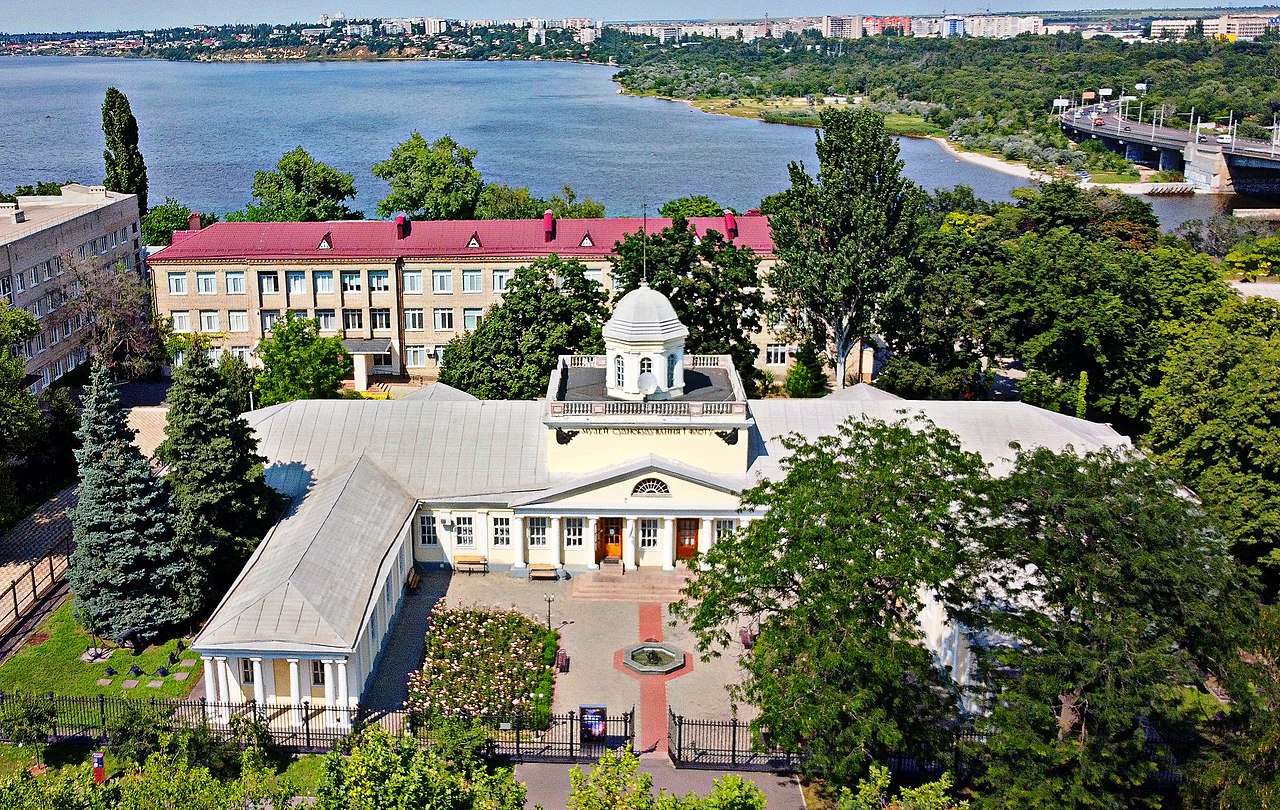
Name

The city is known under two names, which differ in Ukrainian and Russian; there are several transliterations of each name. The Ukrainian name of the city is Миколаїв, transliterated as Mykolaiv. The Russian name, Никола́ев, transliterates as Nikolaev or Nikolayev.
The city was founded in the course of the Russian conquests during the Second Russo-Turkish War of 1787–1792. Founded by Prince Grigory Potemkin as Nikolaev, it was the last of the many cities he established. On 27 August 1789, Potemkin ordered its naming near the wharf at the mouth of the Ingul river, on a high, cool and breezy spot where the Ingul river meets the Southern Bug river. To build the city he brought in peasants, soldiers, and Turkish prisoners; 2,500 were working there during 1789. The shipyards were built first (1788).
Potemkin named the city after Saint Nicholas, the patron of seafarers, on whose day (6 December) he had obtained victory at the siege of Ochakov in 1788. The name Nikolaev is known from the legal order (writ) Number 1065 by Prince Potemkin to Mikhail Faleev dated 27 August 1789.
In 1920, after the establishment of Soviet power, the Odesa provincial council (of laborers and peasants' deputies) petitioned the Soviet Ukrainian government—the All-Ukrainian Central Executive Committee (VUTSIK)—to rename the city of Mykolaiv to Vernoleninsk ("Faithful to Lenin"). As the city of Mykolaiv was a district center of the Odesan province, presumably, the petition would have been initiated by the Odesa City Council, but documentary evidence of this so far has not been identified. On 15 April 1924 the Plenum of the Central Administrative-Territorial Commission of the VUTSIK considered and rejected the petition of the Odesan executive committee. Perhaps the members of the Soviet-Ukraine government thought that the name sounded too obsequious.
History

Early history
Archaeologists have found proof of ancient settlements on the territory of Mykolaiv. In 2018, archaeologists discovered a sunken Ancient Greek ship near the Mykolaiv region, dating from the fifth century BC, the period of Greek colonization of the Northern Black Sea. Researchers stated: "This Ancient Greek ship is one of the oldest known in the Northern Black Sea."
The city has long had close associations with shipbuilding.
The area was populated throughout time by Scythians, ancient Greeks, Slavic tribes, hordes of nomads and free Zaporozhian Cossacks.
The territory of the modern Mykolaiv Oblast encompassed the Buh-Hard Palanka with its center in Voznesensk, where, according to the 1756 Zaporozhian Host Register only 8,000 people resided; due to frequent Crimean Tatar raids, they lived predominantly on remote, fortified farmsteads for defensive reasons .
However, the intensive settlement of the Mykolaiv peninsula started in the last quarter of the 18th century already after the capture of the northern Black Sea coast region by Russia from the Ottoman Empire.
The Russian Empire's Black Sea Navy Headquarters was in Mykolaiv for more than 100 years until the Imperial Russian Navy moved it to Sevastopol, near the southern tip of the Crimean Peninsula. During the Crimean War (1853–1856), Mykolaiv became the main rear base to support Russia's efforts in the war. Most businesses that were created in the city belonged to the military-industrial complex, and, consequently, Mykolaiv was closed to foreigners for many decades.
By the late 19th century, Mykolaiv's port ranked third in the Russian Empire (after Saint Petersburg and Odesa) in trade with foreign countries. Grain-export suppliers of the steppe region (of Ukraine and Southern Russia) were the greatest in the Russian Empire. Mykolaiv had become a great industrial center in the Southern Ukraine.
Administrative status
Mykolaiv is the administrative center of Mykolaiv Oblast (region), as well as that of Mykolaiv Raion. It hosts the administration of Mykolaiv urban hromada, one of the hromadas of Ukraine.
Geography

Mykolaiv is located in a primarily flat terrain area, the fertile, grain-producing steppe region of southern Ukraine. The nearest mountains to Mykolaiv are 300 km (186 mi) south, at the southern end of the Crimean Peninsula. The lack of any mountain barriers north of Mykolaiv means that cold Arctic winds can blow south, unimpeded by any terrain elevation, to Mykolaiv in winter.
Mykolaiv is on a peninsula along the estuary of the Southern Bug river where it meets the Inhul River, 65 km (40 mi) from the Black Sea. Both the Inhul River and the Southern Bug River follow very winding courses just before they join at the northeast corner of Mykolaiv. This has created several long and narrow peninsulas just north of Mykolaiv, and the main part of Mykolaiv is itself on a peninsula at a 180-degree bend in the Southern Bug River.
The area of the city is 260 km2 (100 sq mi).
Mykolaiv is in the second time zone (Eastern European Time).
Ecology
Mykolaiv has environmental issues, which is common in many cities in Ukraine, such as pollution of water, the air, and groundwater; drinking water quality, noise, waste management, and conservation of biological diversity in the city. One of Mykolaiv's most urgent problems is the disposal of solid household waste.
The city has 18 preserved sites, totaling about 12 km2 (5 sq mi):
The monuments of landscape art: Park Peremohy, Park People's Garden, 68 Paratroopers Park, Square, The Sivašskij, The Boulevard Bunker, Linea (Line) Park, Young Heroes Park; Youth Park in the Inhulskyi District
The Botanical Natural Monument Memory Square
The Turkish Fountain Hydrological Natural Monument
The Dubka (oak) 4 Botanical Nature Monument
Climate
The city's climate is moderately continental- cold semi arid steppe climate with cold winters and warm to hot summers. Mykolaiv's average temperature is 10 °C (50 °F). The lowest average temperature is in January −1.9 °C (29 °F), the highest in July 23.1 °C (74 °F).
Population
Language
Distribution of the population by native language according to the 2001 census:
As of 2017, 63% of the population spoke Russian at home, 7% Ukrainian, and 28% spoke both Ukrainian and Russian equally.
According to a survey conducted by the International Republican Institute in April–May 2023, 30% of the city's population spoke Ukrainian at home, and 61% spoke Russian.
Awards
The Soviet Government awarded Mykolaiv the Order of the Red Banner of Labour on 31 December 1970, for successfully fulfilling its assignments for the development of industrial production, in the USSR's five-year economic plan.
On 25 March 2022 Ukrainian President Volodymyr Zelenskyy awarded Mykolaiv the title of Hero City of Ukraine due to the Battle of Mykolaiv.
Administrative districts
Mykolaiv is divided into four urban districts:
Tsentralnyi District is located in the northwest of the city. It includes the historic center of Mykolaiv, Raketne Urochyshche, Temvod, Soliani, Pivnichnyi, Ternivka (with a separate village council), Matviivka, Varvarivka.
Zavodskyi District is located in the west of the city. In this area, many industrial enterprises are concentrated. It also includes neighborhoods Lisky and Namyv, as well as towns of Velyka Korenykha and Mala Korenykha.
Inhulskyi District (former Leninskyi District) is located in the east of Mykolaiv. Among other neighborhoods, it includes the PTZ, Novyi Vodopii, Staryi Vodopii. The district has a zoo, bus and railway stations.
Korabelnyi District is located in the south of the city. It includes a broad beam, Bohoiavlenskyi, Balabanivka, Kulbakyne.
Official symbols
Mykolaiv adopted its current coat of arms on 26 September 1997. Its design came from the one adopted in 1883, by removing the symbol of Kherson province to which Mykolaiv didn't belong anymore.
Mykolaiv adopted its current flag on 2 July 1999 and its anthem on 11 September 2004.
Economy

Mykolaiv is a major shipbuilding center of Ukraine since the time of both the Russian Empire (1721–1917) and the now defunct Soviet Union (1922–1991) and an important river port. The city has three major shipyards one of which is capable of building large navy ships. Other important industries are mechanical engineering, power engineering, metallurgy and food industry.
Mykolaiv was closed to foreign visitors until the late 1980s due to the large number of secret Soviet Navy projects that took place in the city (as well as due to its military air base, turbine factory and military port). The majority of the Soviet Navy's surface ships, including its only aircraft carrier, the aircraft carrier Kuznetsov, were built in Mykolaiv.
In May 2011, Ukrainian President Viktor Yanukovych visited Mykolaiv and said that Ukraine was serious about reviving and further developing its shipbuilding industry in the Mykolaiv region.
One of the largest industrial businesses in the city is the Mykolaiv Aluminia Factory (formerly part of Rusal and currently owned by Glencore), which produces aluminium oxide (alumina), raw material for the production of aluminum.
In addition to heavy industry, the city has a developed food processing industry, including a juice maker, Sandora (part of PepsiCo), a dairy products maker, Laktalis-Mykolaiv, and a brewery, Yantar. Nibulon (Ukrainian: Нібулон), one of Ukraine's biggest agriculture companies specialized in the production and exportation of grain such as wheat, barley and corn is headquartered in Mykolaiv. The company has its own maritime fleet and shipyard, the Nibulon Shipyard, and also developed its own river fleet to transport grain to export terminals.
In January 2017, the Mykolaiv Development Agency released a promo video of the city's investment potential.
Ukrainian military presence
Mykolaiv, being an important strategic city in southern Ukraine has a significant Ukrainian military presence, including the shipyards that build Ukraine's surface navy ships, the Mykolaiv Ukrainian Navy base, the "MARP" aircraft repair factory (Mykolaiv), and the Kulbakino army base (in the Mykolaiv Oblast, outside of the city of Mykolaiv).
Previously for many years after World War II the city had been home to the 92nd Guards Motor Rifle Division, the former 92nd Guards Rifle Division. The 79th Airmobile Brigade is based in the city.
Transportation

Mykolaiv is one of Ukraine's most important transportation junctions. It is a major commercial river and sea port, and a major highway and rail junction. Mykolaiv also has a dual-function passenger and freight airport, but passenger service at the airport is not significant, compared to Ukraine's major airports. In addition to the airport and sea and river port, Mykolaiv has two train stations, and an intercity bus station.
Air
Mykolaiv Airport (IATA code NLV) is one of the largest and most technically well equipped airports in the South of Ukraine, which serves the city. The airport, located northwest of Mykolaiv, is mainly used for air freight and only has limited passenger service. Russian airline UTAir Aviation offers flights from Mykolaiv to Moscow (Vnukovo – VKO airport). In addition, there are one-hour passenger flights from Odesa (the nearest major airport) to Mykolaiv. Almost all airline passenger service in the South West of Ukraine (where Mykolaiv is located) is through Odesa International Airport: to reach Mykolaiv by airplane, tourists generally reach Odesa by plane, and then take a bus, taxi or train, for approximately 2 hours, to Mykolaiv. Odesa, the largest city in South West Ukraine, is 132 km (82 mi) from Mykolaiv.
Kulbakyno airport, also known as Mykolaiv, is a Class I military air base located just to the southeast of the city center, in Kulbakyno. It primarily supports wings of Sukhoi Su-24, Sukhoi Su-25, Sukhoi Su-27, and Mikoyan MiG-29.
Bus travel long distance
Mykolaiv is an 8.5-hour bus ride from Kyiv's main bus station. Ukrainian private national bus companies Gyunsel and Avtoluks operate overnight buses from Kyiv to Mykolaiv seven nights per week. The bus station in Mykolaiv is located at Prospekt (Avenue) Bohoyavlenskyi 21.
Roads
The main north–south highway that passes through Mykolaiv is H (or M)-14.
Education

There are several universities in Mykolaiv. The main universities are: Admiral Makarov National University of Shipbuilding (leading shipbuilding university in Ukraine), Petro Mohyla Black Sea State University, Sukhomlinsky National University of Mykolaiv, and Mykolaiv State Agrarian University.
Sukhomlinsky National University of Mykolaiv is the oldest university in Mykolaiv. The idea of the university foundation arose in the 1860s, but it was realized only on 18 July 1913, when the Mykolaiv Teacher's Institute was founded. Nowadays there are 7,000 students studying at the university, 300 teachers working at 36 departments. Annually, the university graduates 1,000 specialists and 60-70 undergraduates.
There are 10 higher education institutions in Mykolaiv of level III or IV accreditation. 65 general education schools, lycees, gymnasium schools, 3 evening schools, and 12 private learning institutions are in the city.
In a survey in June–July 2017, adult respondents reported the following educational levels:
5% primary or incomplete secondary education.
38% university education (including incomplete university education).
Religion

Mykolaiv is the headquarters of the Mykolaiv Episcopate of the Ukrainian Orthodox Church of the Moscow Patriarchate, which has 18 churches (temples) in the city.
Mykolaiv is also the headquarters of the Mykolaiv Episcopate of the Orthodox Church of Ukraine, which has succeeded the Kyiv Patriarchate.
A survey in June–July 2017 reported the following results for Mykolaiv:
19% Ukrainian Orthodox Church of the Kyivan Patriarchate.
16% Ukrainian Orthodox Church of the Moscow Patriarchate.
44% believe in God, but do not belong to any religion.
Culture
There are three performing arts theaters in Mykolaiv: the Academic Ukrainian Theater of Drama and Musical Comedy, the Mykolaiv State Puppet Theater, and the Mykolaiv Academic Art Russian Drama Theater. In addition, the Mykolaiv Oblast Philharmonic performs in the city.
Mykolaiv has the following museums: Mykolaiv Regional Museum of Local History, The Museum of Shipbuilding and Fleet, the Museum of the World War II Partisan Movement, the V. V. Vereshchagin Art Museum.
Three movie theaters operate in Mykolaiv: Rodina (Motherland), Pioneer, Multiplex. Movies shown include the latest Hollywood films dubbed into Ukrainian and modern Russian films.
Media
Publications include Vecherniy Nikolayev (Evening Mykolaiv), Nikolaevsckie Novosti (Mykolaiv News), and Yuzhnaya Pravda (Southern Truth). Many publications have an Internet version, but exist in an independent Internet publication.
Television programs that are broadcast in Mykolaiv include movies, news, dramas (some of which originated in other countries, such as Mexico and the US, and are dubbed), cartoons, and professional sporting events such as Ukrainian football (soccer). Mykolaiv has the following TV channels: 1+1; 2+2; 5 Kanal; ICTV; Inter; Real Estate TV; Tonis: K1: Kanal Ukraina; Kultura (Ukraina); CTB; TV: TET; and TRK.
Sports

Mykolaiv is represented within the Ukrainian Bandy and Rink-bandy Federation.
MFC Mykolaiv (Municipal Football Club "Mykolaiv", Ukrainian: Муніципальний футбольний клуб "Миколаїв") is a Ukrainian football club. Created back in 1920, it is one of the oldest sports clubs in Eastern Europe. The club existed as a football team of the Black Sea Shipyard. The club has been relegated three times from the Ukrainian Premier League. MFС Mykolaiv's best achievement in the Ukrainian Premier League was the 13th place (in 1994–95). Since the 2022 Russian aggression, the club has suspended its participation in professional competitions. Mykolaiv's main football stadium is Tsentralnyi Stadion. There are several smaller stadiums located within or nearby Mykolaiv, among which is the Stadion Parku Peremohy (Victory Park Stadium). As for other professional-level football clubs in the city, there were also FC Vast Mykolaiv, SC Enerhiya Mykolaiv, FC Sudnobudivnyk Mykolaiv. Besides those clubs, there are many smaller amateur-level clubs such as Varvarivka, Torpedo Mykolaiv, and many others.
Mykolaiv's professional basketball team is MBC Mykolaiv. The team has won or finished second or third in several international tournaments since 1988, and won the Ukrainian Championship in 1992. MBC Mykolaiv is part of the Ukrainian Basketball SuperLeague, which is the top professional basketball league in Ukraine.
The Mykolaiv students won two gold and bronze medals in the Ukrainian Academic Rowing Cup.
Among other types of sports, Mykolaiv hosts an American football team, Mykolaiv Vikings, and there are many enthusiasts of sailing sports.
International relations
Mykolaiv is part of the International Black Sea Club and The World Council of Environmental Initiatives, since ICLEI).
Kaynak: Wikipedia – Mykolaiv · CC BY-SA 4.0