
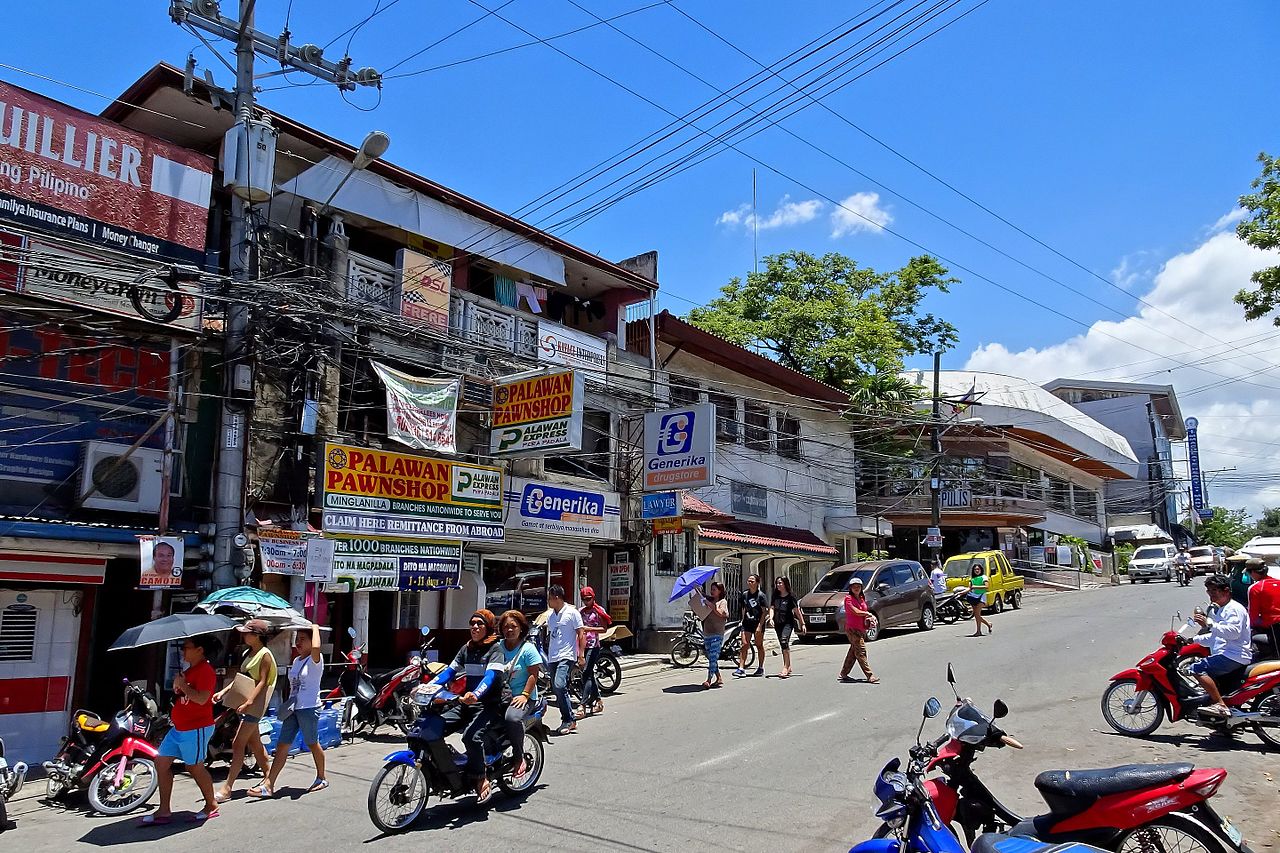
Minglanilla
Minglanilla, officially the Municipality of Minglanilla, is a municipality in the province of Cebu, Philippines.
Government administration · Philippines · 0 followers
Overview
Minglanilla, officially the Municipality of Minglanilla, is a municipality in the province of Cebu, Philippines. According to the 2024 census, it has a population of 155,934 people.
Interested in working with us in the future?
Follow to see new jobs and posts in your feed.
No news yet.
About

Minglanilla, officially the Municipality of Minglanilla, is a municipality in the province of Cebu, Philippines. According to the 2024 census, it has a population of 155,934 people.
Kaynak: Wikipedia · CC BY-SA 4.0
History
Father Sanchez, Minglanilla's first parish priest, is credited as the founder of the town in 1858. The roads and bridges were built by the same Fr. Sanchez together with Fr. Magaz. There were a number of capitanes who headed the town during the Spanish era. The first capitan was Hilario Castañares. During the American regime the first was Canuto Larrobis. The first elected municipal mayor was Gregorio de la Calzada.
Buat was the former name of Minglanilla. It was the place where early settlers dried (buad/buat) their sea catches. But in 1858, it was renamed by Fr. Sanchez after a municipality called Minglanilla in Castilla–La Mancha, Spain.
The town suffered setbacks, among them during the Philippine Revolution of 1896-1898 when insurrectos burned down its municipal building and looted many houses. This event is remembered by a street named 18 de Julio (July 18). In 1942, its poblacion was razed to the ground by the Japanese in retaliation for the presence of the guerrillas in the town.
Geography

Minglanilla is located 15 kilometres (9.3 mi) south of Cebu City. It is bordered to the north by Talisay City, to the west is Toledo City, to the east is the Cebu Strait, and to the south is Naga City. Its land area is 65.6 km2 (25.3 sq mi).
Barangays
Minglanilla is politically subdivided into 19 barangays. Each barangay consists of puroks and some have sitios.
Tunghaan remains the most populous barangay in Minglanilla, while Tungkil was the second most populous and Calajo-an is the third most populous of barangays.
Climate
The climate of Minglanilla is classified as Coronas type III, characterized by a dry season lasting from one to six months. There is no pronounced maximum rain period. The town is placed within the tropical rainforest type of world climate (Köppen type: Af) which has uniform high temperature and heavy precipitation distribution throughout the year.
Economy
It is primarily a residential town, with most of its population commuting to Cebu City for work. Owing to its close location to Cebu City, which is only 15 kilometres (9.3 mi) away from the municipality, it hosts many subdivisions.
Prior to its suburbanization, Minglanilla's primary industry were agriculture and fishing. However, since the 2000s, when the municipality saw developments trickle down from Cebu City due to the city's own economic boom, the municipality has shifted into having a more service-driven economy.
Anjo World Theme Park is located in Barangay Calajo-an. It is the first amusement park in Cebu, and is located in the larger Belmont One development, which hosts a supermarket, a hardware, restaurants, among other retail components, also located within Barangay Calajo-an.
The Minglanilla Techno-Business Park is a 100 hectares (1.0 km2) development which will be built on reclaimed land along the coast of the municipality's Tulay and Calajo-an barangays. It is envisioned primarily to host light industries, but also to other mixed-use developments as well, and is scheduled for completion by 2024.
Culture

Churches
Archdiocesan Shrine of the Immaculate Heart of MaryPoblacion
Our Lady of the Holy Rosary Parish Tungkop
Parroquia de Virgen de los Remedios Guindarohan
Festivals
Sugat–Kabanhawan festival (Easter Feast of Resurrection)
In its devotion to the celebration of Christ's resurrection, the municipality of Minglanilla has long held the distinction of being the "Sugat Capital of the south". Annually held every Easter Sunday, the occasion primarily focuses on the re‑enactment of the meeting of the Risen Christ and the Sorrowful Mother – followed by a string of activities and events scheduled to take place throughout the day. As one of the biggest annually celebrated occasions of the municipality, the festival takes a direct translation in celebrating Christ's resurrection, with street dancing, a wide assortment of day games, and entertainment features. Essentially a socio-religious event, celebrations have played the role of host to a diverse range of organized contests, competitions, and games, including a carabao race, a Burda-making contest (Burda = embroidery), and a mud volleyball tournament. Easter-egg hunts also are part of Sugat-Kabanhawan festivals, just as the street dancing and the ritual showdown have become mainstay staples of the festival's overall program flow.
Kaynak: Wikipedia – Minglanilla · CC BY-SA 4.0