

Providence
Providence es la capital y la ciudad más grande de Rhode Island en los Estados Unidos, y una de las primeras ciudades en ser fundadas en ese país.
Government administration · United States · 0 followers
Overview
Providence es la capital y la ciudad más grande de Rhode Island en los Estados Unidos, y una de las primeras ciudades en ser fundadas en ese país. Ubicada en el condado de Providence, la ciudad es la segunda más grande de Nueva Inglaterra. Su población en 2010 era de 178 042 habitantes, mientras que la de su área metropolitana era de 1 600 856 habitantes.
Interested in working with us in the future?
Follow to see new jobs and posts in your feed.
No news yet.
About

Providence es la capital y la ciudad más grande de Rhode Island en los Estados Unidos, y una de las primeras ciudades en ser fundadas en ese país. Ubicada en el condado de Providence, la ciudad es la segunda más grande de Nueva Inglaterra. Su población en 2010 era de 178 042 habitantes, mientras que la de su área metropolitana era de 1 600 856 habitantes.
Kaynak: Wikipedia · CC BY-SA 4.0
Historia

Providence fue fundada en junio de 1636 por el teólogo puritano Roger Williams y se convirtió en una de las Trece Colonias originales. Como ministro en la Colonia de la bahía de Massachusetts, Williams abogó por la separación de la iglesia y el estado y condenó la confiscación de tierras de los nativos americanos por parte de los colonos. Por estas "opiniones diversas, nuevas y peligrosas" fue condenado por sedición y herejía y desterrado de la colonia. Williams y otros establecieron un asentamiento en Rumford.
Más tarde, el grupo se trasladó río abajo por el río Seekonk, alrededor del punto ahora conocido como Fox Point y río arriba por el río Providence hasta la confluencia de los ríos Moshassuck y Woonasquatucket. Aquí establecieron un nuevo asentamiento al que denominaron "Plantaciones de Providence", uno de los primeros pueblos en los Estados Unidos de la era colonial.
A diferencia de Salem y Boston, Providence carecía de una carta real. Los colonos se organizaron así, asignando terrenos en el lado este del río (el East Side) en 1638. Aproximadamente seis acres cada uno, estos lotes de casas se extendían desde Towne Street (ahora South Main Street) hasta Hope Street.
En 1652, Providence prohibió la esclavitud africana y afroamericana por períodos de más de 10 años. Este estatuto constituyó la primera ley contra la esclavitud en los Estados Unidos, aunque no hay evidencia de que la prohibición se haya aplicado alguna vez.
En marzo de 1676, los narragansetts incendiaron Providence Plantations como parte de la Guerra del Rey Felipe. Más adelante en el año, la legislatura de Rhode Island reprendió formalmente a las otras colonias por provocar la guerra.
En 1770, la Universidad de Brown se trasladó a Providence desde la cercana Warren. En ese momento, la universidad se conocía como Rhode Island College y ocupaba un solo edificio en College Hill. La elección de la universidad de trasladarse a Providence en lugar de Newport simbolizó un alejamiento mayor del dominio comercial y político de esta última ciudad sobre el estado.
Geografía

Según la Oficina del Censo, la ciudad tiene un área total de 112,7 km², de la cual 99,7 km² es tierra y 5,4 km² (10%) es agua.
Providence se encuentra en la cabecera de la bahía Narragansett, con el río Providence, formado por la confluencia de los ríos Moshassuck y Woonasquatucket, fluyendo hacia la bahía a través del Downtown.
Providence está fundada sobre siete colinas. Las más prominentes son: Constitution Hill (cerca del Downtown), College Hill (al este del río Providence), y Federal Hill (al oeste del Downtown). Las otras cuatro son Tockwotten Hill, Smith Hill, Christian Hill y Weybosset Hill.
Barrios
tiene 25 vecindarios oficiales, aunque estos vecindarios a menudo se agrupan y se denominan colectivamente:
El East Side es una región que comprende los vecindarios de Blackstone, Hope (también conocido como Summit), Mount Hope, College Hill, Wayland y Fox Point.
El Distrito de Joyería describe el área delimitada por la I-95, la antigua I-195 y el río Providence. La ciudad se ha esforzado por cambiar el nombre de esta área a Distrito del Conocimiento para reflejar el nuevo desarrollo de la economía basada en la tecnología y las ciencias de la vida del área.
El North End está formado por la concatenación de los barrios de Charles, Wanskuck, Smith Hill, Elmhurst y Mount Pleasant.
El lado sur (o South Providence) consta de los vecindarios de Elmwood, Lower South Providence, Upper South Providence, Washington Park y West End.
West Broadway es un barrio reconocido oficialmente con su propia asociación. Se superpone con la mitad sur de Federal Hill y la parte norte del West End.
Paisaje urbano
Geográficamente, Providence es compacta, característica de las ciudades de la Costa Este que se desarrollaron antes del uso del automóvil. Se encuentra entre las ciudades más densamente pobladas del país y cuenta con el octavo porcentaje más alto de viajeros peatonales. El trazado de las calles de la ciudad es irregular; más de mil calles corren al azar, conectando y saliendo de lugares tradicionalmente bulliciosos como Market Square.
Demografía
Según el censo de 2010, en Providence había 178 042 personas, 162 956 viviendas, y 35 261 familias. La densidad de población era de 3840 habitantes por kilómetro cuadrado, bastante alta y característica de ciudades relativamente antiguas de Nueva Inglaterra como New Haven (Connecticut), Springfield (Massachusetts) y Hartford (Connecticut). También al igual que estas ciudades, la población llegó a su punto más alto en la década de 1940, justo antes del periodo de rápida urbanización que se dio en todo el país.
Providence ha tenido una importante población italiana desde comienzos del siglo XX; en 1930, el 20% de la población aseguraba tener antepasados italianos, porcentaje que ha bajado a 13% en la actualidad. Esta influencia se manifiesta en el barrio Little Italy, en Federal Hill. Los inmigrantes irlandeses también tienen una importancia considerable; el 9% de los residentes aseguran tener antepasados irlandeses.
Según la Oficina del Censo en 2000 los ingresos medios por hogar en la localidad eran de 26 867 dólares, y los ingresos medios por familia eran de 32 058 dólares. Alrededor del 29.1% de la población y del 23.9% de las familias estaban por debajo del umbral de pobreza.
Economía

Alrededor de 1830, Providence tenía industrias manufactureras en metales, maquinaria, textiles, joyería y platería. La fabricación ha disminuido desde entonces, pero la ciudad sigue siendo uno de los mayores centros de diseño y fabricación de joyería y platería. Los servicios también constituyen una gran parte de la economía de la ciudad, en particular la educación, la atención médica y las finanzas. Providence también es el sitio de una instalación de centro seccional (SCF), un centro regional para el Servicio Postal de Estados Unidos Es la capital de Rhode Island, por lo que la economía de la ciudad también consiste en servicios gubernamentales.
Las empresas destacadas con sede en Providence incluyen Fortune 500 Textron, un conglomerado industrial de tecnologías avanzadas; United Natural Foods, distribuidora de alimentos naturales y orgánicos; Fortune 1000 Nortek Incorporado; Gilbane, empresa constructora e inmobiliaria. Otras empresas con sede en la ciudad incluyen Citizens Bank, Virgin Pulse, Ørsted US Offshore Wind y Providence Equity.
La ciudad alberga el Centro de Convenciones de Rhode Island, que se inauguró en diciembre de 1993. Junto con un hotel, el centro de convenciones está conectado con Providence Place Mall, un importante centro comercial, a través de una pasarela elevada.
Cultura

Mucha de la cultura de Providence es similar a la de Rhode Island. Al igual que en el estado, los habitantes de la ciudad tienen un acento no rótico. Providence tiene el mayor número de tiendas de donuts per cápita de cualquier ciudad del país, una por cada 4700 habitantes. Providence, como muchas otras ciudades de Estados Unidos, tiene la reputación de tener el mayor número de restaurantes per cápita, muchos de los cuales han sido fundados o dirigidos por graduados de la Universidad Johnson & Wales.
Providence tiene varios barrios étnicos, los más importantes son Federal Hill y el North End (italianos), Fox Point (portugués), West End (principalmente centroamericano y asiático), y Smith Hill (irlandés con enclaves diversos de otras etnias).
La ciudad ha ganado reputación como una de las comunidades gais más activas y crecientes del noreste; la tasa de relaciones homosexuales es un 75% más alta que la media nacional. El antiguo alcalde, David Cicilline, ganó las elecciones como un hombre abiertamente gay, lo que lo convirtió en el primer alcalde abiertamente gay de una capital de estado de Estados Unidos En Providence se encuentran las mayores saunas para gais de Nueva Inglaterra.
Durante los meses de verano, la ciudad es la sede de WaterFire, una instalación de arte ambiental que consiste en unas 100 hogueras que arden justo por encima de la superficie de los tres ríos que cruzan Downtown Providence. Hay múltiples eventos de WaterFire que están acompañados por piezas de música clásica y world music. Las muestras de arte público, sobre todo las esculturas, cambian regularmente. El grupo de teatro ganador de un premio Tony Trinity Repertory Company, la Providence Black Repertory Company, y la Rhode Island Philharmonic Orchestra tienen su origen en Providence.
Providence también es la sede de varios centros de interpretación de arte como el Veterans Memorial Auditorium, el Providence Performing Arts Center, y el Providence Festival Ballet. La escena de música underground de la ciudad, centrada alrededor de espacios controlados por los artistas como el ya extinto Fort Thunder, es conocida en círculos de música underground. En la ciudad se ambienta El caso de Charles Dexter Ward (1928) de H. P. Lovecraft.
Deportes
La ciudad es la sede del Providence Bruins de la American Hockey League, que juega en el Dunkin' Donuts Center (antiguamente el Providence Civic Center). De 1926 a 1972, los Providence Reds de la AHL jugaron en el Rhode Island Auditorium. En 1972, el equipo se trasladó al Providence Civic Center, donde jugaron hasta que se desplazaron a Binghamton, Nueva York, en 1977.
La ciudad es la sede del equipo de rugby league Rhode Island Rebellion, que juega en la escuela secundaria Classical. Su temporada inaugural comenzó el 4 de junio de 2011.
Los New England Patriots de la NFL y el New England Revolution de la MLS juegan en Foxborough, Massachusetts, que está situado a medio camino entre Providence y Boston. Antiguamente, Providence fue la sede de los Providence Steam Roller de la NFL en la década de 1920 y en la de 1930, y de los Providence Steamrollers de la BAA en la década de 1940. La ciudad también fue el lugar donde Rocky Marciano ganó 29 de sus 49 luchas.
El ya extinto equipo de béisbol de la ciudad, los Providence Grays, compitió en la Liga Nacional de 1879 a 1885. El equipo venció a los New York Metropolitans en la primera Serie Mundial exitosa del béisbol en 1884. Hoy, el béisbol profesional está representado por los Pawtucket Red Sox, que juegan en la vecina Pawtucket.
Providence fue la sede del evento de deportes alternativos Gravity Games de 1999 a 2001, y fue la primera de sede de los X Games, conocidos en su primera edición como los Extreme Games, en 1995. Providence tiene su propia liga de roller derby; fue formada en 2004 y tiene cuatro equipos: el Providence Mob Squad, los Sakonnet River Roller Rats, los Old Money Honeys, y los Rhode Island Riveters.
Gobierno

Como capital del estado, Providence alberga la Asamblea General de Rhode Island, así como las oficinas del gobernador y el vicegobernador en la Casa del Estado de Rhode Island. La ciudad en sí tiene un gobierno de alcalde-consejo. El Ayuntamiento de Providence consta de 15 concejales, uno para cada uno de los distritos de la ciudad, que promulgan ordenanzas y aprueban un presupuesto anual. Providence también tiene tribunales testamentarios y superiores. El Tribunal de Distrito de Estados Unidos para el Distrito de Rhode Island está ubicado en el Downtown, frente al Ayuntamiento de Providence, junto a la Plaza Kennedy.
En noviembre de 2002, David Cicilline fue elegido alcalde de Providence, convirtiéndose en el primer alcalde abiertamente gay de la capital de un estado de Estados Unidos.
El primer alcalde latino de la ciudad fue Ángel Taveras, quien asumió el cargo el 3 de enero de 2011. El actual alcalde Jorge Elorza lo sucedió el 5 de enero de 2015.
Educación
El Distrito de Escuelas Públicas de Providence gestiona las escuelas públicas.
Universidades
Escuela de Diseño de Rhode Island, una de las escuelas mejores de arte del país
Universidad Brown, una universidad de la Ivy League
Universidad Johnson & Wales, notado por su programas culinarios
Universidad de Rhode Island (campus de Providence)
Providencianos ilustres
H. P. Lovecraft (1890-1937), escritor de ciencia ficción y terror.
Henry Giroux (1943- ), crítico cultura y teórico de la pedagogía crítica.
Ernie DiGregorio (1951- ), baloncestista.
Marvin Barnes (1952-2014), baloncestista.
Charles Palumbo (1971- ), luchador profesional.
Damien Chazelle (1985), director de cine y guionista.
Adam Mcllwee (Wicca Phase Springs Eternal) (1990- ), artista musical, vocalista de Tigers Jaw.
Lugares
Centro botánico del parque Roger Williams
Kaynak: Wikipedia – Providence (Rhode Island) · CC BY-SA 4.0
Tarihi
Şehir 1636 yılında dini konular nedeniyle sürgün edilmiş Roger Williams tarafından kurulmuştur.
Sanayileşen ilk şehirlerden olan Providence şehri gümüş ve altın işlemesiyle ünlenmiştir.
Şehirde 8 hastane, 7 yükseköğrenim kurumu bulunmaktadır. Eskiden "Sanayinin arı kovanı" olarak anılan şehir, şimdilerde "rönasans şehri" olarak anılır. Buna rağmen fakirlik oranın en yüksek olduğu kentlerden biridir.
Kardeş şehirler
Providence şehrinin resmen 5 tane kardeş şehri vardır:
History
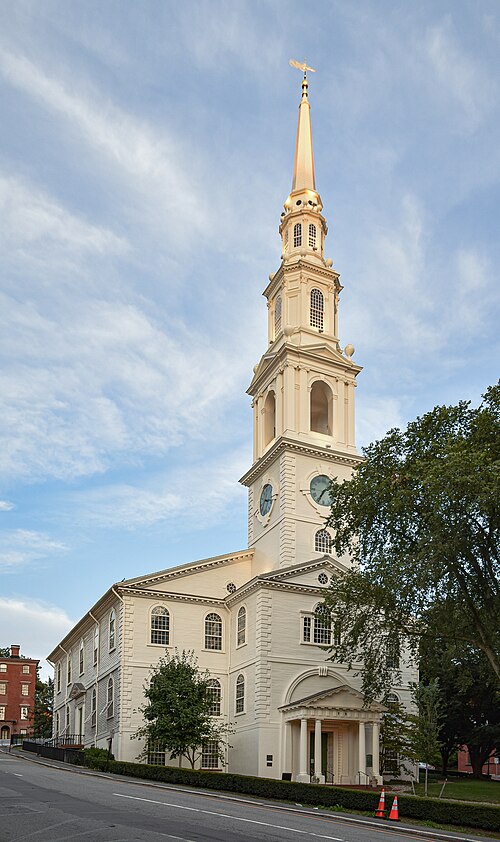
Providence was settled in June 1636 by Puritan theologian Roger Williams and grew into one of the original Thirteen Colonies. As a minister in the Massachusetts Bay Colony, Williams had advocated the separation of church and state and condemned colonists' confiscation of land from the Indians. For these and other "diverse, new, and dangerous opinions," he was convicted of sedition and heresy and banished from the colony. Williams and others established a settlement in Rumford, Rhode Island. The group later moved down the Seekonk River, around Fox Point and up the Providence River to the confluence of the Moshassuck and Woonasquatucket Rivers. The settlement was named after "God's merciful Providence".
Providence lacked a royal charter, unlike Salem and Boston. The settlers thus organized themselves, allotting tracts on the eastern side of the Providence River in 1638 allowing roughly six acres each. These home lots extended from Towne Street (now South Main Street) to Hope Street. Over the following two decades, Providence Plantations grew into a self-sufficient agricultural and fishing settlement, though its lands were difficult to farm and its borders were disputed with Connecticut and Massachusetts.
In 1652, Providence prohibited indentured servitude for periods of longer than 10 years. This statute constituted the first anti-slavery law in the United States, though there is no evidence the prohibition was ever enforced. However, the Rhode Island General Assembly legalized African and Native American slavery throughout the colony in 1703, and Providence merchants' participation in the slave trade helped turn the city into a major port. By 1755, enslaved people made up 8% of Providence's population, below the 10% average for colonial Rhode Island, but above the 5% average for the northern colonies.
Geography

The Providence city limits enclose a small geographical region with a total area of 20.5 square miles (53 km2); 18.5 square miles (48 km2) of it is land and the remaining 2.1 square miles (5.4 km2) is water (roughly 10%). Providence is located at the head of Narragansett Bay, with the Providence River running into the bay through the center of the city, formed by the confluence of the Moshassuck and Woonasquatucket Rivers. The Waterplace Park amphitheater and riverwalks line the river's banks through Downtown. Providence is one of many cities claimed to be founded on seven hills like Rome.
As with many cities worldwide, the Northeastern megacity has a large population of feral pigeons (Columba livia). Although expecting Providence's population genetics to be continuous with the larger megacity, Carlen & Munshi-South 2020 find Providence and Boston share one population and the rest of the region shares another. This is likely due to the intervening low urbanization zone in eastern Connecticut.
Neighborhoods
Providence has 25 official neighborhoods, though these neighborhoods are often grouped together and referred to collectively:
The East Side is a region comprising the neighborhoods of Blackstone, Hope (aka Summit), Mount Hope, College Hill, Wayland, and Fox Point.
The Jewelry District describes the area enclosed by I-95, the old I-195, and the Providence River. The city has made efforts to rename this area the Knowledge District to reflect the area's newly developing life sciences and technology-based economy.
The North End is formed by the concatenation of the neighborhoods of Charles, Wanskuck, Smith Hill, Elmhurst, and Mount Pleasant.
The South Side (or South Providence) consists of the neighborhoods of Elmwood, Lower South Providence, Upper South Providence, Washington Park, and the West End.
Demographics
The city's population peaked in the 1940s, just prior to the nationwide period of rapid suburbanization. The Providence metropolitan area includes Providence, Fall River, and Warwick, and is estimated to have a population of 1,622,520. In 2006, this area was officially added to the Boston Combined Statistical Area (CSA), the sixth-largest CSA in the country. In recent years, Providence has experienced a sizable growth in its under-18 population.
2020 census
As of the 2020 census, Providence had a population of 190,934. The median age was 30.9 years. 21.5% of residents were under the age of 18 and 11.0% of residents were 65 years of age or older. For every 100 females there were 94.7 males, and for every 100 females age 18 and over there were 92.3 males age 18 and over.
100.0% of residents lived in urban areas, while 0.0% lived in rural areas.
There were 69,597 households in Providence, of which 30.5% had children under the age of 18 living in them. Of all households, 29.6% were married-couple households, 24.7% were households with a male householder and no spouse or partner present, and 36.9% were households with a female householder and no spouse or partner present. About 32.9% of all households were made up of individuals and 10.0% had someone living alone who was 65 years of age or older.
There were 75,257 housing units, of which 7.5% were vacant. The homeowner vacancy rate was 1.3% and the rental vacancy rate was 5.2%.
Providence has a racially and ethnically diverse population. In 2020, white Americans formed 53.1% of the population, including a sizable white Hispanic community. Non-Hispanic whites were 33.8% of the total population, down from 89.5% in 1970. Providence has had a substantial Italian American population since the start of the 20th century, with 14% of the population claiming Italian ancestry. Italian influence manifests itself in Providence's 'Little Italy' in Federal Hill. Irish immigrants have also had considerable influence on the city's history, with 8% of residents claiming Irish heritage. The percentages of people claiming Irish and Italian ancestry, though high, has gone down considerably from historical highs, and is much lower than the percentages of these groups in Rhode Island as a whole. The city also has a sizable Jewish community, estimated at 10,500 in 2012, or roughly 5% of the city's population.
Economy

Over one third of Providence's economy is based in trade, transportation, utilities, and educational and health services. As the capital of Rhode Island, the city's economy additionally consists of government services, with approximately 70,000 jobs. The unemployment rate in the city is 5.0% as of August 2022, compared to a national rate of 3.8%.
Prominent companies headquartered in Providence include Fortune 500 Textron, an advanced technologies industrial conglomerate; United Natural Foods, a distributor of natural and organic foods; Fortune 1000 Nortek Incorporated; Gilbane, a construction and real estate company. Other companies with headquarters in the city include Citizens Bank, Virgin Pulse, Ørsted US Offshore Wind, and Providence Equity. Providence is the site of a sectional center facility (SCF), a regional hub for the U.S. Postal Service. Providence is also home to some of toy manufacturer Hasbro's business operations, although their headquarters are in Pawtucket.
The city is home to the Rhode Island Convention Center, which opened in December 1993. Along with a hotel, the convention center is connected to the Providence Place Mall, a major retail center, through a skywalk.
Arts and culture

Much of Providence culture is synonymous with the culture of Rhode Island as a whole. Like the state, the city has a non-rhotic accent that can be heard on local media. Providence also shares Rhode Island's affinity for coffee, with the most coffee and doughnut shops per capita of any city in the country. Providence is also reputed to have the highest number of restaurants per capita of major U.S. cities.
During the summer months, the city regularly hosts WaterFire, an environmental art installation that consists of about 100 bonfires which blaze just above the surface of the three rivers that pass through the middle of Downtown Providence. There are multiple WaterFire events that are accompanied by various pieces of classical and world music.
Providence has several ethnic neighborhoods, notably Federal Hill and the North End (Italian), Fox Point (Portuguese), West End (mainly Central American and Asian), and Smith Hill (Irish). There are also many dedicated community organizations and arts associations located in the city.
The city gained the reputation as one of the most active and growing gay and lesbian communities in the Northeast. The rate of reported gay and lesbian relationships is 75% higher than the national average. Former mayor David Cicilline won his election running as an openly gay man. Former Mayor Buddy Cianci instituted the position of Mayor's Liaison to the Gay and Lesbian community in the 1990s. and Providence is home to the largest gay bathhouse in New England.
The city is the home of the Tony Award-winning theater group Trinity Repertory Company, the Providence Black Repertory Company, and the Rhode Island Philharmonic Orchestra, as well as groups such as The American Band, once associated with noted American composer David Wallis Reeves. Providence hosts several performing arts centers, such as the Veterans Memorial Auditorium, the Providence Performing Arts Center, and Festival Ballet Providence. The city's underground music is centered on artist-run spaces such as the now-defunct Fort Thunder and is known in underground music circles. Providence is also home to the Providence Improv Guild, an improvisational theatre that has weekly performances and offers improv and sketch comedy classes, and AS220, a long-standing non-profit arts center with exhibition, educational, and performance spaces, as well as live-work studios.
Sports

Providence is home to the Providence Bruins of the American Hockey League, who play at the Amica Mutual Pavilion. From 1926 to 1972, the AHL's Providence Reds (renamed the Rhode Island Reds in their last years) played at the Rhode Island Auditorium. In 1972, the team relocated to the Providence Civic Center, where they played until moving to Binghamton, New York, in 1977.
The National Football League's New England Patriots and Major League Soccer's New England Revolution play in Foxborough, Massachusetts, which is situated halfway between Providence and Boston. Providence was formerly home to two major league franchises: the NFL's Providence Steam Roller in the 1920s and 1930s, and the National Basketball Association's Providence Steamrollers in the 1940s. The Rhode Island Auditorium also hosted 29 of the 49 boxing fights of Rocky Marciano.
The city's defunct baseball team, the Providence Grays, competed in the National League from 1878 through 1885. The team defeated the New York Metropolitans in baseball's first successful "world championship series" in 1884. In 1914, after the Boston Red Sox purchased Babe Ruth from the then-minor league Baltimore Orioles, the team prepared Ruth for the major leagues by sending him to finish the season playing for a minor league team in Providence that was also known as the Grays. Most baseball fans—along with the local media—tend to follow the Boston Red Sox.
Major colleges and universities fielding NCAA Division I athletic teams are Brown University and Providence College. The latter is a member of the Big East Conference. Until 2020, Providence was home to the headquarters of the American Athletic Conference (The American).
Providence has also hosted the alternative sports event Gravity Games from 1999 to 2001, and was also the first host of ESPN's X Games, known in its first edition as the Extreme Games, in 1995. Providence has its own roller derby league. Formed in 2004, it currently has four teams: the Providence Mob Squad, the Sakonnet River Roller Rats, the Old Money Honeys, and the Rhode Island Riveters.
Government

The Providence City Council consists of 15 councilors, one for each of the city's wards, who enact ordinances and pass an annual budget. Providence uses a strong-mayor form of government in which the city council acts as a check against the power of the executive branch, the mayor. The members of the Providence City Council are elected by residents of the fifteen wards of Providence. City Council members are elected to four-year terms and are limited, by City Charter, to serving a maximum of three consecutive full terms (excluding any partial term of less than two years previously served).
As the state capital, Providence houses the Rhode Island General Assembly, as well as the offices of the Governor and the Lieutenant Governor in the Rhode Island State House. Providence also has probate and superior courts. The U.S. District Court for the District of Rhode Island is located downtown across from Providence City Hall adjacent to Kennedy Plaza.
Education

Primary and secondary education
The Providence Public School District serves about 21,700 students from pre-Kindergarten to grade 12 as of July 2022. The district has 21 elementary schools, seven middle schools, and nine high schools. The Providence Public School District includes magnet schools at the middle and high school level, Nathanael Greene and Classical respectively. There are two separate centers for students with special needs. Two public charter schools, Time Squared Academy High School (K–12) and Textron Chamber of Commerce (9–12), are funded by GTECH Corporation and Textron respectively. Overall, the public high school graduation rate as of 2019 is 74%, which is below the statewide rate of 84% and the national average of 87%.
A number of private schools also serve Providence students. The city's South Side is home to Community Preparatory School, a private school serving primarily low-income students in grades 3 through 8. There are several private schools in the city's East Side, including Moses Brown (Quaker-affiliated), the Lincoln School, the Wheeler School, and Providence Hebrew Day School (Orthodox Judaism-affiliated). La Salle Academy, a Catholic college preparatory school, is located in the North End, near Providence College.
College and universities
The main campuses of five of Rhode Island's colleges and universities are in Providence (city proper):
Brown University, an Ivy League university and one of nine colonial colleges in the nation
Rhode Island College, the state's oldest public college
In addition, the Community College of Rhode Island, Roger Williams University, and University of Rhode Island have satellite campuses in the city. Between these schools, the number of post-secondary students is between 32,000 and 44,000. Higher education exerts a considerable presence in the city's politics and economy, compounded by the fact that Brown University is the city's second-largest employer.
Media
Providence is the center of Southern New England's broadcasting market, which also encompasses Bristol County, Massachusetts, which includes the cities of Fall River and New Bedford. The city is served by television stations representing every major American television network, as well as radio stations originating from Providence and Boston.
Infrastructure

Health and medicine
Providence is home to eight hospitals, most prominently Rhode Island Hospital, the largest general acute care hospital in the state. It is also the Level I Trauma Center for Rhode Island, Southeastern Massachusetts and parts of Connecticut. The hospital is in a complex that includes Hasbro Children's Hospital and Women and Infants Hospital. The city is also home to the Roger Williams Medical Center, St. Joseph Hospital For Specialty Care (a division of St. Joseph Health Services Of Rhode Island), The Miriam Hospital, a major teaching affiliate associated with the Alpert Medical School of Brown University, as well as a Veterans Affairs medical center.
Transportation
Providence is served by T. F. Green Airport in Warwick, and general aviation fields also serve the region. Massport has been promoting T. F. Green as an alternative to Boston's Logan International Airport because of over-crowding. Providence Station is located between the Rhode Island State House and the Downtown district and is served by Amtrak and MBTA Commuter Rail services, with a commuter rail route running north to Boston and south to T.F. Green Airport and Wickford Junction. Approximately 2,400 passengers pass through the station per day.
I-95 runs from north to south through Providence; I-195 connects the city to eastern Rhode Island and southeastern Massachusetts, including New Bedford, Massachusetts and Cape Cod. I-295 encircles Providence, while RI 146 provides a direct connection with Worcester, Massachusetts. The city began the long-term project Iway in 2007 to move I-195 for safety reasons, to free up land, and to reunify the Jewelry District with Downtown Providence, which had been separated by the highway. The project was estimated to cost $610 million.
The Port of Providence (branded as ProvPort) is the second-largest deep-water seaport in New England. In 1994, the city incorporated ProvPort as an independent non-profit. It is located on a single campus on the west side of the Providence River, next to the Washington Park neighborhood. As of 2021, operations are contracted to Waterson Terminal Services, which also operates terminals at the Port of New Bedford in Massachusetts and in Davisville, Rhode Island. ProvPort handles cargoes such as cement, chemicals, heavy machinery, petroleum, and scrap metal.
Sister cities
Santo Domingo, Dominican Republic (2004)