

Spokane
Spokane es una ciudad estadounidense ubicada en la parte oriental del estado de Washington, cerca de la frontera con el estado de Idaho.
Government administration · United States · 0 followers
Overview
Spokane es una ciudad estadounidense ubicada en la parte oriental del estado de Washington, cerca de la frontera con el estado de Idaho. La ciudad es la segunda más grande del estado de Washington, y también es la más antigua del estado. Es, además, la sede del condado de Spokane. La zona metropolitana alberga una población de casi 550 000 ciudadanos, si se incluyen las afueras de Country Homes, Spokane y Cœur d'Alene. El topónimo Spokane proviene de un idioma nativo y se puede traducir como la ciudad de la tribu del sol.
Interested in working with us in the future?
Follow to see new jobs and posts in your feed.
No news yet.
About

Spokane es una ciudad estadounidense ubicada en la parte oriental del estado de Washington, cerca de la frontera con el estado de Idaho. La ciudad es la segunda más grande del estado de Washington, y también es la más antigua del estado. Es, además, la sede del condado de Spokane. La zona metropolitana alberga una población de casi 550 000 ciudadanos, si se incluyen las afueras de Country Homes, Spokane y Cœur d'Alene. El topónimo Spokane proviene de un idioma nativo y se puede traducir como la ciudad de la tribu del sol.
Kaynak: Wikipedia · CC BY-SA 4.0
Clima
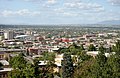
Spokane tiene un clima continental húmedo (Clasificación climática de Koppen: Csa). Típicamente, el área tiene un clima caluroso y árido en los meses de verano, con primaveras y otoños de poca duración. En promedio, julio y agosto son igualmente cálidos, y el mes más frío es diciembre; la temperatura promedio de julio es de 21,7 °C (71,1 °F), mientras que en diciembre es de −1,6 °C (29,1 °F).[cita requerida]
Cultura popular
En esta ciudad transcurre la acción de las películas Mozart y la ballena de 2005,[cita requerida] Amanecer rojo de 2012 y Vision Quest de 1983.
Kaynak: Wikipedia – Spokane (Washington) · CC BY-SA 4.0
History

The first humans to live in the Spokane area were hunter-gatherers that lived off plentiful fish and game; early human remains have been dated to 8,000 to 13,000 years ago. The Spokane tribe, after which the city is named (the name meaning "children of the sun" or "sun people" in Salishan),[a] are believed to be either their direct descendants, or descendants of people from the Great Plains. When asked by early white explorers, the Spokanes said their ancestors came from "up North." Early in the 19th century, the Northwest Fur Company sent two white fur trappers west of the Rocky Mountains to search for fur. These were the first white men met by the Spokanes, who believed they were sacred, and set the trappers up in the Colville River valley for the winter.
Trading post
The explorer-geographer David Thompson, working as head of the North West Company's Columbia Department, became the first European to explore the Inland Empire (now called the Inland Northwest). Crossing what is now the Canada–US border from British Columbia, Thompson wanted to expand the North West Company further south in search of furs. After establishing the Kullyspell House and Saleesh House trading posts in what are now Idaho and Montana, Thompson then attempted to expand further west. He sent out two trappers, Jacques Raphael Finlay and Finan McDonald, to construct a fur trading post on the Spokane River, which flows west from Lake Coeur d'Alene to the Columbia River, and trade with the local Indians. This post was established in 1810, at the confluence of the Little Spokane and Spokane rivers, becoming the first enduring European settlement of significance in what later became Washington state. Known as the Spokane House, or simply "Spokane", it was in operation from 1810 to 1826. Operations were run by the British North West Company and later the Hudson's Bay Company, and the post was the headquarters of the fur trade between the Rocky and Cascade mountains for 16 years. After the latter business absorbed the North West Company in 1821, the major operations at the Spokane House were eventually shifted north to Fort Colville, reducing the post's significance.
Geography

Topography
Spokane is located on the Spokane River in eastern Washington at an elevation of 1,843 feet (562 m) above sea level, about eighteen miles (29 km) west of the Idaho border, 92 miles (148 km) south of the Canadian border, 229 miles (369 km) due east of Seattle, and 279 miles (449 km) southwest of Calgary, Alberta, Canada. The lowest elevation in the city of Spokane is the northernmost point of the Spokane River within city limits (in Riverside State Park) at 1,608 feet (490 m); the highest elevation is on the northeast side, near the community of Hillyard (though closer to Beacon Hill and the North Hill Reservoir) at 2,591 feet (790 m). Spokane is part of the Inland Northwest region, consisting of eastern Washington, north Idaho, northwestern Montana, and northeastern Oregon. The city has a total area of 60.02 square miles (155.45 km2), of which 59.25 square miles (153.46 km2) is land and 0.77 square miles (1.99 km2) is water.
Spokane lies mostly within the Spokane Valley Outwash Plains at the periphery of the North Central Rockies forests ecoregion and partly within the eastern edge of the basaltic Channeled Scablands steppe of the Columbia Plateau ecoregion, a plain that eventually rises sharply to the east towards the rugged, timbered Selkirk Mountains. The foothills of the Rockies—the Coeur d'Alene Mountains—rise about 25 miles (40 km) to the east in north Idaho. The city is in a transition area between the barren landscape of the Columbia Basin and the coniferous forests to the east; to the south are the lush prairies and rolling hills of the Palouse. The highest peak in Spokane County is Mount Spokane, at an elevation of 5,883 feet (1,793 m), on the eastern side of the Selkirk Mountains. The Spokane River is the area's most prominent water feature, a 111-mile (179 km) tributary of the Columbia River, originating from Lake Coeur d'Alene in northern Idaho. The river flows west across the Washington state line through downtown Spokane, meeting Latah Creek, then turns to the northwest, where it is joined by the Little Spokane River on its way to the Columbia River, north of Davenport. The Channeled Scablands and many of the area's numerous large lakes, such as Lake Coeur d'Alene and Lake Pend Oreille, were formed by the Missoula Floods after the ice-dammed Glacial Lake Missoula ruptured at the end of the last ice age. The Turnbull National Wildlife Refuge south of Cheney is the closest natural reserve, the closest National Forest is the Colville National Forest, the closest National Recreation Area is the Lake Roosevelt National Recreation Area and the closest national park is Mount Rainier National Park, approximately a four-and-a-half hour drive from Spokane.
Demographics

2020 census
As of the 2020 census, Spokane had a population of 228,989. The median age was 36.6 years, 21.0% of residents were under the age of 18, and 16.2% of residents were 65 years of age or older. For every 100 females there were 96.8 males, and for every 100 females age 18 and over there were 94.9 males age 18 and over.
According to the 2020 census, 99.9% of residents lived in urban areas and 0.1% lived in rural areas.
There were 94,494 households in Spokane, of which 26.3% had children under the age of 18 living in them, 37.9% were married-couple households, 22.0% were households with a male householder and no spouse or partner present, and 30.6% were households with a female householder and no spouse or partner present. About 34.2% of all households were made up of individuals and 12.9% had someone living alone who was 65 years of age or older.
There were 99,938 housing units, of which 5.4% were vacant. The homeowner vacancy rate was 1.3% and the rental vacancy rate was 5.1%.
2022 American Community Survey
As of the 2022 American Community Survey estimates, there were 230,176 people and 101,130 households. The population density was 3,347.5 inhabitants per square mile (1,292.5/km2). There were 105,002 housing units at an average density of 1,527.1 per square mile (589.6/km2). The racial makeup of the city was 80.7% White, 2.9% some other race, 2.5% Black or African American, 2.0% Asian, 0.8% Native American or Alaskan Native, and 0.5% Native Hawaiian or Other Pacific Islander, with 10.5% from two or more races. Hispanics or Latinos of any race were 8.1% of the population.
Of the 101,130 households, 24.5% had children under the age of 18 living with them, 29.8% had seniors 65 years or older living with them, 35.9% were married couples living together, 7.9% were couples cohabitating, 24.8% had a male householder with no partner present, and 31.4% had a female householder with no partner present. The median household size was 2.21 and the median family size was 2.96.
Economy

Spokane became an important rail and shipping center because of its location between mining and farming areas. In the early 1880s, gold and silver were discovered in the Inland Empire; as a regional shipping center, the city furnished supplies to the miners who passed through on their way to the mineral-rich Coeur d'Alene, Colville and Kootenay districts. The mining districts are still considered among the most productive in North America.
Natural resources have historically been the foundation of Spokane's economy, with the mining, logging, and agriculture industries providing much of the region's economic activity. After mining declined at the turn of the 20th century, agriculture and logging replaced mining as the primary influences in the economy. Lumberjacks and millmen working in the hundreds of mills along the railroads, rivers, and lakes of northern Washington and Idaho were provisioning themselves in Spokane. Agriculture has always been an important sector in the local economy. The surrounding area, especially to the south is the Palouse, a region that has long been associated with farming, especially wheat production where it is one of the largest wheat producing regions in the United States. As with the mining industry in the late 1880s, Spokane was an important agricultural market and trade center. Inland Empire farmers exported wheat, livestock and other agricultural products to the ports such as New York, Liverpool and Tokyo. Today, a large share of the wheat produced in the region is shipped to Far East markets. The Inland Northwest also supports many vineyards and microbreweries as well. By the early 20th century Spokane was primarily a commercial center rather than an industrial center.
In Spokane, wood and food processing, printing and publishing, primary metal refining and fabrication, electrical and computer equipment, and transportation equipment are leaders in the manufacturing sector. Gold mining company Gold Reserve, and Fortune 1000 company Potlatch Corporation – a forest products company that operates as a real estate investment trust – are headquartered in the city proper. Mining, forestry, and agribusiness remain important to the local and regional economy, but Spokane's economy has diversified to include other industries, including the high-tech and biotech sectors. Spokane is becoming a more service-oriented economy in the face of a less prominent manufacturing sector which declined in the 1980s, particularly as a medical and biotechnology center; Fortune 1000 technology company Itron, for instance, is headquartered in the area. Avista Corporation, the holding company of Avista Utilities, is the only company in Spokane that has been listed in the Fortune 500, ranked 299 on the list in 2002. Other companies with head offices in the Spokane area include technology company Key Tronic, vacation rental provider Stay Alfred, and microcar maker Commuter Cars. Despite diversification to new industries, Spokane's economy has struggled in recent decades. Spokane was ranked the #1 "Worst City For Jobs" in America in both 2012 and 2015, while also ranking #4 in 2014. Additionally, Forbes named Spokane the "Scam Capital of America" in 2009 due to widespread business fraud. Trends of fraud were noted as far back as 1988, again in 2002, and continuing through 2011.
Culture

Arts and theater
Spokane's main art districts are located in the Davenport Arts District, the Garland Business District, and East Sprague. The First Friday Artwalk, which occurs the first Friday of every month, is dedicated to local vendors and performers displaying art around downtown. The two most important Artwalk dates (the first Friday of February and October) attract large crowds to the art districts.
The Davenport Arts District has the largest concentration of art galleries and is home to many of Spokane's main performing arts venues, including the Knitting Factory, Fox Theater, and Bing Crosby Theater. The Knitting Factory is a concert house that serves as a setting for many mainstream touring musicians and acts. The Martin Woldson Theater at the Fox, restored to its original 1931 Art Deco state after years of being derelict, is home to the Spokane Symphony Orchestra. The Metropolitan Performing Arts Center was restored in 1988 and renamed the Bing Crosby Theater in 2006 to honor the former Spokanite. Touring stand-up comedians are hosted by the Spokane Comedy Club. Theater is provided by Spokane's only resident professional company, The Modern Theater, though there are also the Spokane Civic Theatre and several other amateur community theaters and smaller groups. The First Interstate Center for the Arts often hosts large traveling exhibitions, shows, and tours. Spokane was awarded the All-America City Award by the National Civic League in 1974, 2004, and 2015.
Spokane offers an array of musical performances catering to a variety of interests. Spokane's local music scene, however, is considered somewhat lacking by the Spokane All-Ages Music Initiative and other critics, who have identified a need for a legitimate all-ages venue for music performances. The Spokane Symphony presents a full season of classical music, and the Spokane Jazz Orchestra, a full season of jazz music. The Spokane Jazz Orchestra, formed in 1962, is a 70-piece orchestra and non-profit organization.
Government and politics

The City of Spokane operates under a mayor–council form of government, with executive and legislative branches that are elected in non-partisan elections. David Condon was elected mayor in November 2011 and took office on the last business day of the year. The previous mayor was Mary Verner, who succeeded Dennis P. Hession who himself succeeded the recalled James "Jim" West. The city elected James Everett Chase as its first African-American mayor in 1981, and after his retirement, elected the city's first woman mayor, Vicki McNeil. Spokane is the county seat of Spokane County, a position it wrested from Cheney in 1886. Spokane is a part of Washington's 3rd legislative district, which is represented in the Washington State Senate by Andy Billig. The 3rd Legislative District is represented in the Washington House of Representatives by Marcus Riccelli and Timm Ormsby.
Federally, Spokane is within Washington's 5th congressional district, and has been represented in the House of Representatives by Republican Michael Baumgartner since 2025. Washington State is represented nationally in the Senate by Democrat Patty Murray and Democrat Maria Cantwell. In the 2012 general election, Spokane County favored Mitt Romney for president over Barack Obama by 51.5 to 45.7 percent; on the state ballot, the county supported the legalization of recreational marijuana ballot measure by 52.2 to 47.9 percent but opposed the legalization of same-sex marriage by 55.9 to 44.1 percent. Spokane native Tom Foley was a Democratic Speaker of the House and served as a representative of Washington's 5th district for 30 years, enjoying large support from Spokane, until his narrow defeat in the "Republican Revolution" of 1994, the only time U.S. voters have turned out a sitting Speaker of the House since 1860.
Education

Public and private schools
Spokane Public Schools (District 81) was organized in 1889, and is the largest public school system in Spokane, and the second-largest in the state, as of 2014, serving roughly 30,000 students in six high schools, six middle schools, and thirty-four elementary schools. Other public school districts in the Spokane area include the Mead School District in north Spokane County, outside city limits. A variety of state-approved, independent charter schools and private and parochial elementary and secondary schools augment the public school system. The Roman Catholic Diocese of Spokane manages ten such schools in & around the area.
Higher education
Spokane is home to many higher education institutions. They include the private universities Gonzaga and Whitworth, and the public Community Colleges of Spokane system (Spokane Community College and Spokane Falls Community College) as well as a variety of technical institutes. Gonzaga University and Law School were founded by the Italian-born priest Joseph Cataldo and the Jesuits in 1887. Whitworth was founded in Tacoma, Washington in 1890 and moved to its present location in 1914. It is affiliated with the Presbyterian Church and had 2,500 students studying in 53 different undergraduate and degree programs as of 2011. While Spokane is one of the larger cities in the U.S. to lack a main campus of a state-supported university within its city limits, Eastern Washington University (EWU) and Washington State University (WSU) have operations at the Riverpoint Campus in the University District, just adjacent to downtown and across the Spokane River from the Gonzaga campus. Washington State University Spokane is WSU's health sciences campus and houses the school's College of Nursing, College of Pharmacy, and Elson S. Floyd College of Medicine. The main EWU campus is located 15 miles (24 km) southwest of Spokane in nearby Cheney, and WSU is located 65 miles (105 km) to the south in Pullman. In addition to WSU's health science presence in Spokane, there is also a four-year medical school branch affiliated with the University of Washington's WWAMI program. An international branch campus of the Mukogawa Women's University, the Mukogawa Fort Wright Institute, is located in Spokane.
Sports

Spokane is close to dozens of lakes and rivers for outdoor sports and recreation. People use these for swimming, boating, kayaking, rafting, and fishing. Nearby mountains provide for skiing, hiking, biking and sightseeing.
The Spokane region's professional and semi-professional sports teams include the Spokane Indians in Minor League Baseball and the Spokane Chiefs in junior ice hockey. Collegiate sports in Spokane focus on the local teams such as the Gonzaga Bulldogs who compete in the NCAA's Division I West Coast Conference and the Whitworth Pirates playing in the Division III Northwest Conference and local media covers other regional teams, including the Eastern Washington Eagles, Washington State Cougars, and the Idaho Vandals.
Baseball
The Spokane Indians located in the suburb Spokane Valley, are a Class High-A baseball team in the Northwest League (NWL) and have been a farm team of the Colorado Rockies since 2021. The Indians play their home games at the 6,803-seat Avista Stadium and have won seven NWL titles since their Short-Season-A debut in 1982. Prior to 1982, the Indians played at the Triple-A level. The team achieved considerable success in the early 1970s, winning the Pacific Coast League championship in 1970, and having a 94–52 record. In the 1920s and 1930s the Spokane City League, a semiprofessional baseball league of teams of the Inland Empire, reached its peak.
Hockey
The Spokane Chiefs are a junior ice hockey team that play in the Canadian Hockey League's Western Hockey League. They play their home games in the Spokane Arena and have a regional rivalry with the Tri-City Americans. They have won the CHL's top prize, the Memorial Cup, two times in club history, first in 1991 and again in 2008.
Soccer
Spokane is host to United Soccer League professional men's USL League One (Spokane Velocity FC), a women's pre-professional USL W League team, as well as a women's professional USL Super League team (Spokane Zephyr FC). They play their home games in ONE Spokane Stadium.
Media

Newspaper service in Spokane is provided by its only major daily newspaper, The Spokesman-Review, which has a daily circulation of 76,291 and Sunday circulation of 95,939. The Spokesman-Review was formed from the merger of the Spokane Falls Review (1883–1894) and the Spokesman (1890–1893) in 1893 and was first published under the present name on June 29, 1894. It later absorbed the competing afternoon paper The Spokane Daily Chronicle, a significant newspaper that existed from 1881 until 1982 and returned in 2021.[j] More specialized publications include the weekly alternative newspaper Inlander, the bi-weekly Spokane Journal of Business, and the student-run Gonzaga Bulletin. Monthly publications include The Black Lens, an African American community newspaper, a newspaper for parents, Kids Newspaper, and a home and lifestyle magazine, Spokane Coeur d'Alene Living.
Radio
According to Arbitron, Spokane is the 94th-largest radio market in the U.S., with 532,100 listeners aged 12 and over. There are 28 AM and FM radio stations broadcast in the city. The five most listened-to stations are KKZX-FM (classic rock), KQNT-AM (news/talk), KXLY-FM (country), KISC-FM (adult contemporary),KZBD-FM (Contemporary Hit Radio), and KZZU-FM (Hot AC). Spokane's primary sources of non-commercial and community radio include Spokane's NPR-affiliate station KPBX-FM and KYRS, a full-power community radio station.
Television
Spokane is the 73rd-largest television market in the U.S., accounting for 0.366% of the total TV households in the U.S. The city has six television stations, representing the major commercial networks and public television. Spokane is the television broadcast center for much of eastern Washington (except the Yakima and Tri-Cities area), northern Idaho, northwestern Montana, northeastern Oregon, and parts of southern Canada (by cable television). Spokane receives broadcasts in the Pacific Time Zone, with weekday prime time beginning at 8 pm. Montana and Alberta, Canada are in the Mountain Time Zone and receive Spokane broadcasts one hour later by their local time. The major network television affiliates include KREM (TV) 2 (CBS), KXLY-TV 4 (ABC), KHQ-TV 6 (NBC; Spokane's first television station, on air on December 20, 1952), KAYU 28 (FOX), KSKN 22 (The CW), KSPS-TV 7 (PBS), and KCDT-TV 26 (PBS; operating out of Coeur d'Alene, Idaho).
Infrastructure

City streets
Spokane's streets use a grid plan that is oriented to the four cardinal directions; generally, the east–west roads are designated as avenues, and the north–south roads are referred to as streets. Major east–west thoroughfares in the city include Francis, Wellesley, Mission, Sprague, and 29th avenues. Major north–south thoroughfares include Maple–Ash, Monroe, Division, Hamilton, Greene–Market (north of I-90), and Ray–Freya (south of I-90) Streets. Division Street divides the city into East and West, while Sprague Avenue splits the city into North and South. Division Street is Spokane's major retail corridor; Sprague Avenue serves the same purpose in Spokane Valley. With over 40,000 vehicles per day in average daily traffic from I-90 north to the intersection of US 2/US 395, North Division is Spokane's busiest corridor.
Spokane's extensive skywalk system covers thirteen blocks in the downtown area and is among the largest in the United States; it is used for pedestrian travel in cold and inclement weather and retail space as well. Despite this, the city has an average Walk Score of 49 as of 2020, indicating that most errands require a car. Its average Bike Score is 52.
Mass transportation
Before the influx of automobiles, Spokane's electric streetcar and interurban lines played a dominant role in moving people and goods around Spokane. Streetcars were installed as early as 1888, when they were pulled by horses. Many older side streets in Spokane still have visible streetcar rails embedded in them. Streetcar service was reduced due to declining ridership beginning in 1922, and by August 1936, all lines had been abandoned or converted to motor buses.
Spokane has intercity rail and bus service provided by Amtrak, Greyhound, Flixbus and Jefferson Lines via the Spokane Intermodal Center. The city is a stop for Amtrak's Empire Builder on its way to and from Chicago's Union Station en route to Seattle and Portland. Amtrak's through service to Seattle and Portland is a legacy of BNSF Railway's old Spokane, Portland and Seattle Railway trackage. Spokane is a major railway junction for the BNSF Railway and the Union Pacific Railroad and is the western terminus for the Montana Rail Link.
Sister cities
Spokane has six current sister cities, as designated by Sister Cities International:
Nishinomiya, Japan – since September 1961 (Spokane's first sister city)
Kaynak: Wikipedia – Spokane, Washington · CC BY-SA 4.0