

Overview
दिल्ली, आधिकारिक तौर पर राष्ट्रीय राजधानी क्षेत्र दिल्ली भारत का एक महानगर और केंद्र-शासित प्रदेश है। इसमें नई दिल्ली सम्मिलित है जो भारत की राजधानी है। दिल्ली में राजधानी के होने के नाते केंद्र सरकार की तीनों इकाइयों- कार्यपालिका, संसद और न्यायपालिका के मुख्यालय नई दिल्ली और दिल्ली में स्थापित हैं। १४८३ वर्ग किलोमीटर में फैला दिल्ली जनसंख्या के तौर पर भारत का दूसरा सबसे बड़ा महानगर है। यहाँ की जनसंख्या लगभग १ करोड़ ७० लाख है। यहाँ बोली जाने वाली मुख्य भाषाएँ हैं : हिन्दी, पंजाबी, उर्दू और अंग्रेज़ी। भारत में दिल्ली का ऐतिहासिक और भौगोलिक महत्त्व है। इसके दक्षिण पश्चिम में अरावली पहाड़ियाँ और पूर्व में यमुना नदी है, जिसके किनारे यह नगर बसा हुआ है। यह प्राचीन समय में गंगा के मैदान से होकर जाने वाले वाणिज्य पथों के रास्ते में पड़ने वाला मुख्य पड़ाव था।
Interested in working with us in the future?
Follow to see new jobs and posts in your feed.
No news yet.
About

दिल्ली, आधिकारिक तौर पर राष्ट्रीय राजधानी क्षेत्र दिल्ली भारत का एक महानगर और केंद्र-शासित प्रदेश है। इसमें नई दिल्ली सम्मिलित है जो भारत की राजधानी है। दिल्ली में राजधानी के होने के नाते केंद्र सरकार की तीनों इकाइयों- कार्यपालिका, संसद और न्यायपालिका के मुख्यालय नई दिल्ली और दिल्ली में स्थापित हैं। १४८३ वर्ग किलोमीटर में फैला दिल्ली जनसंख्या के तौर पर भारत का दूसरा सबसे बड़ा महानगर है। यहाँ की जनसंख्या लगभग १ करोड़ ७० लाख है। यहाँ बोली जाने वाली मुख्य भाषाएँ हैं : हिन्दी, पंजाबी, उर्दू और अंग्रेज़ी। भारत में दिल्ली का ऐतिहासिक और भौगोलिक महत्त्व है। इसके दक्षिण पश्चिम में अरावली पहाड़ियाँ और पूर्व में यमुना नदी है, जिसके किनारे यह नगर बसा हुआ है। यह प्राचीन समय में गंगा के मैदान से होकर जाने वाले वाणिज्य पथों के रास्ते में पड़ने वाला मुख्य पड़ाव था।
Kaynak: Wikipedia · CC BY-SA 4.0
नामकरण
इस नगर का नाम "दिल्ली" कैसे पड़ा इसका कोई निश्चित सन्दर्भ नहीं मिलता, लेकिन व्यापक रूप से यह माना गया है कि यह एक प्राचीन राजा "ढिल्लु" से सम्बन्धित है। कुछ इतिहासकारों का यह मानना है कि यह देहलीज़ का एक विकृत रूप है, जिसका हिन्दुस्तानी में अर्थ होता है 'चौखट', जो कि इस नगर के सम्भवतः सिन्धु-गंगा समभूमि के प्रवेश-द्वार होने का सूचक है। एक और अनुमान के अनुसार इस नगर का प्रारम्भिक नाम "ढिलिका" था। हिन्दी/प्राकृत "ढीली" भी इस क्षेत्र के लिए प्रयोग किया जाता था।
इतिहास

दिल्ली का प्राचीनतम उल्लेख महाभारत नामक महापुराण में मिलता है जहाँ इसका उल्लेख प्राचीन इन्द्रप्रस्थ के रूप में किया गया है। इन्द्रप्रस्थ महाभारत काल में पांडवों की राजधानी थी। पुरातात्विक रूप से जो पहले प्रमाण मिले हैं उससे पता चलता है कि ईसा से दो हजार वर्ष पहले भी दिल्ली तथा उसके आस-पास मानव निवास करते थे।। दिल्ली का इतिहास बेहद पुराना है करीब ७३० ईसा पूर्व के दौरान मालवा के शासकराजा धन्ना भील के एक उत्तराधिकारी ने दिल्ली के सम्राट को चुनौती दी थी ।
मौर्य-काल (ईसा पूर्व ३००) से यहाँ एक नगर का विकास होना आरम्भ हुआ। महाराज पृथ्वीराज चौहान के दरबारी कवि चंद बरदाई की हिन्दी रचना पृथ्वीराज रासो में तोमर राजा अनंगपाल को दिल्ली का संस्थापक बताया गया है। ऐसा माना जाता है कि उसने ही 'लाल-कोट' का निर्माण करवाया था और महरौली के गुप्त कालीन लौह-स्तंभ को दिल्ली लाया। दिल्ली में तोमरों का शासनकाल वर्ष ९००-१२०० तक माना जाता है। 'दिल्ली' या 'दिल्लिका' शब्द का प्रयोग सर्वप्रथम उदयपुर में प्राप्त शिलालेखों पर पाया गया। इस शिलालेख का समय वर्ष ११७० निर्धारित किया गया। महाराज पृथ्वीराज चौहान को दिल्ली का अन्तिम हिन्दू सम्राट माना जाता है।
१२०६ ई० के बाद दिल्ली दिल्ली सल्तनत की राजधानी बनी। इस पर खिलज़ी वंश, तुगलक़ वंश, सैयद वंश और लोदी वंश समेत कुछ अन्य वंशों ने शासन किया। ऐसा माना जाता है कि आज की आधुनिक दिल्ली बनने से पहले दिल्ली सात बार उजड़ी और विभिन्न स्थानों पर बसी, जिनके कुछ अवशेष आधुनिक दिल्ली में अब भी देखे जा सकते हैं। दिल्ली के तत्कालीन शासकों ने इसके स्वरूप में कई बार परिवर्तन किया। मुगल बादशाह हुमायूँ ने सरहिन्द के निकट युद्ध में अफ़गानों को पराजित किया तथा बिना किसी विरोध के दिल्ली पर अधिकार कर लिया। हुमायूँ की मृत्यु के बाद हेमू विक्रमादित्य के नेतृत्व में अफ़गानों नें मुगल सेना को पराजित कर आगरा व दिल्ली पर पुनः अधिकार कर लिया। मुगल बादशाह अकबर ने अपनी राजधानी को दिल्ली से आगरा स्थान्तरित कर दिया। अकबर के पोते शाहजहाँ (१६२८-१६५८) ने सत्रहवीं सदी के मध्य में इसे सातवीं बार बसाया जिसे शाहजहाँनाबाद के नाम से पुकारा गया। शाहजहाँनाबाद को आम बोल-चाल की भाषा में पुराना शहर या पुरानी दिल्ली कहा जाता है। प्राचीनकाल से पुरानी दिल्ली पर अनेक राजाओं एवं सम्राटों ने राज्य किया है तथा समय-समय पर इसके नाम में भी परिवर्तन किया जाता रहा था। पुरानी दिल्ली १६३८ के बाद मुग़ल सम्राटों की राजधानी रही। दिल्ली का आखिरी मुगल बादशाह बहादुर शाह जफ़र था जिसकी मृत्यू निवार्सन में ही रंगून में हुई।
जलवायु, भूगोल और जनसांख्यिकी

दिल्ली-एनसीआर
एनसीआर में दिल्ली से सटे सूबे उत्तर प्रदेश, हरियाणा और राजस्थान के कई शहर शामिल हैं। एनसीआर में ४ करोड़ ७० से ज्यादा आबादी रहती है। समूचे एनसीआर में दिल्ली का क्षेत्रफल १,४८४ स्क्वायर किलोमीटर है। देश की राजधानी एनसीआर का २.९ फीसदी भाग कवर करती है। एनसीआर के तहत आने वाले क्षेत्र में उत्तर प्रदेश के मेरठ, गाजियाबाद, गौतम बुद्ध नगर (नोएडा), बुलंदशहर,शामली, बागपत, हापुड़ और मुजफ्फरनगर; और हरियाणा के फरीदाबाद, गुड़गांव, मेवात, रोहतक, सोनीपत, रेवाड़ी, झज्जर, पानीपत, पलवल, महेंद्रगढ़, भिवाड़ी, जिंद और करनाल जैसे जिले शामिल हैं। राजस्थान से दो जिले - भरतपुर और अलवर एनसीआर में शामिल किए गए हैं।
भौगोलिक स्थिति
राष्ट्रीय राजधानी क्षेत्र दिल्ली 1,484 kमी2 (573 वर्ग मील) में विस्तृत है, जिसमें से 783 kमी2 (302 वर्ग मील) भाग ग्रामीण और 700 kमी2 (270 वर्ग मील) भाग शहरी घोषित है। दिल्ली उत्तर-दक्षिण में अधिकतम 51.9 kमी॰ (32 मील) है और पूर्व-पश्चिम में अधिकतम चौड़ाई 48.48 kमी॰ (30 मील) है। दिल्ली के अनुरक्षण हेतु तीन संस्थाएं कार्यरत है:-
दिल्ली नगर निगम:विश्व का सबसे बड़ा स्थानीय निकाय है, जो कि अनुमानित १३७.८० लाख नागरिकों (क्षेत्रफल 1,397.3 kमी2 or 540 वर्ग मील) को नागरिक सेवाएं प्रदान करती है। यह क्षेत्रफ़ल के हिसाब से भी मात्र टोक्यो से ही पीछे है।". नगर निगम १३९७ वर्ग कि॰मी॰ का क्षेत्र देखती है। वर्तमान में दिल्ली नगर निगम को तीन हिस्सों में बाट दिया गया है उत्तरी दिल्ली नगर निगम,पूर्वी दिल्ली नगर निगम व दक्षिण दिल्ली नगर निगम।
नई दिल्ली नगरपालिका परिषद: (एन डी एम सी) (क्षेत्रफल 42.7 kमी2 or 16 वर्ग मील) नई दिल्ली की नगरपालिका परिषद् का नाम है। इसके अधीन आने वाला कार्यक्षेत्र एन डी एम सी क्षेत्र कहलाता है।
दिल्ली छावनी बोर्ड: (क्षेत्रफल (43 kमी2 or 17 वर्ग मील) जो दिल्ली के छावनी क्षेत्रों को देखता है।
दिल्ली एक अति-विस्तृत क्षेत्र है। यह अपने चरम पर उत्तर में सरूप नगर से दक्षिण में रजोकरी तक फैला है। पश्चिमतम छोर नजफगढ़ से पूर्व में यमुना नदी तक (तुलनात्मक परंपरागत पूर्वी छोर)। वैसे शाहदरा, भजनपुरा, आदि इसके पूर्वतम छोर होने के साथ ही बड़े बाज़ारो में भी आते हैं। रा.रा.क्षेत्र में उपर्युक्त सीमाओं से लगे निकटवर्ती प्रदेशों के नोएडा, गुड़गांव आदि क्षेत्र भी आते हैं। दिल्ली की भू-प्रकृति बहुत बदलती हुई है। यह उत्तर में समतल कृषि मैदानों से लेकर दक्षिण में शुष्क अरावली पर्वत के आरम्भ तक बदलती है। दिल्ली के दक्षिण में बड़ी प्राकृतिक झीलें हुआ करती थीं, जो अब अत्यधिक खनन के कारण सूखती चली गईं हैं। इनमें से एक है बड़खल झील। यमुना नदी शहर के पूर्वी क्षेत्रों को अलग करती है। ये क्षेत्र यमुना पार कहलाते हैं, वैसे ये नई दिल्ली से बहुत से पुलों द्वारा भली-भांति जुड़े हुए हैं। दिल्ली मेट्रो भी अभी दो पुलों द्वारा नदी को पार करती है।
प्रशासन और जनसांख्यिकी
राष्ट्रीय राजधानी क्षेत्र दिल्ली कुल नौ ज़िलों में बँटा हुआ है। हरेक जिले का एक उपायुक्त नियुक्त है और जिले के तीन उपजिले हैं। प्रत्येक उप जिले का एक उप जिलाधीश नियुक्त है। सभी उपायुक्त मंडलीय अधिकारी के अधीन होते हैं। दिल्ली का जिला प्रशासन सभी प्रकार की राज्य एवं केन्द्रीय नीतियों का प्रवर्तन विभाग होता है। यही विभिन्न अन्य सरकारी कार्यकलापों पर आधिकारिक नियंत्रण रखता है। निम्न लिखित दिल्ली के जिलों और उपजिलों की सूची है:-
• सदर बाजार, दिल्ली • कोतवाली, दिल्ली • सब्जी मंडी
• प्रीत विहार • लक्ष्मी नगर • वसुंधरा एंक्लेव • मयूर विहार
• गाँधी नगर, दिल्ली • शाहदरा • बिहारी कालोनी • विवेक विहार • दिलशाद गार्डन
• सीलमपुर • करावल नगर • सीमा पुरी • भजनपुरा
जनसांख्यिकी
१९०१ में ४ लाख की जनसंख्या के साथ दिल्ली एक छोटा नगर था। १९११ में ब्रिटिश भारत की राजधानी बनने के साथ इसकी जनसंख्या बढ़ने लगी। भारत के विभाजन के समय पाकिस्तान से एक बहुत बड़ी संख्या में लोग आकर दिल्ली में बसने लगे। यह प्रवासन विभाजन के बाद भी चलता रहा। वार्षिक ३.८५% की वृद्धि के साथ २००१ में दिल्ली की जनसंख्या १ करोड़ ३८ लाख पहुँच चुकी है। १९९१ से २००१ के दशक में जनसंख्या की वृद्धि की दर ४७.०२% थी। दिल्ली में जनसंख्या का घनत्व प्रति किलोमीटर ९,२९४ व्यक्ति तथा लिंग अनुपात ८२१ महिलाओं एवं १००० पुरूषों का है। यहाँ साक्षरता का प्रतिशत ८१.८२% है।
दर्शनीय स्थल
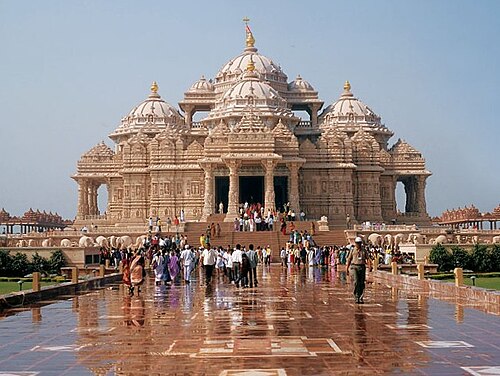
दिल्ली भारत का एक पर्यटन का मुख्य केन्द्र भी है। भारत की राजधानी नई दिल्ली का इसमें होने के कारण भारत सरकार के अनेक कार्यालय, राष्ट्रपति भवन, संसद भवन, केन्द्रीय सचिवालय आदि अनेक आधुनिक स्थापत्य के नमूने तो यहाँ देखे ही जा सकते हैं; प्राचीन नगर होने के कारण इसका ऐतिहासिक महत्त्व भी है। पुरातात्विक दृष्टि से पुराना किला, सफदरजंग का मकबरा, जंतर मंतर, क़ुतुब मीनार और लौह स्तंभ जैसे अनेक विश्व प्रसिद्ध निर्माण यहाँ पर आकर्षण का केन्द्र समझे जाते हैं। एक ओर हुमायूँ का मकबरा, लाल किला जैसे विश्व धरोहर मुगल शैली की तथा पुराना किला, सफदरजंग का मकबरा, लोधी मकबरे परिसर आदि ऐतिहासिक राजसी इमारत यहाँ है तो दूसरी ओर निज़ामुद्दीन औलिया की पारलौकिक दरगाह भी। लगभग सभी धर्मों के प्रसिद्ध धार्मिक स्थल यहाँ हैं जैसे बिरला मंदिर, आद्या कात्यायिनी शक्तिपीठ, बंगला साहब गुरुद्वारा, बहाई मंदिर, अक्षर धाम मंदिर, और जामा मस्जिद
देश के शहीदों का स्मारक इंडिया गेट, राजपथ पर इसी शहर में निर्मित किया गया है। भारत के प्रधान मंत्रियों की समाधियाँ हैं, जंतर मंतर है, लाल किला है साथ ही अनेक प्रकार के संग्रहालय और अनेक बाज़ार हैं, जैसे कनॉट प्लेस, चाँदनी चौक और बहुत से रमणीक उद्यान भी हैं, जैसे मुगल उद्यान, गार्डन ऑफ फाइव सेंसिस, तालकटोरा गार्डन, लोदी गार्डन, चिड़ियाघर, आदि, जो दिल्ली घूमने आने वालों का दिल लुभा लेते हैं।
दिल्ली के शिक्षा संस्थान

दिल्ली भारत में शिक्षा का एक महत्त्वपूर्ण केन्द्र है। दिल्ली के विकास के साथ-साथ यहाँ शिक्षा का भी तेजी से विकास हुआ है। प्राथमिक शिक्षा तो प्रायः सार्वजनिक है। एक बहुत बड़े अनुपात में बच्चे माध्यमिक विद्यालयों में शिक्षा ग्रहण कर रहे हैं। स्त्री शिक्षा का विकास हर स्तर पर पुरुषों से अधिक हुआ है। यहाँ की शिक्षा संस्थाओं में विद्यार्थी भारत के सभी भागों से आते हैं। यहाँ कई सरकारी एवं निजी शिक्षा संस्थान हैं जो कला, वाणिज्य, विज्ञान, प्रोद्योगिकी, आयुर्विज्ञान, विधि और प्रबंधन में उच्च स्तर की शिक्षा देने के लिए विख्यात हैं। उच्च शिक्षा के संस्थानों सबसे महत्त्वपूर्ण है जिसके अन्तर्गत कई कॉलेज एवं शोध संस्थान हैं। अखिल भारतीय आयुर्विज्ञान संस्थान, भारतीय प्रौद्योगिकी संस्थान, जवाहरलाल नेहरू विश्वविद्यालय, इन्दिरा गांधी राष्ट्रीय मुक्त विश्वविद्यालय, गुरु गोबिन्द सिंह इन्द्रप्रस्थ विश्वविद्यालय, टेरी - ऊर्जा और संसाधन संस्थान एवं जामिया मिलिया इस्लामिया उच्च शिक्षा के प्रमुख संस्थान हैं।
संस्कृति

दिल्ली शहर में बने स्मारकों से विदित होता है कि यहां की संस्कृति प्राच्य ऐतिहासिक पृष्ठ भूमि से प्रभावित है। भारतीय पुरातात्विक सर्वेक्षण विभाग ने दिल्ली शहर में लगभग १२०० धरोहर स्थल घोषित किए हैं, जो कि विश्व में किसी भी शहर से कहीं अधिक है। और इनमें से १७५ स्थल राष्ट्रीय धरोहर स्थल घोषित किए हैं। पुराना शहर वह स्थान है, जहां मुगलों और तुर्क शासकों ने स्थापत्य के कई नमूने खड़े किए, जैसे जामा मस्जिद (भारत की सबसे बड़ी मस्जिद) और लाल किला। दिल्ली में फिल्हाल तीन विश्व धरोहर स्थल हैं – लाल किला, कुतुब मीनार और हुमायुं का मकबरा। अन्य स्मारकों में इंडिया गेट, जंतर मंतर (१८वीं सदी की खगोलशास्त्रीय वेधशाला), पुराना किला (१६वीं सदी का किला). बिरला मंदिर, अक्षरधाम मंदिर और कमल मंदिर आधुनिक स्थापत्यकला के उत्कृष्ट उदाहरण हैं। राज घाट में राष्ट्रपिता महात्मा गाँधी तथा निकट ही अन्य बड़े व्यक्तियों की समाधियां हैं। नई दिल्ली में बहुत से सरकारी कार्यालय, सरकारी आवास, तथा ब्रिटिश काल के अवशेष और इमारतें हैं। कुछ अत्यंत महत्त्वपूर्ण इमारतों में राष्ट्रपति भवन, केन्द्रीय सचिवालय, राजपथ, संसद भवन और विजय चौक आते हैं। सफदरजंग का मकबरा और हुमायुं का मकबरा मुगल बागों के चार बाग शैली का उत्कृष्ट उदाहरण हैं।
दिल्ली के राजधानी नई दिल्ली से जुड़ाव और भूगोलीय निकटता ने यहाँ की राष्ट्रीय घटनाओं और अवसरों के महत्त्व को कई गुणा बढ़ा दिया है। यहाँ कई राष्ट्रीय त्यौहार जैसे गणतंत्र दिवस, स्वतंत्रता दिवस और गाँधी जयंती खूब हर्षोल्लास से मनाए जाते हैं। भारत के स्वतंत्रता दिवस पर यहाँ के प्रधान मंत्री लाल किले से यहाँ की जनता को संबोधित करते हैं। बहुत से दिल्लीवासी इस दिन को पतंगें उड़ाकर मनाते हैं। इस दिन पतंगों को स्वतंत्रता का प्रतीक माना जाता है। गणतंत्र दिवस की परेड एक वृहत जुलूस होता है, जिसमें भारत की सैन्य शक्ति और सांस्कृतिक झांकी का प्रदर्शन होता है।
यहाँ के धार्मिक त्यौहारों में दीवाली, होली, दशहरा, दुर्गा पूजा, महावीर जयंती, गुरु परब, क्रिसमस, महाशिवरात्रि, ईद उल फितर, बुद्ध जयंती लोहड़ी पोंगल और ओड़म जैसे पर्व हैं। कुतुब फेस्टिवल में संगीतकारों और नर्तकों का अखिल भारतीय संगम होता है, जो कुछ रातों को जगमगा देता है। यह कुतुब मीनार के पार्श्व में आयोजित होता है। अन्य कई पर्व भी यहाँ होते हैं: जैसे आम महोत्सव, पतंगबाजी महोत्सव, वसंत पंचमी जो वार्षिक होते हैं। एशिया की सबसे बड़ी ऑटो प्रदर्शनी: ऑटो एक्स्पो दिल्ली में द्विवार्षिक आयोजित होती है। प्रगति मैदान में वार्षिक पुस्तक मेला आयोजित होता है। यह विश्व का दूसरा सबसे बड़ा पुस्तक मेला है, जिसमें विश्व के २३ राष्ट्र भाग लेते हैं। दिल्ली को उसकी उच्च पढ़ाकू क्षमता के कारण कभी कभी विश्व की पुस्तक राजधानी भी कहा जाता है।
स्थापत्य

इस ऐतिहासिक नगर में एक ओर प्राचीन, अतिप्राचीन काल के असंख्य खंडहर मिलते हैं, तो दूसरी ओर अवार्चीन काल के योजनानुसार निर्मित उपनगर भी। इसमें विश्व के किसी भी नवीनतम नगर से होड़ लेने की क्षमता है। प्राचीनकाल के कितने ही नगर नष्ट हो गए पर दिल्ली अपनी भौगिलिक स्थिति और समयानुसार परिवर्तनशीलता के कारण आज भी समृद्धशाली नगर ही नहीं महानगर है। भारत सरकार के संस्कृति मंत्रालय के भारतीय पुरातत्व सर्वेक्षण विभाग ने दिल्ली में १२०० इमारतों को ऐतिहासिक महत्त्व का तथा १७५ को राष्ट्रीय सांस्कृतिक स्मारक घोषित किया है।
नई दिल्ली में महरौली में गुप्तकाल में निर्मित लौहस्तंभ है। यह प्रौद्योगिकी का एक अनुठा उदाहरण है। ईसा की चौथी शताब्दी में जब इसका निर्माण हुआ तब से आज तक इस पर जंग नहीं लगा। दिल्ली में इंडो-इस्लामी स्थापत्य का विकाश विशेष रूप से दृष्टगत होता है। दिल्ली के कुतुब परिसर में सबसे भव्य स्थापत्य कुतुब मिनार है। इस मिनार को स़ूफी संत कुतुबुद्दीन बख्तियार काकी की स्मृति में बनवाया गया था। तुगलक काल में निर्मित गयासुद्दीन का मकबरा स्थापत्य में एक नई प्रवृत्ति का सूचक है। यह अष्टभुजाकार है। दिल्ली में हुमायूँ का मकबरा मुगल स्थापत्य कला का एक उत्कृष्ट उदाहरण है। शाहजहाँ का शासनकाल स्थापत्य कला के लिए याद किया जाता है।
अर्थ व्यवस्था
मुंबई के बाद दिल्ली भारत के सबसे बड़े व्यापारिक महानगरो में से है। देश में प्रति व्यक्ति औसत आय की दृष्टि से भी यह देश के सबसे सम्पन्न नगरो में गिना जाता है। १९९० के बाद से दिल्ली विदेशी निवशेकों का पसन्दीदा स्थान बना है। हाल में कई बहुराष्ट्रीय कंपनियों जैसे पेप्सी, गैप, इत्यादि ने दिल्ली और उसके आस-पास के क्षेत्रों में अपना मुख्यालय खोला है। क्रिसमस के दिन वर्ष २००२ में दिल्ली के महानगरी क्षेत्रों में दिल्ली मेट्रो रेल का शुभारम्भ हुआ जिसे वर्ष २०२२ में पूरा किये जाने का अनुमान है।
हवाई यातायात द्वारा दिल्ली इन्दिरा गांधी अन्तरराष्ट्रीय विमानस्थल से पूरे विश्व से जुड़ा है।.
यातायात सुविधाएं

दिल्ली के सार्वजनिक यातायात के साधन मुख्यतः बस, ऑटोरिक्शा और मेट्रो रेल सेवा हैं। दिल्ली की मुख्य यातायात आवश्यकता का ६०% बसें पूरा करती हैं। दिल्ली परिवहन निगम द्वारा संचालित सरकारी बस सेवा दिल्ली की प्रधान बस सेवा है। दिल्ली परिवहन निगम विश्व की सबसे बड़ी पर्यावरण सहयोगी बस-सेवा प्रदान करता है। हाल ही में बी आर टी कॉरिडोर की सेवा अंबेडकर नगर और दिल्ली गेट के बीच आरम्भ हुई है। जिसे तकनीकी खामियों के कारण तोड़ दिया है और अब सड़क को पुराने स्वरूप में बदल दिया गया है। ऑटो रिक्शा दिल्ली में यातायात का एक प्रभावी माध्यम है। ये ईंधन के रूप में सी एन जी का प्रयोग करते हैं, व इनका रंग हरा होता है। दिल्ली में वातानुकूलित टैक्सी सेवा भी उपलब्ध है जिनका किराया ७.५० से १५ रु/कि॰मी॰ तक है। दिल्ली की कुल वाहन संख्या का ३०% निजी वाहन हैं। दिल्ली में १९२२.३२ कि॰मी॰ की लंबाई प्रति १०० कि॰मी॰२, के साथ भारत का सर्वाधिक सड़क घनत्व मिलता है। दिल्ली भारत के पांच प्रमुख महानगरों से राष्ट्रीय राजमार्गों द्वारा जुड़ा है। ये राजमार्ग हैं: राष्ट्रीय राजमार्ग संख्या: १, २, ८, १० और २४। अभी कुछ समय पहले प्रधानमंत्री नरेंद मोदी ने राष्ट्रीय राजमार्ग २४ जो निज़ामुद्दीन से मेरठ के लिए दिल्ली-मेरठ एक्स्प्रेस वे का उद्घाटन किया था वह ८ लेन का है जिसकी अधिकतम १०० किलोमीटर प्रतिघंटा की स्पीड से चल सकते हैं वो भी है। दिल्ली की सड़कों का अनुरक्षण दिल्ली नगर निगम (एम सी डी), दिल्ली छावनी बोर्ड, पब्लिक वर्क डिपार्टमेंट (PWD) और दिल्ली विकास प्राधिकरण द्वारा किया जाता है। दिल्ली के उच्च जनसंख्या दर और उच्च अर्थ विकास दर ने दिल्ली पर यातायात की वृहत मांग का दबाव यहाँ की अवसंरचना पर बनाए रखा है। २००८ के अनुसार दिल्ली में ५५ लाख वाहन नगर निगम की सीमाओं के अंदर हैं। इस कारण दिल्ली विश्व का सबसे अधिक वाहनों वाला शहर है। साथ ही राष्ट्रीय राजधानी क्षेत्र में ११२ लाख वाहन हैं। सन १९८५ में दिल्ली में प्रत्येक १००० व्यक्ति पर ८५ कारें थीं। दिल्ली के यातायात की मांगों को पूरा करने हेतु दिल्ली और केन्द्र सरकार ने एक मास रैपिड ट्रांज़िट सिस्टम का आरम्भ किया, जिसे दिल्ली मेट्रो कहते हैं। सन १९९८ में सर्वोच्च न्यायालय ने दिल्ली के सभी सार्वजनिक वाहनों को डीज़ल के स्थान पर कंप्रेस्ड नैचुरल गैस का प्रयोग अनिवार्य रूप से करने का आदेश दिया था। तब से यहाँ सभी सार्वजनिक वाहन सी एन जी पर ही चालित हैं।
इन्हें भी देखें
भारत के राज्यों और संघ क्षेत्रों की राजधानियाँ
राष्ट्रीय राजधानी क्षेत्र दिल्ली के सर्वाधिक जनसंख्या वाले शहरों की सूची
Kaynak: Wikipedia – दिल्ली · CC BY-SA 4.0
Toponym
There are a number of myths and legends associated with the origin of the name Delhi. One of them is derived from Dhillu or Dilu, a king who built a city at this location in 50 BCE and named it after himself. Another legend holds that the name of the city is based on the Prakrit word dhili (loose) and that it was used by the Tomaras to refer to the city because the Iron pillar of Delhi had a weak foundation and had to be moved. According to Panjab Notes and Queries, the name of the city at the time of King Prithviraj Chauhan was dilpat, and that dilpat and dilli are probably derived from the Old Hindi word dil meaning "eminence". The former director of the Archaeological Survey of India, Alexander Cunningham, mentioned that dilli later became dihli/dehli. Some suggest the coins in circulation in the region under the Tomaras were called dihliwal/dehliwal. According to the Bhavishya Purana, King Prithiviraja of Indraprastha built a new fort in the modern-day Purana Qila area for the convenience of all four castes in his kingdom. He ordered the construction of a gateway to the fort and later named the fort dehali. Some historians believe that Dhilli or Dhillika is the original name for the city while others believe the name could be a corruption of the Hindustani words dahliz (from Persian) or dehali (from Sanskrit) —both terms meaning "threshold" or "gateway"—and symbolic of the city as a gateway to the Gangetic Plain.
The people of Delhi are referred to as Delhiites or Dilliwalas. The city is referenced in various idioms of the Northern Indo-Aryan languages. Examples include:
Dillī abhī dūr hai (दिल्ली अभी दूर है / دلی ابھی دور ہے) or its Persian version, Hanūz Dihlī dūr ast (هنوز دهلی دور است), which aptly translates to both "there's many a slip twixt cup and lip" as well as "there is still much work to be done" (lit. 'Delhi is still far away'), which is generically said about a task or journey still far from completion.
History

Ancient and early medieval periods
Traditionally seven cities have been associated with the region of Delhi. The earliest, Indraprastha, is part of a literary description in the Sanskrit epic Mahabharata (composed c. 400 BCE to 300 CE but describing an earlier time) which situates a city on a knoll on the banks of the river Yamuna. According to art historian Catherine B. Asher, the topographical description of the Mahabharata matches the area of Purana Qila, a 14th-century CE fort of the Delhi sultanate, but the analogy does not go much further. Whereas the Mahabharata speaks of a beautifully decorated city with surrounding fortifications, the excavations have yielded "uneven findings of painted grey pottery characteristic of the eleventh century BCE; no signs of a built environment, much less fortifications, have been revealed."
The earliest architectural relics date back to the Maurya period (c. 300 BCE); in 1966, an inscription of the Mauryan Emperor Ashoka (273–235 BCE) was discovered near Srinivaspuri. Remains of several major cities can be found in Delhi. The first of these was in the southern part of present-day Delhi. Tomara Rajput King Anang Pal built the Lal Kot and several temples in 1052 CE. The Chauhan Rajputs under Vigraharaja IV conquered Lal Kot in the mid-12th century and renamed it Qila Rai Pithora.
Late medieval period
Prithviraj Chauhan was defeated in 1192 by Muhammad Ghori in the second battle of Tarain. Qutb-ud-din Aibak, was given the responsibility of governing the conquered territories of India after Ghori returned to his capital, Ghor. When Ghori died without an heir in 1206 CE, Qutb-ud-din assumed control of Ghori's Indian possessions and laid the foundation of the Delhi Sultanate and the Mamluk dynasty. He began construction of the Qutb Minar and Quwwat-al-Islam (Might of Islam) mosque, the earliest extant mosque in India. It was his successor, Iltutmish (1211–1236), who consolidated the conquest of northern India. At 72.5 m (238 ft), the Qutb Minar, a UNESCO World Heritage Site in Delhi, was completed during the reign of Sultan Illtutmish in the 13th century. Although its style has some similarities with the Jarkurgan minaret, it is more closely related to the Ghaznavid and Ghurid minarets of Central Asia Razia, daughter of Iltutmish, became the Sultana of Delhi upon the former's death.
Geography

Delhi is located in North India at 28.61°N 77.23°E / 28.61; 77.23. The city is bordered on its northern, western, and southern sides by the state of Haryana and to the east by that of Uttar Pradesh (UP). Two prominent features of the geography of Delhi are the Yamuna flood plains and the Delhi Ridge. The Yamuna River was the historical boundary between Haryana and UP, and its floodplains provide fertile alluvial soil suitable for agriculture but are prone to recurrent flooding. The Yamuna, a sacred river in Hinduism, is the only major river flowing through Delhi. The Hindon River separates Ghaziabad from the eastern part of Delhi. The Delhi Ridge originates in the Aravalli Range to the south and encircles the west, northeast, and northwest parts of the city. It reaches a height of 318 m (1,043 ft) and is a dominant feature of the region.
In addition to the wetlands formed by the Yamuna River, Delhi continues to retain over 500 ponds (wetlands < 5 ha (12 acres)), which in turn support a considerable number of bird species. Delhi's ponds, despite experiencing ecological deterioration due to garbage dumping and concretisation, support the largest number of bird species known to be using ponds anywhere in the world. Existing policy in Delhi prevents the conversion of wetlands and, quite inadvertently, has led to the city's ponds becoming invaluable refuge for birds.
The National Capital Territory of Delhi covers an area of 1,483 km2 (573 sq mi), of which 783 km2 (302 sq mi) is designated rural, and 700 km2 (270 sq mi) urban therefore making it the largest city in terms of area in the country. It has a maximum length of 51.9 km (32 mi) and a greatest width of 48.48 km (30 mi). Delhi is included in India's seismic zone-IV, indicating its vulnerability to major earthquakes. The region is traversed by the Delhi–Haridwar Ridge and the Delhi–Moradabad fault systems, which contribute to its seismic hazard, with the potential for earthquakes reaching intensity VIII on the MSK scale.
Civic administration
Currently, the NCT of Delhi is made up of one division, 11 districts, 33 subdivisions, 59 census towns, and 300 villages.
On the other hand, the NCT of Delhi is divided into three municipalities. The boundaries of municipalities may be different from district boundaries:
Municipal Corporation of Delhi (MCD), which occupies an area of 1,397.3 km2 (539.5 sq mi) and is sub-divided into 12 zones, that is, Centre, South, West, Najafgarh, Rohini, Civil Lines, Karol Bagh, SP-City, Keshavpuram, Narela, Shahdara North and Shahdara South. Pravesh Wahi, is the current mayor of the unified Municipal Corporation of Delhi since 2026.
New Delhi Municipality , which occupies an area of 42.7 km2 (16.5 sq mi)
Delhi Cantonment, which occupies an area of 42.3 km2 (16.3 sq mi)
Between 13 January 2011 and 22 May 2022, MCD was divided into three municipal corporations:
South Delhi Municipal Corporation (SDMC) had jurisdiction over South and West Delhi areas, including Mahipalpur, Rajouri Garden, Uttam Nagar, Badarpur, Jaitpur, Janakpuri, Hari Nagar, Tilak Nagar, Dwarka, Jungpura, Greater Kailash, R K Puram, Malviya Nagar, Kalkaji, Ambedkar Nagar and Pul pehladpur.
North Delhi Municipal Corporation (NDMC) had jurisdiction over areas such as Badli, Rithala, Bawana, Kirari, Mangolpuri, Tri Nagar, Model Town, Sadar Bazar, Chandni Chowk, Matia Mahal, Karol Bagh, Moti Nagar
East Delhi Municipal Corporation (EDMC) had jurisdiction over areas such as Patparganj, Kondli, Laxmi Nagar, Seemapuri, Gonda, Karawal Nagar, Babarpur and Shahadra.
Delhi is home to the High Court of Delhi. The High Court of Delhi is the highest in the Delhi before Supreme Court. The High Court of Delhi just like the apex court and other High Courts in India is the Court of record. Delhi is also home to various District Court according to jurisdictions. Delhi have Currently seven District Courts namely Tis Hazari Court Complex, Karkardooma Court Complex, Patiala House Court Complex, Rohini Court Complex, Dwarka Courts Complex, Saket Court Complex, and Rouse Avenue Court
Government and politics

As a first-level administrative division, the National Capital Territory of Delhi has its own Legislative Assembly, Lieutenant Governor, the council of ministers, and Chief Minister. Members of the legislative assembly are directly elected from territorial constituencies in the NCT. The legislative assembly was abolished in 1956, after which direct federal control was implemented until it was re-established in 1993. The municipal corporation handles civic administration for the city as part of the Panchayati Raj Act. The Government of India and the Government of National Capital Territory of Delhi jointly administer New Delhi, where both bodies are located. The Parliament of India, the Rashtrapati Bhavan (Presidential Palace), Cabinet Secretariat, and the Supreme Court of India are located in the municipal district of New Delhi. There are 70 assembly constituencies and seven Lok Sabha (Indian Parliament's lower house) constituencies in Delhi.
In the first legislative assembly elections, Bharatiya Janata Party (BJP), led by Madan Lal Khurana, came to power. In 1998, the Congress came to power under the leadership of Sheila Dikshit, who was subsequently re-elected for 3 consecutive terms. But in 2013, the Congress was ousted from power by the newly formed Aam Aadmi Party (AAP) led by Arvind Kejriwal forming the government with outside support from the Congress. This was despite the Bharatiya Janata Party winning a plurity. However, that government was short-lived, collapsing only after 49 days. Delhi was then under President's rule until February 2015, after which AAP returned to power after a landslide victory, winning 67 out of the 70 seats in the Delhi Legislative Assembly. AAP has held power until Feb 2025. Following assembly elections in 2025, BJP came to power with an outright majority.
Economy

Delhi is the largest commercial center in northern India. As of 2016 recent estimates of the economy of the Delhi urban area have ranged from $370 billion to $400 billion (PPP metro GDP) ranking it either the most or second-most productive metro area of India. The nominal GSDP of the NCT of Delhi for 2016–17 was estimated at ₹6,224 billion (US$65 billion), 13% higher than in 2015–16. Oxford Economics Global Cities index 2024 ranked Delhi as best city in India and 108th best city in the world in Economics Category.
As per the Economic survey of Delhi (2005–2006), the tertiary sector contributes 70.95% of Delhi's gross SDP followed by secondary and primary sectors with 25.20% and 3.85% contributions, respectively. Delhi's workforce constitutes 32.82% of the population, and increased by 52.52% between 1991 and 2001. Delhi's unemployment rate decreased from 12.57% in 1999–2000 to 4.63% in 2003. In December 2004, 636,000 people were registered with various employment exchange programmes in Delhi.
In 2018 the total workforce in national and state governments and the quasi-government sector was 594,000, and the private sector employed 273,000. Key service industries are information technology, telecommunications, hotels, banking, media and tourism. Construction, power, health and community services and real estate are also important to the city's economy. Delhi has one of India's largest and fastest growing retail industries. Manufacturing also grew considerably as consumer goods companies established manufacturing units and headquarters in the city. Delhi's large consumer market and the availability of skilled labour has also attracted foreign investment. In 2001, the manufacturing sector employed 1,440,000 workers and the city had 129,000 industrial units.
Utility services
Delhi's municipal water supply is managed by the Delhi Jal Board (DJB). As of November 2025, it supplies 900 million gallons per day (MGD). The shortfall is met by private and public tube wells and hand pumps. At 240 MGD, the Bhakra storage is DJB's largest water source, followed by the Yamuna and Ganges rivers. Delhi's groundwater level is falling and its population density is increasing, so residents often encounter acute water shortage. Research on Delhi suggests that up to half of the city's water use is unofficial groundwater.In Delhi, daily domestic solid waste production is 8000 tonnes which is dumped at three landfill locations by MCD. The daily domestic waste water production is 470 MGD and industrial waste water is 70 MGD. A large portion of the sewage flows untreated into the Yamuna river.
The city's electricity consumption is about 1,265 kWh per capita but the actual demand is higher. In Delhi power distribution is managed by TPDDL and BSES Yamuna & BSES Rajdhani since 2002, transmission of power is done by Delhi Transco Limited and Powergrid, while generation of power is by IPGCL and PPCL. The city also imports a significant quantum of power from other states.
The Delhi Fire Service runs 43 fire stations that attend about 15,000 fire and rescue calls per year. The state-owned MTNL and private enterprises such as Airtel, Vi, Jio provide telephone and cell phone services to the city. Cellular coverage is available in GSM, 3G, 4G, 4G+ and 5G.
Transport

Air
Indira Gandhi International Airport, situated to the south-west of Delhi, is the main gateway for the city's domestic and international civilian air traffic. In 2015–16, the airport handled more than 48 million passengers, making it the busiest airport in India and South Asia. Terminal 3, which cost ₹96.8 billion (US$1.0 billion) to construct between 2007 and 2010, handles an additional 37 million passengers annually. In 2010, IGIA was conferred the 4th best airport award in the world in the 15–25 million category, by Airports Council International. The airport was rated as the Best airport in the world in the 25–40 million passengers category in 2015, by Airports Council International. Delhi Airport was awarded The Best Airport in Central Asia and Best Airport Staff in Central Asia at the Skytrax World Airport Awards 2015. Hindon Domestic Airport in Ghaziabad was inaugurated by Prime Minister Narendra Modi as the second airport for the Delhi-NCR Region on 8 March 2019. A second international airport open for commercial flights has been suggested either by expansion of Meerut Airport or construction of a new airport in Greater Noida.
The Taj International Airport project in Jewar has been approved by the Uttar Pradesh government.
The Delhi Flying Club, established in 1928 with two de Havilland Moth aircraft named Delhi and Roshanara, was based at Safdarjung Airport which started operations in 1929, when it was the Delhi's only airport and the second in India. The airport functioned until 2001; however, in January 2002 the government closed the airport for flying activities because of security concerns following the New York attacks in September 2001. Since then, the club only carries out aircraft maintenance courses and is used for helicopter rides to Indira Gandhi International Airport for VIP including the president and the prime minister.
Demographics
Population growth
According to the 2011 census of India, the population of the NCT of Delhi is 16,753,235. The corresponding population density was 11,297 persons per km2 with a sex ratio of 866 women per 1000 men, and a literacy rate of 86.34%. In 2004, the birth rate, death rate and infant mortality rate per 1000 population were 20.03, 5.59 and 13.08, respectively. In 2001, the population of Delhi increased by 285,000 as a result of migration and by 215,000 as a result of natural population growth, which made Delhi one of the fastest-growing cities in the world. Dwarka Sub City, Asia's largest planned residential area, is located within the National Capital Territory of Delhi.
Urban expansion has resulted in Delhi's urban area now being considered as extending beyond the NCT boundaries to incorporate the towns and cities of neighbouring states including Faridabad and Gurgaon in Haryana, and Ghaziabad and Noida in Uttar Pradesh, the total population of which is estimated by the United Nations to be over 28 million. According to the UN this makes Delhi urban area the world's second-largest urban area after Tokyo, although Demographia declares the Jakarta urban area to be the second-largest.
The 2011 census provided two figures for urban area population: 16,314,838 within the NCT boundary, and 21,753,486 for the Extended Urban Area. The 2021 regional plan released by the Government of India renamed the Extended Urban Area from Delhi Metropolitan Area (DMA) as defined by the 2001 plan, to Central National Capital Region (CNCR).
Slums
As of 2012, around 49% of the population of Delhi lives in slums and unauthorised colonies without any civic amenities. The majority of these slums have inadequate provisions to the basic facilities and according to a DUSIB report.
Religions
Hinduism is Delhi's predominant religious faith, with 81.68% of Delhi's population, followed by Islam (12.86%), Sikhism (3.40%), Jainism (0.99%), Christianity (0.87%), and Buddhism (0.11%). Other minority religions include Zoroastrianism, Baháʼísm and Judaism.
Culture
Delhi's culture has been influenced by its lengthy history and historic association as the capital of India. Although a strong Punjabi Influence can be seen in language, dress and cuisine brought by the large number of refugees who came following the partition in 1947 the recent migration from other parts of India has made it a melting pot. This is exemplified by many significant monuments in the city. The Archaeological Survey of India recognises 1,200 heritage buildings and 175 monuments as national heritage sites.
In the Old City, the Mughals and the Turkic rulers constructed several architecturally significant buildings, such as the Jama Masjid—India's largest mosque built in 1656 and the Red Fort. Three World Heritage Sites—the Red Fort, Qutub Minar and Humayun's Tomb—are located in Delhi. Other monuments include the India Gate, the Jantar Mantar—an 18th-century astronomical observatory—and the Purana Qila—a 16th-century fortress. The Laxminarayan Temple, Akshardham temple, Gurudwara Bangla Sahib, the Baháʼí Faith's Lotus Temple and the ISKCON temple are examples of modern architecture. Raj Ghat and associated memorials houses memorials of Mahatma Gandhi and other notable personalities. New Delhi houses several government buildings and official residences reminiscent of British colonial architecture, including the Rashtrapati Bhavan, the Secretariat, Rajpath, the Parliament of India and Vijay Chowk. Safdarjung's Tomb is an example of the Mughal gardens style. Some regal havelis (palatial residences) are in the Old City. Lotus Temple is a Baháʼí House of Worship completed in 1986. Notable for its flowerlike shape, it serves as the Mother Temple of the Indian subcontinent and has become a prominent attraction in the city. The National Museum and National Gallery of Modern Art are some of the largest museums in the country. Other museums in Delhi include the National Museum of Natural History, National Rail Museum and National Philatelic Museum.
Education

Private schools in Delhi—which use either English or Hindi as the language of instruction—are affiliated to one of three administering bodies, the Council for the Indian School Certificate Examinations (CISCE), the Central Board for Secondary Education (CBSE) or the National Institute of Open Schooling (NIOS). In 2004–05, approximately 1,529,000 students were enrolled in primary schools, 822,000 in middle schools and 669,000 in secondary schools across Delhi. Female students represented 49% of the total enrolment. The same year, the Delhi government spent between 1.58% and 1.95% of its gross state domestic product on education.
Schools and higher educational institutions in Delhi are administered either by the Directorate of Education, the NCT government or private organisations. In 2006, Delhi had 165 colleges, five medical colleges and eight engineering colleges, seven major universities and nine deemed universities.
The premier management colleges of Delhi such as Faculty of Management Studies (Delhi) and Indian Institute of Foreign Trade rank the best in India. All India Institute of Medical Sciences Delhi is a premier medical school for treatment and research. National Law University, Delhi is a prominent law school and is affiliated with the Bar Council of India. The Indian Institute of Technology, Delhi situated in Hauz Khas is a premier engineering college of India and ranks as one of the top institutes in South Asia.
Delhi Technological University, Indira Gandhi Delhi Technical University for Women, Indraprastha Institute of Information Technology, Netaji Subhas University of Technology, Guru Gobind Singh Indraprastha University and National Law University are the only state universities. University of Delhi, Jawaharlal Nehru University and Jamia Millia Islamia are the central universities, and Indira Gandhi National Open University is for distance education. As of 2008, about 16% of all Delhi residents possessed at least a college graduate degree.
Media

As the capital of India, Delhi is the focus of political reportage, including regular television broadcasts of Parliament sessions. Many national media agencies, including the state-owned Press Trust of India, Media Trust of India and Doordarshan, are based in the city. Television programming includes two free terrestrial television channels offered by Doordarshan, and several Hindi, English, and regional-language cable channels offered by multi system operators. Satellite television has yet to gain a large number of subscribers in the city.
Print journalism remains a popular news medium in Delhi. The city's Hindi newspapers include Navbharat Times, Hindustan Dainik, Punjab Kesari, Pavitra Bharat, Dainik Jagran, Dainik Bhaskar, Amar Ujala and Dainik Desbandhu. Among the English language newspapers, the Hindustan Times, with a daily circulation of over a million copies, is the single largest daily. Other major English newspapers include The Times of India, The Hindu, The Indian Express, Business Standard, The Pioneer, The Statesman, and The Asian Age. Regional language newspapers include the Malayalam daily Malayala Manorama and the Tamil dailies Dinamalar and Dinakaran. Qaumi Duniya Daily was a local Urdu newspaper, which has since moved online.
Radio is a less popular mass medium in Delhi, although FM radio has gained popularity since the inauguration of several new stations in 2006. A number of state-owned and private radio stations broadcast from Delhi.
Sports

Delhi hosted the first Asian Games in 1951 from 4 to 11 March. A total of 489 athletes representing 11 Asian National Olympic Committees participated in 57 events from eight sports and discipline. The Games was the successor of the Far Eastern Games and the revival of the Western Asiatic Games. On 13 February 1949, the Asian Games Federation was formally established in Delhi, with Delhi unanimously announced as the first host city of the Asian Games. National Stadium was the venue for all events. Over 40,000 spectators watched the opening ceremony of the Games in National Stadium.
Delhi hosted the ninth Asian Games for the second time in 1982 from 19 November to 4 December. This was the second time the city has hosted the Asian Games and was also the first Asian Games to be held under the aegis of the Olympic Council of Asia. A total of 3,411 athletes from 33 National Olympic Committees participated in these games, competing in 196 events in 21 sports and 23 disciplines. The Jawaharlal Nehru Stadium, which has a capacity of 60,000 people, was built purposely for the event and hosted its opening ceremony.
Delhi hosted the Nineteenth Commonwealth Games in 2010, which ran from 3 to 14 October and was the largest sporting event held in India. The opening ceremony of the 2010 Commonwealth Games was held at the Jawaharlal Nehru Stadium, the main stadium of the event, in New Delhi at 7:00 pm Indian Standard Time on 3 October 2010. The ceremony featured over 8,000 performers and lasted for two and a half hours. It is estimated that ₹3.5 billion (US$36 million) were spent to produce the ceremony. Events took place at 12 competition venues. 20 training venues were used in the Games, including seven venues within Delhi University. The rugby stadium in Delhi University North Campus hosted rugby games for Commonwealth Games.
Kaynak: Wikipedia – Delhi · CC BY-SA 4.0