
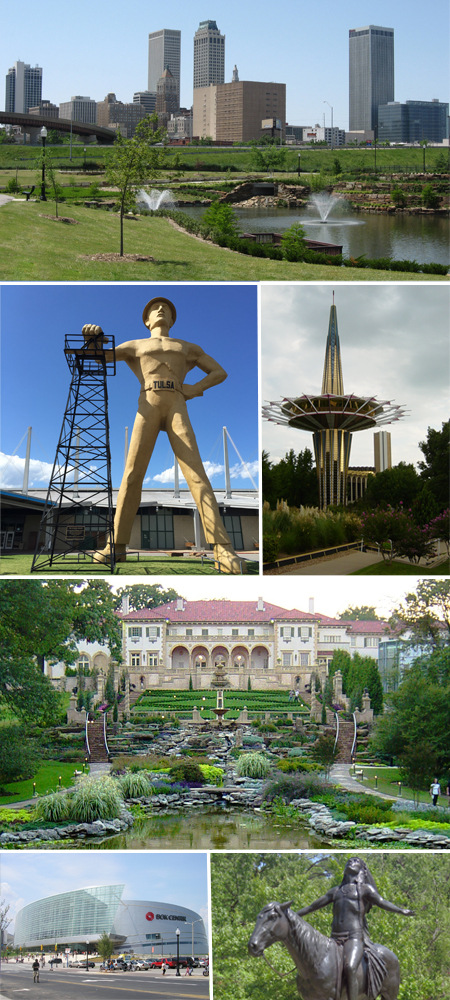

Tulsa
Tulsa es una ciudad situada en el estado de Oklahoma, Estados Unidos.
Government administration · United States · 0 followers
Overview
Tulsa es una ciudad situada en el estado de Oklahoma, Estados Unidos. Tiene una población estimada, a mediados de 2020, de 411 401 habitantes.
Interested in working with us in the future?
Follow to see new jobs and posts in your feed.
No news yet.
About

Tulsa es una ciudad situada en el estado de Oklahoma, Estados Unidos. Tiene una población estimada, a mediados de 2020, de 411 401 habitantes.
Kaynak: Wikipedia · CC BY-SA 4.0
Historia

El área actual de Tulsa era Territorio Indígena de las tribus kiikaapoi (kickapoo), wahzhazhe ma zha (osage), muscogee (creek) y caddo, entre otras, antes de que fuera asentada formalmente por primera vez por las tribus lochapoka y creek en 1836. Establecieron un pequeño asentamiento bajo el Creek Council Oak Tree en la intersección actual de la venida Cheyenne y la calle 18. Esta área y este árbol le recordaron al Jefe Tukabahchi y su pequeño grupo a los sobrevivientes del destierro del Sendero de las Lágrimas de la curva en el río y su anterior Árbol de Roble del Consejo Creek en su tradicional Tallassee, en Alabama. Llamaron a su nuevo asentamiento Tallasi, que significa "ciudad vieja" en el idioma Creek, que más tarde se convirtió en "Tulsa". El área alrededor de Tulsa también fue poblada por miembros de las otras llamadas " Cinco Tribus Civilizadas " que habían sido reubicadas en Oklahoma desde el sur de Estados Unidos. La mayor parte de Tulsa moderna se encuentra en Creek Nation, con partes ubicadas en las naciones cherokee y osage.
Aunque Oklahoma todavía no era un estado durante la Guerra de Secesión, el área de Tulsa fue uno de los escenarios de la contienda. La Batalla de Chusto-Talasah ocurrió en el lado norte de Tulsa y se llevaron a cabo varias batallas y escaramuzas en los condados cercanos. Tras la guerra, las tribus firmaron tratados de reconstrucción con el gobierno federal que en algunos casos requirieron concesiones de tierras sustanciales. En los años posteriores a la Guerra de Secesión y alrededor del cambio de siglo, el área a lo largo del río Arkansas que ahora es Tulsa fue periódicamente el hogar o la visita de una serie de coloridos forajidos, como el legendario Wild Bunch, Dalton Gang o Little Britches.
En 2020, la Corte Suprema dictaminó que gran parte del este de Oklahoma, incluida gran parte de Tulsa, entra en la categoría de Territorio Indígena, lo que reconfigura gran parte de la jurisdicción legal en la región. Las comunidades tribales muscogee (creek), cherokee, chickasaw, choctaw y seminole celebraron la decisión.
Geografía

Topografía
Tulsa se encuentra sobre el curso medio-bajo del río Arkansas, un afluente del Misisipi.
Clima
Tulsa se encuentra cerca del callejón de los tornados y tiene un clima templado y subtropical húmedo, con una temperatura media anual de 16.3 °C y una precipitación promedio de 1.040 mm. Como es típico de zonas templadas los patrones del clima varían según la temporada con extremos ocasionales en la temperatura y las precipitaciones. La temperatura más alta registrada en Tulsa fue de 46.1 °C el 10 de agosto de 1936.
En la primavera y los primeros meses del verano, la ciudad está sometida a severas tormentas con granizo, fuertes vientos y ocasionalmente tornados, que siempre dejan en el área un porcentaje desproporcionado de precipitaciones anuales. Debido a su potencial para eventos de inundación, la ciudad ha desarrollado uno de los sistemas de control de inundaciones más extensos de la nación. Un plan integral de gestión de las inundaciones fue desarrollado en 1984 después de una inundación severa causada por un frente meteorológico estancado que dejó 15 pulgadas (380 milímetros) de lluvia durante la noche, matando a 14 personas, hiriendo a 288 y la destrucción de 7,000 viviendas con un total de $ 180 millones en daños. A principios de 1990 y otra vez en el año 2000 la Agencia Federal para el Manejo de Emergencias (FEMA) reconoció a Tulsa como líder del país en la gestión de inundaciones.
La temporada de otoño suele ser corta, que consiste en días agradables y soleados seguidos de noches frías. Las temperaturas en invierno aunque en general leves en ocasiones puede sufrir condiciones extremas por debajo de -18 °C , mientras que el promedio anual de nieve es de 24.4 cm.
Arquitectura
Un auge de la construcción en Tulsa a principios del siglo XX coincidió con el auge de la arquitectura art déco en los Estados Unidos. Más comúnmente en los estilos zigzag y aerodinámico, el art déco de la ciudad está salpicado por sus vecindarios más antiguos, principalmente en el centro y el centro de la ciudad. Una colección de grandes estructuras art decó, como Mid-Continent Tower, Boston Avenue Methodist Church, Will Rogers High School y Philtower tienen valor arquitectónico.
Demografía
Según el censo de 2020, en ese momento la ciudad estaba habitada por 413 066 personas y su densidad de población era de 806.44 hab/km². El 51.81 % de los habitantes eran blancos, el 14.83 % eran afroamericanos, el 5.20 % eran amerindios, el 3.52 % eran asiáticos, el 0.22 % eran isleños del Pacífico, el 9.81 % eran de otras razas y el 14.60 % eran de una mezcla de razas. Del total de la población, el 19.14% eran hispanos o latinos de cualquier raza.
Deportes
Aunque Tulsa no tiene un equipo en la NFL, NBA, MLS, NHL o MLB, la ciudad apoya una amplia gama de deportes a nivel profesional y universitario. La ciudad alberga dos universidades de la División I de la NCAA y varios equipos deportivos profesionales de ligas menores en béisbol, fútbol, hockey y fútbol.
El 1 de octubre de 1983, Tulsa derrotó a Toronto 2-0 en el Soccer Bowl '83 en Vancouver, convirtiéndose en la primera y única franquicia profesional en ganar un título de campeonato deportivo en el estado de Oklahoma.
Economía

Aunque la industria petrolífera ha dominado históricamente la economía de Tulsa, los esfuerzos realizados en pro de la diversificación económica han creado un nuevo tejido productivo centrado en los sectores aeroespacial, financiero, tecnológico, de telecomunicaciones, de tecnología punta y manufacturero. El Aeropuerto Internacional de Tulsa (TUL) y el puerto de Catoosa, el puerto más grande del interior de todo Estados Unidos, conectan la región con el comercio internacional y el transporte. La planta de mantenimiento de American Airlines en la ciudad es la mayor ofertante de empleo de la misma y el mayor centro de mantenimiento del mundo, sirviendo como base mundial de las operaciones de mantenimiento e ingeniería de la compañía. Por otro lado, tanto el aeropuerto como el puerto de Catoosa albergan amplios polígonos industriales.
La producción de las empresas manufactureras de Tulsa representa en torno al 60 % del total de las exportaciones de Oklahoma, y en 2001, el producto interior bruto (PIB) de la ciudad estuvo en el tercio superior de los de áreas metropolitanas, estados y países, con más de 29.000 millones de dólares, con una tasa de crecimiento anual de 250 millones de dólares. En 2006, la revista Forbes calificó a Tulsa como la segunda ciudad de Estados Unidos respecto a crecimiento de ingresos y como una de las mejores ciudades de dicho país para hacer negocios. El área metropolitana de Tulsa, habitualmente situada entre las que permiten llevar a cabo negocios a unos menores costes, fue calificada en 2005 como la quinta mejor área metropolitana de Estados Unidos en ese aspecto.
Un importante número de coporaciones financieras tienen su sede en Tulsa, siendo la más grande la BOK Financial Corporation. La cadena de tiendas de 24 horas Quiktrip, la compañía de alquiler de coches Dollar Thrifty Automotive Group, Hilti y la cadena de pizzerías Mazzio's también tienen su sede en la ciudad de Tulsa. Asimismo, varias multinacionales relacionadas con la industria del gas y del petróleo también desarrollan su actividad desde la ciudad, como Williams Companies, SemGroup, Syntroleum, ONEOK, Samson y Excel Energy. De este modo, hay treinta empresas en cada una de las cuales trabajan más de mil personas, aunque es el pequeño comercio el que engloba a más del 80 % de las compañías de la ciudad.
Ciudades hermanadas
De acuerdo con la "Tulsa Global Alliance" que opera en conjunto con "Sister Cities International", una organización que comenzó bajo la administración del presidente Dwight Eisenhower en 1956, a Tulsa se le ha dado el hermanamiento con diez ciudades internacionales, en un intento de fomentar el entendimiento intercultural:
Personajes famosos
Kenneth E. Hagin, Reverendo internacional y fundador de RHEMA (Bible training center).
David Heath, luchador de artes marciales mixtas.
Elizabeth Melise Jow, cantante y actriz.
Heather Langenkamp, actriz conocida por su papel de Nancy Thompson en las películas de Freddy Krueger.
P.C. y Kristen Cast, autoras de la saga de La casa de la noche.
Ryan Tedder, cantante en One Republic y compositor.
Kaynak: Wikipedia – Tulsa · CC BY-SA 4.0
Görülebilecek yerler
Philbrook Müzesi - sanat müzesi (Philbrook Museum of Art)
Kardeş şehirler
Tulsa'nın resmen 8 tane kardeş şehri vardır
Kaynak: Wikipedia – Tulsa · CC BY-SA 4.0
History
The area where Tulsa now exists is considered Indian Territory, on the land of the Kiikaapoi (Kickapoo), Wahzhazhe Ma zha (Osage), Muscogee (Creek/Muskogee), and Caddo tribes, among others. It was initially named after a Muscogee settlement in the southeastern United States called Tvlahasse with the short form Tallasi in the Muscogee language, which became Tullahassee or Tallise in Spanish. Etvlwv ahassee means "old town" in the Muscogean language. In 1540, Hernando de Soto became the first European to visit and document the original Tulsa in the southeast. Tvlahasse was a member of the Creek Confederacy and had a strong relationship with the town of Locvpokv and members of the two towns largely settled together after Indian Removal and the Trail of Tears in modern-day Tulsa.
Muscogee founding
On March 28, 1836, Opothleyahola and the Muscogee (Creek) Nation established a small settlement called Lochapoka ("place of turtles" in Creek) under the Creek Council Oak Tree at the present-day intersection of Cheyenne Avenue and 18th Street. The area around Tulsa was also settled by members of the other so-called "Five Civilized Tribes" who had been relocated to Oklahoma from the Southern United States. Most of modern Tulsa is located in the Creek Nation, with parts located in the Cherokee and Osage Nations.
Although Oklahoma was not yet a state during the Civil War, Indian Territory saw its share of fighting. The Battle of Chusto-Talasah took place on Bird Creek, and several battles and skirmishes took place in nearby counties. After the War, the tribes signed Reconstruction treaties with the federal government that in some cases required substantial land concessions. In the years after the Civil War and around the turn of the century, the area along the Arkansas River that is now Tulsa was periodically home to or visited by a series of colorful outlaws, including the legendary Wild Bunch and the Dalton Gang.
Geography

Tulsa is located in the northeastern corner of Oklahoma between the edge of the Great Plains and the foot of the Ozarks in a generally forested region of rolling hills. The city touches the eastern extent of the Cross Timbers, an ecoregion of forest and prairie transitioning from the drier plains of the west to the wetter forests of the east. With a wetter climate than points westward, Tulsa serves as a gateway to "Green Country", a popular and official designation for northeast Oklahoma that stems from the region's green vegetation and relatively large number of hills and lakes compared to central and western areas of Oklahoma, which lie largely in the drier Great Plains region of the Central United States. Located near the western edge of the U.S. Interior Highlands, northeastern Oklahoma is the most topographically diverse part of the state, containing seven of Oklahoma's 11 eco-regions and more than half of its state parks. The region encompasses 30 lakes or reservoirs and borders the neighboring states of Kansas, Missouri, and Arkansas.
Topography
The city developed on both sides of the prominent Arkansas River, which flows in a wide, sandy-bottomed channel. Its flow through Tulsa is controlled by reservoirs at Keystone Lake, and a low-water dam was built at Zink Lake in downtown Tulsa to maintain a full channel at all times. This dam deteriorated and eventually failed, and was repaired and reopened in 2014.
Heavily wooded and with abundant parks and water areas, the city has several prominent hills, such as "Shadow Mountain" and "Turkey Mountain", which create varied terrain, especially in its southern portions. While its central and northern sections are generally flat to gently undulating, the Osage Hills extension into the northwestern part of the city further varies the landscape. Holmes Peak, north of the city, is the tallest point in the Tulsa Metro area at 1,360 ft (415 m) According to the United States Census Bureau, the city has a total area of 186.8 square miles (484 km2), of which 182.6 square miles (473 km2) is land and 4.2 square miles (11 km2) (2.24%) is water.
Demographics

2020 census
As of the 2020 census, Tulsa had a population of 413,066. The median age was 35.8 years. 23.4% of residents were under the age of 18 and 15.3% of residents were 65 years of age or older. For every 100 females there were 95.5 males, and for every 100 females age 18 and over there were 93.0 males age 18 and over.
99.3% of residents lived in urban areas, while 0.7% lived in rural areas.
There were 171,638 households in Tulsa, of which 28.2% had children under the age of 18 living in them. Of all households, 36.3% were married-couple households, 23.3% were households with a male householder and no spouse or partner present, and 32.9% were households with a female householder and no spouse or partner present. About 35.4% of all households were made up of individuals and 12.1% had someone living alone who was 65 years of age or older.
There were 191,364 housing units, of which 10.3% were vacant. Among occupied housing units, 49.9% were owner-occupied and 50.1% were renter-occupied. The homeowner vacancy rate was 2.0% and the rental vacancy rate was 10.9%.
The most reported ancestries in 2020 were:
2010 census
According to the 2010 census, Tulsa had a population of 391,906 and the racial and ethnic composition was as follows: White American: 62.6% (57.9% Non-Hispanic Whites); Black, 15.6%; Hispanic or Latino (of any race), 14.1% (11.5% Mexican, 0.4% Puerto Rican, 0.3% Guatemalan, 0.2% Spanish, 0.2% Honduran, 0.2% Salvadoran); some other race, 8.0%; Two or more races, 5.9%; Native American, 5.3%; Asian American, 2.3% (0.5% Hmong, 0.4% Vietnamese, 0.3% Chinese, 0.2% Indian, 0.2% Korean, 0.2% Burmese); and Native Hawaiian and Other Pacific Islander: 0.1%. In the 2020 census, its population increased to 413,066.
As of the 2010 census, there were 391,906 people, 163,975 households, and 95,246 families residing in the city, with a population density of 2,033.4 inhabitants per square mile (785.1/km2) There were 185,127 housing units at an average density of 982.3 per square mile (379.3/km2). Of 163,975 households, 27% had children under the age of 18 living with them, 38.2% were married couples living together, 14.6% had a female householder with no husband present, and 41.9% were non-families. Of all households, 34.5% are made up of only one person, and 10% had someone living alone who was 65 years of age or older. The average household size was 2.34 people and the average family size was 3.04.
Economy
Energy industry's legacy and resurgence
The United States Oil and Gas Association was founded in Tulsa on October 13, 1917. Over the city's history many large oil companies have been headquartered in the city, including Warren Petroleum (which merged with Gulf Oil in what was then the largest merger in the energy industry), Skelly Oil, Getty Oil and CITGO. In addition, ConocoPhillips was headquartered in nearby Bartlesville. Industry consolidation and increased offshore drilling threatened Tulsa's status as an oil capital, but new drilling techniques and the rise of natural gas have buoyed the growth of the city's energy sector.
Today, Tulsa is again home to the headquarters of many international oil- and gas-related companies, including Williams Companies, ONE Gas, Syntroleum, ONEOK, Laredo Petroleum, Samson Resources, Helmerich & Payne, Magellan Midstream Partners, and Excel Energy.
Diversification and emerging industries
Tulsa has diversified to capitalize on its status as a regional hub with substantial innovation assets. Products from Tulsa manufacturers account for about sixty percent of Oklahoma's exports, and in 2001, the city's total gross product was in the top one-third of metropolitan areas, states, and countries, with more than $29 billion in total goods, growing at a rate of $250 million each year.
Tulsa's primary employers are small and medium-sized businesses: there are 30 companies in Tulsa that employ more than 1,000 people locally, and small businesses make up more than 80% of the city's companies.
During a national recession from 2001 to 2003, the city lost 28,000 jobs. In response, a development initiative, Vision 2025, promised to incite economic growth and recreate lost jobs. Projects spurred by the initiative promised urban revitalization, infrastructure improvement, tourism development, riverfront retail development, and further diversification of the economy. By 2007, employment levels had surpassed pre-recession heights and the city was in a significant economic development and investment surge. This economic improvement is also seen in Tulsa's housing trends which show an average of a 6% increase in rent in 2010. Since 2006, more than 28,000 jobs have been added to the city. The unemployment rate of Tulsa in August 2014 was 4.5%.
Arts and culture

Tulsa culture is influenced by the nearby Southwest, Midwest, and Southern cultural regions, as well as a historical Native American presence. These influences are expressed in the city's museums, cultural centers, performing arts venues, ethnic festivals, park systems, zoos, wildlife preserves, and large and growing collections of public sculptures, monuments, and artwork.
Museums, archives and visual culture
Tulsa is home to several museums. Located in the former villa of oil pioneer Waite Phillips in Midtown Tulsa, the Philbrook Museum of Art is considered one of the top 50 fine art museums in the United States and is one of only five to offer a combination of a historic home, formal gardens, and an art collection. The museum's expansive collection includes work by a diverse group of artists including Pablo Picasso, Andrew Wyeth, Giovanni Bellini, Domenico di Pace Beccafumi, Willem de Kooning, William Merritt Chase, Auguste Rodin and Georgia O'Keeffe.
In the Osage Hills of Northwest Tulsa, the Gilcrease Museum holds the world's largest, most comprehensive collection of art and artifacts of the American West. The museum includes the extensive collection of Native American oilman and famed art collector Thomas Gilcrease with numerous works by Frederic Remington, Thomas Moran, Albert Bierstadt and John James Audubon among the many displayed.
The 170-acre Tulsa Botanic Garden is a public flower garden and arboretum with art works and water features, also dedicated to preserving the native environment of the Cross Timbers forest and prairie.
On the west bank of the Arkansas River in the suburb of Jenks, the Oklahoma Aquarium is the state's only freestanding aquarium, containing over 200 exhibits, including a shark tank.
In addition, the city hosts a number of galleries, experimental art-spaces, smaller museums, and display spaces located throughout the city (clustered mostly in downtown, Brookside, and the Pearl District). Living Arts of Tulsa, in downtown Tulsa, is among the organizations dedicated to promoting and sustaining an active arts scene in the city.
Cuisine
Tulsa restaurants and food trucks offer a number of cuisines, but several cuisines are particularly prominent in its culinary landscape because of its distinctive history.
BBQ
Tulsa is known nationally for its barbecue offerings; its barbecue reflects its midpoint location "between pig country and cow country", that is, in the transition zone between the South and the West. The city's barbecue is also helped by its geography; the wood used in barbecuing is abundant in Northeastern Oklahoma (including pecan, oak, hickory, mesquite and maple). The region's ethnic diversity is felt, too: its BBQ traditions bear the influences of white, African-American and American Indian foodways.
Tulsa is also home to the nationally acclaimed premium smoker manufacturer Hasty-Bake Company. Some Tulsa based barbecue joints have expanded even beyond the state's borders, including Leon's Smoke Shack, Rib Crib and Billy Sims Barbecue. The prize-winning Oklahoma Joe's was founded by Oklahoman Joe Davidson, who mastered his craft at Tulsa's T-Town BBQ Cook-Off.
Oklahoma barbecue is also unique in its emphasis on hickory-smoked barbecue bologna, nicknamed "Oklahoma tenderloin", and its fried okra.
Southern "homestyle" food
By and large, Tulsa's traditional cuisine reflects the influence of Southern foodways, particularly "upland South and... Texas where many of Oklahoma's nineteenth-century population originated." The prominence of certain foods reflects the agricultural heritage of the surrounding regions. For instance, at the suggestion of experts at what is now Oklahoma State University, peanuts became a major crop in now eastern Oklahoma as a means for lessening the reliance on cotton cultivation. Chicken-fried steak is part of the state meal of Oklahoma and is the signature dish at a number of Tulsa restaurants.
Chili and Coney Island hot dogs
Oklahomans have been consuming chili since well before statehood, owing to the influence of Mexican-American culture on the state. In 1910, iconic Tulsa restaurant Ike's Chili Parlor opened and Ivan "Ike" Johnson is purported to have acquired his recipe from a Latino Texan named Alex Garcia.
Sports

Tulsa supports a wide array of sports at the professional and collegiate levels. The city hosts two NCAA Division I colleges and multiple professional minor league sports teams in baseball, football, hockey, and soccer. From 2010 to 2015, Tulsa had a WNBA team called the Tulsa Shock.
Professional sports
Tulsa's Class AA Texas League baseball team is called the Tulsa Drillers; famous former Drillers include Sammy Sosa, Matt Holliday, and Iván Rodríguez.
In 2008, Tulsa funded $39.2 million to build a new ballpark in the Greenwood District near downtown for the Drillers. The ground breaking was held on December 19, 2008. ONEOK bought the naming rights for $10 million for the next 25 years. The first game at ONEOK Field was held on April 8, 2010. Country music star Tim McGraw threw out the first pitch.
The 19,199-seat BOK Center is the centerpiece of the Vision 2025 projects and was completed in August 2008; the BOK Center was in the top ten among indoor arenas worldwide in ticket sales for the first quarter of 2009 when it was the home for the city's Tulsa Shock WNBA, Tulsa Talons arena football, and Tulsa Oilers ice hockey teams; as of 2022, the Oilers are the sole remaining tenant.
College sports
Two Tulsa universities compete at the NCAA Division I level: the University of Tulsa Golden Hurricane, and the Oral Roberts University Golden Eagles. The University of Tulsa's men's basketball program has reached the Sweet Sixteen three times, made an appearance in the Elite Eight in 2000, won the NIT championship in 1981 and 2001, and won the inaugural College Basketball Invitational in 2008. The Tulsa football team has played in 16 bowl games, including the Sugar Bowl (twice) and the Orange Bowl. Oral Roberts University's men's basketball team reached the Elite Eight in 1974, the Sweet Sixteen in 2021, and won the Mid-Continent Conference title three straight years, from 2005 to 2007.
Parks and recreation
As of 2016, the city of Tulsa manages 134 parks spread over 8,278 acres (3,350 ha). Woodward Park, a 45-acre (18 ha) tract located in midtown Tulsa, doubles as a botanical garden, featuring the Tulsa Municipal Rose Garden, with more than 6,000 rose plants in 250 varieties, and the Linnaeus Teaching Gardens, which demonstrate the latest and most successful techniques for growing vegetables, annuals, perennials, woody plants and groundcovers.
Some Tulsa-area parks are run by Tulsa County Parks. These include the 270-acre (110 ha) LaFortune Park in Midtown Tulsa, and the 192-acre (78 ha) Chandler Park.
Some parks are under the Tulsa River Parks Authority. These include a series of linear parks that run adjacent to the Arkansas River for about 10 miles (16 km) from downtown to the Jenks bridge. Since 2007 a significant portion of the River Parks area has been renovated with new trails, landscaping, and playground equipment. The River Parks Turkey Mountain Urban Wilderness Area on the west side of the Arkansas River in south Tulsa is a 300-acre (120 ha) area that contains over 45 miles (72 km) of dirt trails available for hiking, trail running, mountain biking and horseback riding.
Gathering Place is a 66-acre (27 ha) park which features a playground, lodge, boathouse, splash playground, sports courts, skate park, wetland pond and garden, trails, classrooms, and amphitheatre.
Bicycling
Tulsa has a number of cycling trails, and has installed protected bike lanes in parts of the downtown area. Additional efforts to expand this infrastructure have been included as part of the city's "GoPlan".
Government

A mayor-council government has been in place in Tulsa since 1989, when the city converted from a city commission government deemed wasteful and less efficient. Since the change, Tulsa mayors have been given more power in accordance with a strong mayoral system and have greater control of a more consolidated array of governmental branches. Plurality voting is used to elect mayors, who serve a term in office of four years. The present mayor of Tulsa is Democrat Monroe Nichols, who won the 2024 mayoral election and took office on December 2, 2024. Another Tulsa political figure, Jim Inhofe, who represented Oklahoma in the United States Senate for 30 years, served as the mayor of Tulsa early in his political career.
A city councilor from each of the city's nine council districts is elected every two years, each serving a term of two years. Councilors are elected from their own respective districts based on a plurality voting system, and serve on the Tulsa City Council. As a whole, the council acts as the legislative body of the city government, which aims to pass laws, approve the city budget, and manage efficiency in the city government. In accordance with the mayor-council form of government, the Tulsa City Council and the office of the Mayor coordinate in city government operations. A third body of the government, the city auditor, is elected independently of the city council and mayor to ensure that the auditor can act in an objective manner. The auditor is elected for a term of two years. Phil Wood, a Democrat, held the position for 21 years before being defeated by Republican Preston Doerflinger in the 2009 election. The city serves as the seat of county government for Tulsa County, and lies mostly within Oklahoma's 1st congressional district, with its far northwestern areas in southern Osage County in Oklahoma's 3rd congressional district. Municipal and state laws are enforced in Tulsa by the Tulsa Police Department, an organization of 781 officers as of 2012.
Education
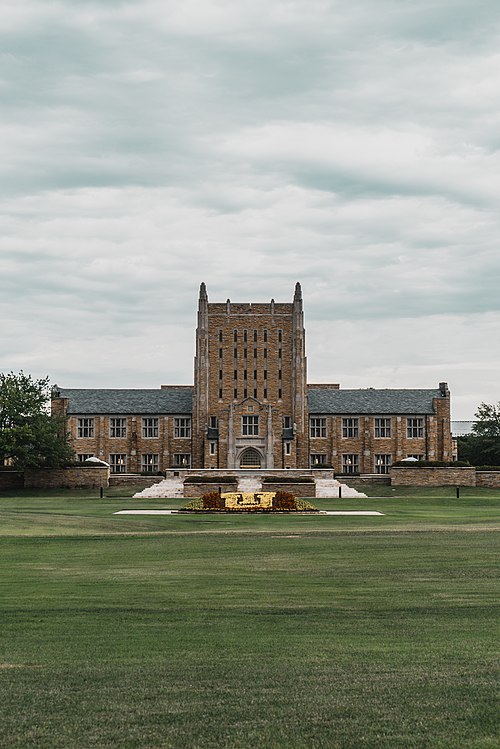
K–12 education
Tulsa Public Schools, with nine high schools and over 41,000 students, is the second-largest school district in Oklahoma. In 2006, there were more than 90,000 students attending Tulsa County's public schools.
Portions of Tulsa within Tulsa County are in the following school districts: Tulsa, Berryhill, Bixby, Broken Arrow, Jenks, Owasso, and Union. Portions within Osage County are in Tulsa Public Schools. Portions within Wagoner County are in the following districts: Tulsa, Broken Arrow, and Catoosa. The Allen-Bowden School District facility in Creek County has a Tulsa postal address, but none of its area is in the Tulsa city limits.
A variety of independent and sectarian schools exist in Tulsa, also. Most, but not all, of the private schools have religious affiliations with various Christian, Jewish or Muslim denominations. The Catholic Diocese of Tulsa supports a system of parochial and diocesan schools, including Bishop Kelley High School, administered by the LaSallians (French Christian Brothers). Another Catholic high school, Cascia Hall Preparatory School, is administered by Augustinians. Holland Hall School is independent but historically affiliated with the Episcopal Church. Riverfield Country Day School is non-sectarian.
History of K-12 education
The Presbyterian Church (PCUSA) established the Presbyterian Mission Day School, a one-story building at what would become the intersection of 4th Street and Boston Avenue in 1884. A second story was soon added to accommodate the number of children who were to attend. This school operated until 1889. When Tulsa incorporated in 1899, it took over the school, which became the first public school. James M. Hall and three other men bought the property with their own funds and held the title until the city could reimburse them.
Tulsa built its first two public schools in 1905. The construction of more schools began accelerating in 1906. In December 1907, control of the public schools passed from the city government to the Tulsa Board of Education.
Media

Tulsa's leading newspaper is the daily Tulsa World, the second-most widely circulated newspaper in Oklahoma with a Sunday circulation of 189,789.
The Tulsa Voice is an Alt-Weekly newspaper covering entertainment and cultural events. Covering primarily economic events and stocks, the Tulsa Business Journal caters to Tulsa's business sector. Other publications include the Oklahoma Indian Times, the Tulsa Daily Commerce and Legal News, the Tulsa Beacon, This Land Press, and the Tulsa Free Press. The first black-owned newspaper was the Tulsa Star, which ceased publication when its office burned during the Tulsa race massacre. It was succeeded by the Oklahoma Eagle, which began publishing using the press salvaged from the Star's office.
Until 1992, the Tulsa Tribune served as a daily afternoon newspaper competing with the Tulsa World. The paper was acquired by the Tulsa World that year. Urban Tulsa Weekly served as the city's alt-weekly paper from 1991 until its closure in 2013.
Television and radio
Tulsa is also served by television and radio broadcasting networks. All major U.S. television networks are represented in Tulsa through local affiliates in the designated market area (a region covering a 22-county area serving the northeastern and east-central portions of Oklahoma, and far southeastern Kansas); these include NBC affiliate KJRH-TV (channel 2), CBS affiliate KOTV-DT (channel 6), ABC/Fox affiliate KTUL (channel 8), PBS station KOED-TV (channel 11, a satellite of the state-run OETA member network), CW affiliate KQCW-DT (channel 19), Roar affiliate KOKI-TV (channel 23), MyNetworkTV affiliate KMYT-TV (channel 41), Ion Television owned-and-operated station KTPX-TV (channel 44). The market is also home to several religious stations including TBN owned-and-operated station KDOR-TV (channel 17), religious/secular independent station KWHB (channel 47), and Oral Roberts University-owned KGEB (channel 53, which is distributed nationwide via satellite as GEB America).
Infrastructure

Transportation
Transportation in Tulsa is aided by MetroLink's bus network of 97 vehicles and two primary airports, while the Tulsa Port of Catoosa provides transportation of goods and industry through international trade routes.
Highways
Tulsa has an extensive highway system that connects many cities in the region such as Joplin, Missouri on the Will Rogers Turnpike and Oklahoma City on the Turner Turnpike. Most commuters use the highway system in Tulsa to get to and from work. Highways that run through Tulsa are I-44, I-244, I-444 (unsigned), US-412, US-169, OK-66, US-64, US-75, OK-11, OK-51, OK-364/Creek Turnpike, and OK-344/Gilcrease Expressway.
In 2011, the Oklahoma Department of Transportation (ODOT) reported that Tulsa's busiest freeway was US-169 with about 121,500 vehicles daily between 51st and 61st Streets, and its second busiest freeway was OK-51 with about 104,200 vehicles between Memorial and I-44. Surrounding Downtown is the Inner Dispersal Loop (sometimes called the "I-D-L"), which connects Downtown with almost all the highways in Tulsa.
In 2023, ODOT and the American Association of State Highway and Transportation Officials (AASHTO) approved applying the Interstate 42 designation to US-412, contingent on upgrades. This includes the segment of I-244 in Tulsa.
Buses
MetroLink (formerly Tulsa Transit), the city's transit bus operator, runs buses on 18 different routes across Tulsa and in surrounding suburbs such as Broken Arrow, Sand Springs and Jenks. Tulsa Transit has two stations: the Memorial Midtown Station at 7952 East 33rd Street in Midtown Tulsa, and the Denver Avenue Station at 319 South Denver, across from the BOK Center in Downtown. Most routes go through one or both of the stations, facilitating the commute to work and events in Downtown or Midtown. Buses stop at specific stops such as Tulsa Community College, Oklahoma State University-Tulsa, CityPlex Towers, Cox Communications, the various medical facilities in Tulsa, and many shopping destinations, hotels, and schools. The bus schedules are periodically changed; votes are taken by Tulsa Transit to help decide the particulars of certain routes. Tulsa debuted its first bus rapid transit line, Aero on Peoria Avenue, in November 2019. The service has more frequent buses, upgraded stations, and faster travel times.
In popular culture
Several films starring Brat Pack actors and written by S.E. Hinton were filmed in Tulsa in the early 1980s; among them were Tex (1982), The Outsiders (1983), Rumble Fish (1983), That Was Then... This Is Now (1985) and Fandango (1985).
The FX television shows Reservation Dogs and The Lowdown prominently feature Tulsa
Most of the HBO TV series Watchmen (2019) takes place in Tulsa.
"Twenty Four Hours from Tulsa" song by Gene Pitney
"Tulsa Telephone Book" song by Tom T. Hall
"Tulsa Jesus Freak" song by Lana Del Rey
Tulsa King TV series starring Sylvester Stallone is primarily set in Tulsa
Three of S.E. Hinton's novels, The Outsiders, That Was Then, This is Now, and Rumble Fish, take place in Tulsa.
The 2020 drama film Minari was filmed in Tulsa.
Sister cities
In accordance with the Tulsa Global Alliance, which operates in conjunction with Sister Cities International, an organization that began under President Dwight Eisenhower in 1956, Tulsa has nine international sister cities in an attempt to foster cross-cultural understanding:
Places of interest
Tulsa Zoo encompasses a total of 84 acres (34 ha) with over 2,600 animals representing 400 species. The zoo is located in 2,820-acre (1,140 ha) Mohawk Park (the third largest municipal park in the United States) which also contains the 745-acre (301 ha) Oxley Nature Center.
The Tulsa State Fair, operating in late September and early October, attracts over one million people during its 10-day run. A number of other cultural heritage festivals are held in the city throughout the year, including the Intertribal Indian Club Powwow of Champions in August; Scotfest, India Fest, Greek Festival, and Festival Viva Mexico in September; ShalomFest in October; Dia de Los Muertos Art Festival in November; and the Asian-American Festival in May. The annual Mayfest arts and crafts festival held downtown was estimated to have drawn more than 365,000 people in its four-day run in 2012. On a smaller scale, the city hosts block parties during a citywide "Block Party Day" each year, with festivals varying in size throughout city neighborhoods. Tulsa has one major amusement park attraction, Paradise Beach Waterpark (formerly Safari Joe's H2O Water Park, formerly Big Splash Water Park), featuring multi-story water slides and large wave pools. Until 2006, the city also hosted Bell's Amusement Park, which closed after Tulsa County officials declined to renew its lease agreement.
Kaynak: Wikipedia – Tulsa, Oklahoma · CC BY-SA 4.0